Establishing secure connection…Loading editor…Preparing document…

Bill of Sale and Assignment of Stock

This template is fully customizable. Edit the text, fill out the fields, and send it for signature. Give it a try!
Bill of Sale and Assignment of Stock

What a Bill of Sale and Assignment of Stock Is

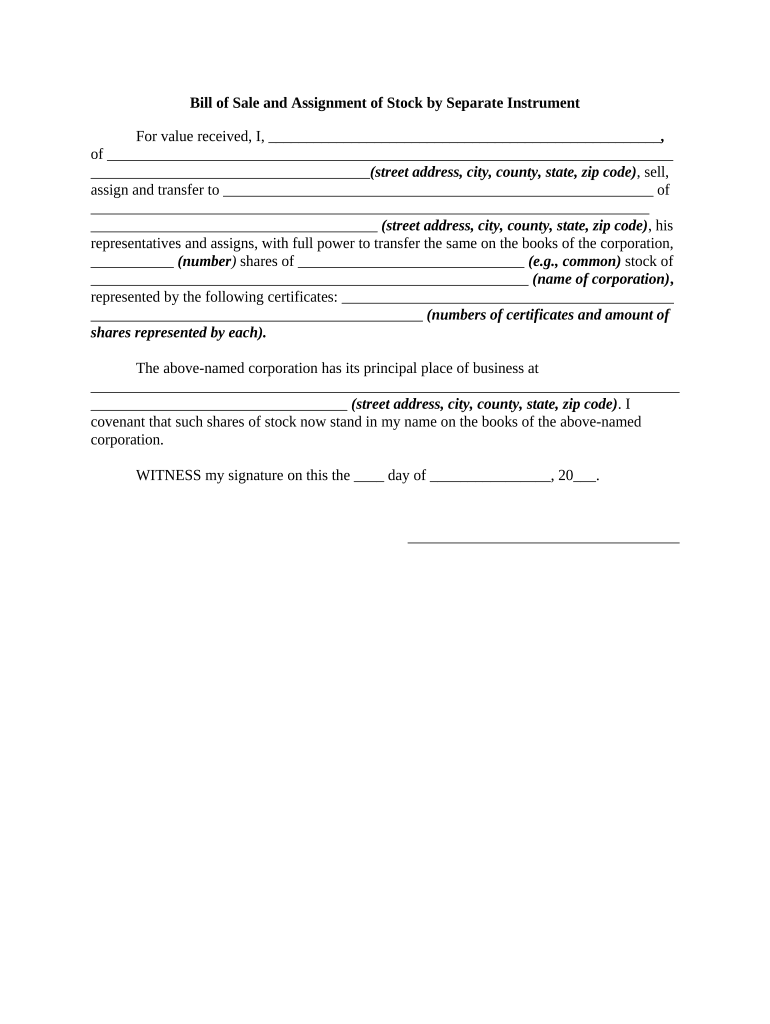
A Bill of Sale and Assignment of Stock is a written legal instrument that documents the transfer of ownership of shares from a seller to a buyer and the assignment of any related rights. It identifies parties, describes the number and class of shares, states consideration, and confirms delivery and endorsement. The document creates an auditable record for corporate ledgers and may trigger tax reporting obligations. It is commonly used in private stock transfers, corporate buyouts, and founder equity transfers, and can be executed electronically subject to ESIGN and UETA where permitted.

Why a Clear Assignment Matters

Use a Bill of Sale and Assignment of Stock to create clear legal evidence of title transfer, document consideration, and update corporate records. Properly executed assignments reduce disputes, support tax reporting, and preserve chain-of-title for shareholder registries and transfer agents.

Why a Clear Assignment Matters

Who Typically Prepares and Signs This Document

Typical users include sellers, buyers, corporate officers, and legal counsel when transferring privately held shares or registered certificates.

  • Private company founders and shareholders completing ownership transfers following buyouts or secondary sales.
  • Corporate secretaries or transfer agents updating the stock ledger and issuing new certificates.
  • Buyers and investors documenting acquisition terms, consideration, and any restrictions on resale or transfer.

Representative Roles and Responsibilities

Corporate Secretary

Responsible for updating the corporate ledger and ensuring the assignment is recorded. Verifies stock certificate numbers, endorsements, and board approvals required under corporate bylaws; often coordinates notary or transfer agent processes to complete the transfer.

Buyer / Investor

Confirms consideration paid, reviews any restrictive legends or transfer restrictions, and provides required tax documentation such as a completed W-9 when requested to avoid backup withholding and ensure accurate reporting to the IRS.

Technical and Security Details to Note

Encryption: TLS 1.2/1.3; AES-256 at rest
Audit Trail: Timestamp, IP, and action log
Regulatory Coverage: ESIGN, UETA, 21 CFR Part 11
HIPAA: BAA available — protects PHI
Certifications: SOC 2 Type II, ISO 27001
Access Controls: SSO, role-based permissions

Common Legal and Financial Risks

Tax Reporting: Missed 1099 filings incur penalties
Backup Withholding: Incorrect TIN triggers 24% withholding
Invalid Transfer: Improper signatures may void transfer
Notarization Errors: Missing notarization invalidates acknowledgement
Fraud Risk: Intentional misstatement leads to liability
Corporate Liability: Failure to update ledger creates disputes

Frequent Preparation Mistakes to Avoid

  • Leaving consideration vague or described as 'fair value' can create disputes over purchase price and complicate tax basis calculations for seller and buyer.
  • Failing to update the issuer's stock ledger or notifying the transfer agent can leave the buyer without formal registration or dividend rights despite the assignment.
  • Not verifying restrictive legends, shareholder agreements, or preemptive rights may result in prohibited transfers and expose parties to breach claims.
  • Using unsigned stock certificates, or relying on scanned images without clear endorsement language, risks rejection by transfer agents and bank custodians.

Step-by-Step: Completing the Assignment

Follow these steps to complete and record a Bill of Sale and Assignment of Stock accurately and in compliance with corporate procedures.

  • 01
    Identify Parties: Record full legal names and contact information
  • 02
    Describe Shares: Specify class, quantity, certificate numbers, and legends
  • 03
    State Consideration: List payment amount or other valuable consideration
  • 04
    Sign & Deliver: Obtain signatures, notarize if required, and update ledger

How a Typical Transfer Workflow Operates

A typical transfer workflow moves from agreement drafting through signatures and corporate record updates, concluding with any necessary tax or broker notifications.

  • Draft Document: Prepare the assignment with specific share details
  • Obtain Signatures: Parties sign; use eSignature or wet ink
  • Notarize if Needed: Use in-person notary or RON per state rules
  • Update Records: Record transfer in corporate ledger and notify transfer agent

Core Elements Every Assignment Should Contain

Essential components define a professionally drafted Bill of Sale and Assignment of Stock and reduce future disputes by making rights, obligations, and evidentiary facts explicit.

Parties

Identify seller and buyer by full legal names, entity types, and mailing addresses. Include authorized signatory names and contact details for corporate records and transfer agent communications.
Share Details

Describe class, par value if any, exact number of shares transferred, certificate numbers, and any restrictive legends or transfer limitations attached to the shares being assigned.

Consideration

State monetary amount, stock-for-stock exchange terms, promissory note details, or other consideration. Reference payment timing, escrow arrangements, and tax allocation between parties.

Representations

Include seller representations about ownership, authority to transfer, absence of liens, and accuracy of corporate records; include buyer representations as appropriate to the transaction.

Execution

Provide signature blocks for parties with printed names, titles, dates, and spaces for notarization. Specify whether electronic signatures are permitted and under what authentication method.

Corporate Action

Reference board resolutions, stock power endorsements, or transfer agent instructions necessary to effect registration; require seller to deliver endorsed certificates and any required transfer documentation.

Key Deadlines and Timing Considerations

Important calendar items include tax reporting deadlines, internal ledger updates, and any notarization scheduling tied to the transfer date.

Provide W-9 upon request:

No specific deadline; supply when payer requests

File 1099-B if applicable:

Broker reporting deadlines vary; taxpayer reports capital gains on Form 1040

1099 filing dates:

1099-NEC due Jan 31; 1099-MISC to IRS paper Feb 28, electronic Mar 31

Form 1040 deadline:

Individual returns due April 15; extensions to October 15 with Form 4868

Ledger update timeframe:

Update corporate ledger promptly upon transfer; delays can impair registration

eSignature Pricing and Feature Comparison

Compare typical eSignature vendor pricing and features relevant to executing and storing signed stock assignment documents.

signNow DocuSign Adobe Sign PandaDoc HelloSign
Starting Price $8/user/mo $15/user/mo $14/user/mo $19/user/mo $15/user/mo
Free Trial 7-day free trial Varies by vendor Varies by vendor Varies by vendor Varies by vendor
Bulk Send Yes Yes Yes Yes No
Audit Trail Yes Yes Yes Yes Yes
HIPAA Compliant Yes Yes Yes No No

FAQs: Common Questions About Assignments and Signatures

Answers to frequent practical questions about completing, signing, and enforcing a Bill of Sale and Assignment of Stock.


Need help? Contact support

be ready to get more
Join over 28 million airSlate SignNow users