Establishing secure connection…Loading editor…Preparing document…

Booth Rental Agreement

This template is fully customizable. Edit the text, fill out the fields, and send it for signature. Give it a try!
Booth Rental Agreement

What a Booth Rental Agreement Covers

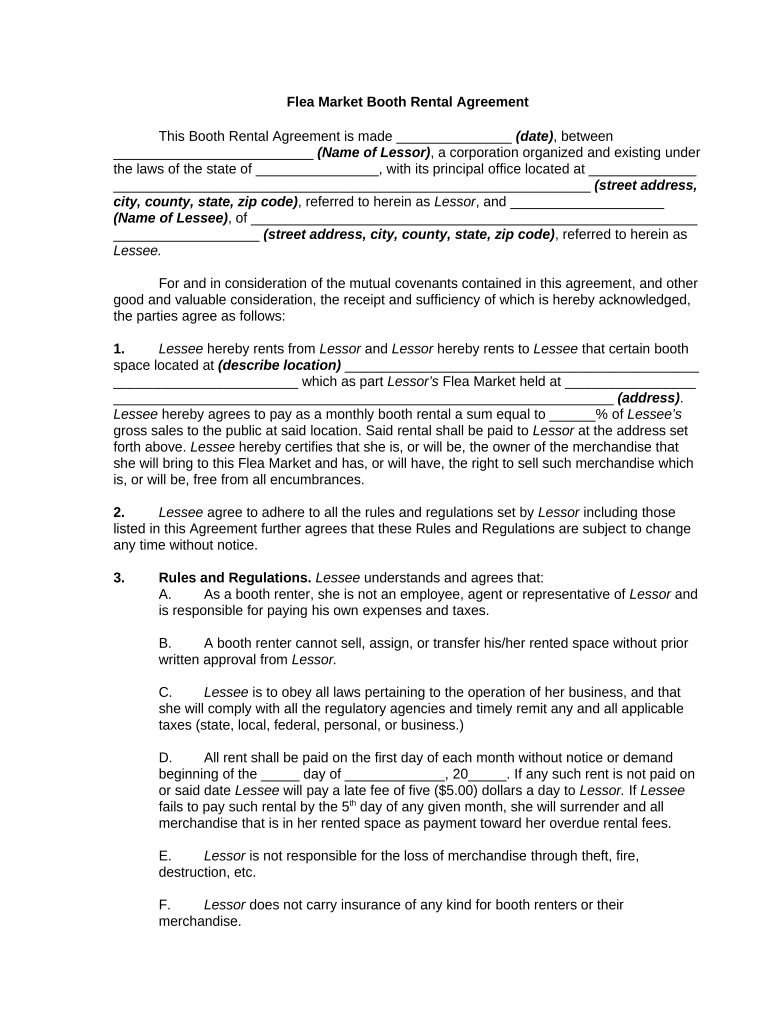
A Booth Rental Agreement is a written contract between a booth owner or venue operator and a third party who rents space to sell products or provide services at events, markets, trade shows, or fixed locations. The agreement defines the parties, the rented area, term and hours, payment and deposit terms, permitted uses, setup and teardown rules, insurance and indemnity obligations, utilities and services, and termination or default remedies. It allocates risk, clarifies responsibilities for safety and compliance, and creates an enforceable record of the commercial arrangement.

Why a Written Booth Rental Agreement Matters

A clear, signed agreement reduces misunderstandings, protects each party’s financial and legal interests, and sets expectations on insurance, safety, and permitted activities. It also documents payment schedules and remedies for breaches.

Why a Written Booth Rental Agreement Matters

Who Commonly Uses Booth Rental Agreements

Users include event organizers, venue operators, vendors, artisans, franchisees, and temporary exhibitors who need a formal allocation of space, fees, and responsibilities.

  • Event organizers managing multiple vendor relationships and logistics
  • Independent vendors or makers renting space at markets or expos
  • Permanent kiosk operators inside malls or trade centers

The agreement serves operational, accounting, and legal needs for these groups; tailor clauses for duration, utilities, and risk allocation based on the specific arrangement.

Who Can Sign and Bind Each Party

Business Owner

An owner or authorized officer signs on behalf of a company. Verify corporate resolution or delegated authority to ensure the signer can bind the business for payments, indemnities, and lease-like obligations.

Venue Manager

A property or venue manager with written delegation signs for the operator. Confirm the manager’s authority in writing to accept deposits, issue chargebacks, or terminate rentals under the agreement.

Essential Clauses to Include

A professional Booth Rental Agreement contains specific clauses that limit disputes and protect both parties. Ensure each element below is drafted clearly and unambiguously.

Identification

Full legal names and contact details for owner/operator and renter, including billing address and emergency contact information to ensure enforceability and proper notice delivery.
Premises Description

Precise booth location, dimensions, assigned stall number, and map reference. Include permitted signage, subletting restrictions, and storage or back-of-house access terms.

Term and Hours

Start and end dates, daily operating hours, move-in and move-out windows, and options for extensions or additional event days with associated fees.

Rent and Payments

Amount, deposit requirements, due dates, accepted payment methods, late fees, and consequences for nonpayment including termination and retention of deposit.

Insurance and Liability

Minimum insurance limits, certificate of insurance requirements naming venue as additional insured, and allocation of responsibility for loss, theft, or injury.

Termination and Remedies

Grounds for termination, cure periods, refund rules, force majeure, and remedies such as re-entry, holdover fees, or litigation venue for disputes.

Step-by-Step: How to Complete the Agreement

Follow these steps in order to prepare, review, and execute a Booth Rental Agreement efficiently and accurately.

  • 01
    Prepare Document: Assemble venue details, fees, and insurance requirements before drafting.
  • 02
    Populate Fields: Enter legal names, dates, booth ID, and payment terms using MM/DD/YYYY where required.
  • 03
    Review Terms: Confirm permitted uses, utilities, and termination rights with both parties.
  • 04
    Execute Agreement: Have authorized signers sign and exchange fully executed copies for records.

Where to Send and How to Route the Signed Agreement

Routing depends on whether you use paper, email, or an eSignature platform; keep a record of delivery and acceptance for enforcement and accounting.

  • Send to Signer: Email or deliver the agreement to the authorized signer with clear instructions.
  • Collect Signatures: Obtain signatures from all parties and date each signature line.
  • Distribute Copies: Provide each party a signed copy; retain the original executed agreement for records.
  • Store Securely: Save a digital, tamper-evident version and a backup to comply with retention rules.

Configuring an Online Completion Workflow

When using an eSignature platform, set authentication, reminders, and field behaviors to match your risk tolerance and regulatory needs.

Field Configuration
Authentication Method Email link, SMS code, or stronger KBA depending on signer identity needs
Signature Fields Place signature, date, and initials fields for each signer; require all mandatory fields
Conditional Fields Use conditional visibility for optional services, add-ons, or insurance details
Reminder Schedule Set automated reminders for unsigned documents and overdue payments

Distribution Channels and Technical Requirements

Choose sharing methods that preserve intent, attribution, and an audit trail when executing electronically or in person.

  • Email Delivery: Common for single-signature transactions
  • Platform Integration: Use CRM or file storage integrations to centralize signed copies
  • In-Person Signing: Use a tablet or paper process with witness/notary if required

Keep copies in an access-controlled repository and ensure the chosen channel supports reproducible audit records for enforceability.

Key Timing and Deadline Considerations

Track payment dates, setup windows, insurance certificate deadlines, and cancellation notice requirements to avoid breaches and penalties.

Deposit Due Date:

Pay deposit by the date stated to secure the booth

Balance Due Date:

Remaining rent due by the specified pre-event date

Insurance Certificate Deadline:

Provide COI before move-in, often 7–14 days prior

Setup/Teardown Windows:

Adhere to venue move-in and move-out hours

Cancellation Notice:

Give advance written notice as specified to qualify for refund

Milestones from Reservation to Move-Out

A sequential milestone view helps operations teams coordinate logistics and ensure compliance with timing requirements.

01

Reservation Confirmed

Deposit received and booth assigned following booking

02

Contract Execution

Fully signed agreement returned and copies distributed

03

Pre-Event Compliance

Insurance, permits, and equipment approvals submitted and verified

04

Move-Out and Inspection

Booth cleared and inspected; security deposit adjustments finalized

Common Mistakes to Avoid

  • Leaving the rented area description vague, which causes setup disputes and liability gaps during events.
  • Failing to require a certificate of insurance naming the venue as additional insured before move-in.
  • Not specifying payment milestones and late fees, leading to collections or occupancy disputes after the event.
  • Allowing unapproved subletting or shared use without written consent, creating security and revenue issues.

Required Information and Contact Details

Party Names: Full legal names
Mailing Addresses: Street, city, state, ZIP
Email Addresses: Primary contact emails
Phone Numbers: Daytime contact numbers
Emergency Contact: Onsite or local contact
Tax ID: TIN or EIN if required

Penalties and Risks from Incorrect or Missing Data

Deposit Forfeiture: Loss of deposit
Liability Exposure: Personal or business liability
Contract Termination: Immediate eviction
Insurance Gaps: Claims denial risk
Backup Withholding: 24% if missing TIN
Regulatory Fines: Permit or safety violations

Typical eSignature Pricing and Feature Comparison

Compare baseline pricing and key feature differences across common eSignature providers. signNow appears first per platform conventions.

signNow DocuSign Adobe Sign PandaDoc HelloSign
Starting Price $8/user/mo $15/user/mo $14/user/mo $19/user/mo $15/user/mo
Free Trial 7-day free trial Varies Varies Varies Varies
Bulk Send Yes Yes Yes Yes Varies
Audit Trail Yes Yes Yes Yes Yes
HIPAA Compliant Yes Yes Yes No No

Real-World Use Cases

These scenarios show how a Booth Rental Agreement resolves common operational questions and risks.

Local Market Vendor

A local artisan booked a weekend stall with a clear deposit and cancellation policy to avoid double-booking

  • Deposit required to reserve; payment due 14 days before event
  • Having written terms prevented a dispute when the artisan canceled late; deposit rules applied and both parties kept documented evidence for reconciliation.

Recurring Mall Kiosk

A kiosk operator negotiated a month-to-month term with fixed utilities and defined hours

  • Monthly rent and utility allocation defined in contract
  • Clear operating hours and a damage clause reduced conflict with mall management and streamlined monthly accounting for both parties.

Frequently Asked Questions

Answers to common questions about completing, signing, and storing Booth Rental Agreements.


Need help? Contact support

be ready to get more
Join over 28 million airSlate SignNow users