Establishing secure connection…Loading editor…Preparing document…

Buy Agreement

This template is fully customizable. Edit the text, fill out the fields, and send it for signature. Give it a try!
Buy Agreement

What a Buy Agreement Is and when it applies

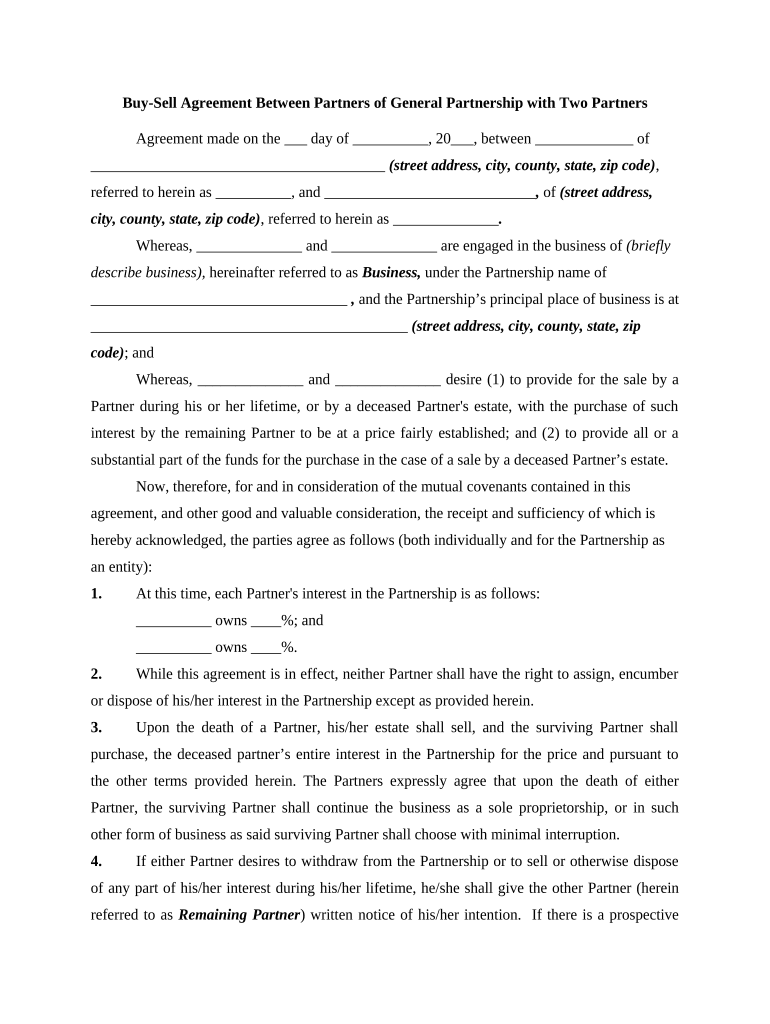
A Buy Agreement is a written contract that records the terms under which one party agrees to purchase goods, assets, or real property from another. It identifies the parties, describes the item or property, states the purchase price and payment terms, and sets conditions such as inspection, financing, and closing. For real property, it commonly includes title and closing provisions; for business or asset purchases it describes included inventory, liabilities, and any intellectual property transfer. The document establishes enforceable obligations and allocates risk between buyer and seller.

Why a clear Buy Agreement matters

A precise Buy Agreement reduces ambiguity about price, scope, and timing, which lowers dispute risk, clarifies remedies, and preserves evidence for enforcement under contract law and applicable statutes such as the ESIGN Act and state UETA rules.

Why a clear Buy Agreement matters

Who commonly prepares and signs Buy Agreements

Buy Agreements are used by parties across transactions: brokers, buyers, sellers, lenders, and closing agents all participate in preparing or approving the contract.

  • Real estate brokers and agents coordinating offer terms and disclosures with clients.
  • Individual or corporate buyers and sellers negotiating price, contingencies, and closing logistics.
  • Lenders, escrow officers, and title agents reviewing financing, title, and recording conditions.

Each participant has different responsibilities: brokers advise, buyers negotiate protections, and title/escrow manage closing and recording steps.

Core sections every professional Buy Agreement should include

A professional Buy Agreement organizes material terms so each party understands obligations, deadlines, and remedies. Clear sections reduce negotiation friction and support enforceability in court or arbitration.

Parties

Identify full legal names and entity types for buyer and seller, including contact and mailing addresses; errors can void notices.
Property Description

State a precise description of the goods or real property, including legal description for real estate and serial numbers or schedules for assets.

Purchase Price

Specify the exact dollar amount, deposit amount, payment schedule, and any escrow instructions for earnest money or down payment.

Contingencies

List conditions precedent such as inspections, title review, financing approval, and appraisal requirements with clear deadlines.

Closing Terms

Describe closing date, location, prorations, delivery of deed or bill of sale, and responsibility for closing costs.

Representations

Include seller and buyer representations, warranties, indemnities, and any survival period for claims after closing.

Step-by-step: completing a Buy Agreement

Follow these sequential steps to prepare, execute, and record a Buy Agreement efficiently while preserving legal certainty.

  • 01
    Draft: Assemble parties, description, price, and key terms in a single document.
  • 02
    Review: Verify title, liens, financing conditions, and required disclosures.
  • 03
    Negotiate: Confirm contingencies, deadlines, and responsibility for closing costs.
  • 04
    Execute: Sign in authorized form, obtain notarization if required, and distribute final copies.

Typical electronic signing workflow for a Buy Agreement

Modern eSignature workflows follow a predictable sequence that preserves an audit trail, supports remote signing, and integrates with storage and closing systems.

  • Upload: Prepare the finalized PDF or DOCX with all exhibits attached.
  • Place Fields: Insert signature, initials, date, and conditional fields where required.
  • Send to Signers: Add signer emails, set authentication, and define signing order.
  • Track: Monitor completion, send reminders, and capture the certificate of completion.

Key workflow settings to configure before sending

Configure these core settings to ensure proper signer authentication, routing, and record retention for the Buy Agreement.

Field Configuration
Signature Order Sequential or parallel
Authentication Email link, SMS code, or advanced KBA
Reminders Automated reminders and expiry
Storage Save signed PDF to cloud storage

Technical considerations for digital completion and integrations

Confirm that the chosen eSignature platform supports required authentication, storage, and integrations before distributing the Buy Agreement.

  • Integrations: Salesforce, NetSuite, Google Workspace integration
  • File Types: PDF, DOCX, and fillable forms supported
  • Security: TLS in transit, AES-256 at rest

Common timeframes and deadline types in a Buy Agreement

Buy Agreements include several deadline categories; list them clearly to avoid missed contingencies or closing delays.

Inspection Period Deadline:

Typically 7–14 days from acceptance for inspections and repairs.

Financing Contingency Deadline:

Set a firm date for loan commitment or credit approval.

Earnest Money Deposit Date:

Specify when deposit must be transferred into escrow.

Closing Date:

Fixed calendar date for transfer and funding.

Recording Deadline:

Record deed or transfer within agreed days after closing.

Frequent mistakes when preparing a Buy Agreement

  • Using imprecise descriptions for property or goods that leave room for later disputes or mistaken identity of the item.
  • Failing to attach or reference essential exhibits such as inspection reports, title commitments, or equipment schedules.
  • Omitting exact payment mechanics or escrow instructions, causing disputes about deposit timing or release conditions.
  • Neglecting statutory or lender-required language, which can delay financing or make terms unenforceable.

Potential legal and financial consequences of errors

Unenforceable Terms: Ambiguous clauses can be voided by courts
Deposit Loss: Failure to meet contingencies may forfeit earnest money
Tax Exposure: Incorrect reporting or missing TINs can trigger withholding
Title Problems: Undisclosed liens may obstruct closing
Late Recording: Delays can impair priority or tax status
Regulatory Fines: Privacy or disclosure breaches may incur penalties

Common eSignature vendor pricing and capability snapshot

Use this high-level vendor table to compare entry pricing and key capabilities relevant to executing Buy Agreements electronically.

signNow DocuSign Adobe Sign PandaDoc HelloSign
Starting Price $8/user/mo $15/user/mo $14/user/mo $19/user/mo $15/user/mo
Free Trial 7-day free trial Varies by vendor Varies by vendor Varies by vendor Varies by vendor
Bulk Send Yes Yes Yes Yes Varies
Audit Trail Yes Yes Yes Yes Yes
HIPAA Compliant Yes Yes Yes No No

Real-world examples of Buy Agreement execution

These brief examples show how actual organizations used electronic workflows to complete purchase agreements while preserving compliance and auditability.

Optica Ventures LLC

Optica used digital signing to coordinate remote buyers and sellers with complex closing schedules.

  • Centralized routing cut turnaround time significantly.
  • "The interface is simple and easy-to-use for our team; more importantly, it is just as easy for our customers."

Martin Properties

A small brokerage needed mobile execution for on-site offers.

  • Staff executed deals from phone or tablet.
  • "I can process and execute all of these documents online with 100% compliance and built-in security. Whether on mobile or working offline, I can get forms back to their necessary parties efficiently."

Profiles of common signers and approvers

Real Estate Attorney

A licensed attorney reviews title, negotiates representations, and prepares closing documents. They often confirm deed language and escrow instructions, and advise on state-specific notary or witness requirements and tax consequences.

Escrow / Title Officer

The title officer coordinates closing, verifies payoff demands, records the deed, and ensures escrow disbursements. They manage release of funds and provide the final closing statement to buyer and seller.

Practical tips for accurate and efficient Buy Agreements

Apply these practical measures to reduce errors, speed closing, and limit legal exposure when preparing or executing Buy Agreements.

Verify Legal Names and Titles
Confirm that signatories have authority to bind their entity by checking formation records or a corporate resolution. Ask for government ID for individuals and an executed authorization for corporate signers to avoid later challenges to authority.
Use Clear Contingency Dates
Specify exact calendar dates or counted business days for inspections, financing, and closing deadlines. Clear deadlines reduce disputes, allow automated reminders, and protect deposits from forfeiture due to ambiguous timing.
Attach Key Exhibits
Include inspection reports, title commitments, equipment lists, and any negotiated addenda as numbered exhibits. Refer to exhibits within the body of the agreement so that missing attachments cannot be claimed as intentional omissions.
Preserve an Audit Trail
Use an eSignature workflow that captures signer email, IP address, timestamps, and a certificate of completion. Maintain signed PDF/A copies and secure backups to support enforcement and regulatory audits.

Common questions about using and validating a Buy Agreement

Answers cover enforceability, notarization, digital signing, signer authority, revocation, and record retention to help resolve frequent issues.


Need help? Contact support

be ready to get more
Join over 28 million airSlate SignNow users