Establishing secure connection…Loading editor…Preparing document…

Change of Trustee Form

This template is fully customizable. Edit the text, fill out the fields, and send it for signature. Give it a try!
Change of Trustee Form

What a Change of Trustee Form Is

A Change of Trustee Form is a legal instrument used to document the removal, resignation, or replacement of a trustee and the appointment of a successor under an existing trust. The form identifies the trust, records the outgoing trustee’s resignation or removal, confirms the successor trustee’s acceptance, and specifies any limits or continuations of trustee powers. It usually includes the trust name and date, trustee names, effective date, signature blocks, and a notary or witness block where state law or institutional policy requires authentication.

Why Completing This Form Matters

Using a Change of Trustee Form clarifies authority, preserves fiduciary continuity, and documents consent of successor trustees. Complete, signed, and properly notarized forms reduce administrative delays, minimize disputes, and provide a clear record for financial institutions and courts.

Why Completing This Form Matters

Who Prepares, Signs, and Receives the Form

Trustees and successor trustees commonly prepare or sign the Change of Trustee Form, often with counsel and relevant institutions present.

  • Current trustees — document resignation or removal and confirm transfer of powers to successor trustee.
  • Successor trustees — accept appointment, state qualifications, and provide identification and acceptance signature.
  • Trust attorneys and banks — verify authority, update records, and request notarized or witnessed execution.

Primary Signer Roles

Current Trustee

The current trustee is the fiduciary relinquishing authority. They must sign the form to document resignation or removal, disclose any outstanding actions, and provide a clear transfer of account access and asset control to avoid gaps in fiduciary duties or liability exposure.

Successor Trustee

The successor trustee accepts appointment and assumes fiduciary obligations. Their narrative should include consent to serve, any required qualifications or bond information, contact details, and a statement accepting the powers and responsibilities specified in the trust instrument to ensure institutional acceptance.

Security and Compliance Snapshot

Encryption in transit: TLS 1.2/1.3 protects data in transit
Encryption at rest: AES-256 encryption protects stored documents
Compliance certifications: SOC 2 Type II, ISO 27001 certified
HIPAA support: BAA available for protected health information
Audit trails: Detailed timestamp, IP, and action logs
21 CFR Part 11: Controls and logs for FDA-regulated records

Step-by-Step: Completing the Form

Follow these sequential steps to prepare, execute, and distribute a Change of Trustee Form efficiently.

  • 01
    Prepare: Populate trust details, outgoing and successor trustee information.
  • 02
    Sign: Outgoing and successor trustees sign and date the form.
  • 03
    Notarize: Obtain notarization or RON acknowledgement if state or institution requires it.
  • 04
    Distribute: Send signed copies to banks, title companies, custodians, and beneficiaries.

Configuring a Digital Signing Workflow

Configure your digital workflow to collect signatures, authenticate signers, and retain the completed Change of Trustee Form with audit trail and secure storage.

Field Configuration
Signer Authentication Email link with optional SMS code
Routing Order Sequential routing to successor trustee and counsel
Notary Support Enable RON or local notary options
Retention Store signed PDF and audit trail securely

Platform Capabilities to Look For

Digital platforms should support PDF/DOCX uploads, audit trails, conditional fields, and integrations with custody or title systems for a seamless Change of Trustee process.

  • Integrations: Salesforce, NetSuite, Google Workspace supported
  • Supported Formats: PDF, Word DOCX, HTML, Excel
  • Authentication: Email link, SMS code, ID verification

How Electronic Processing Typically Works

Typical steps show how to prepare, sign, notarize, and distribute a Change of Trustee Form using digital tools and recordkeeping.

  • Prepare: Complete trust details, successor info, and acceptance clause
  • Sign: Outgoing and incoming trustees sign and date
  • Notarize: Notary or RON completes acknowledgement where required
  • Distribute: Send final signed copy to banks, title, and beneficiaries

Key Elements Every Professional Form Should Include

A professional Change of Trustee Form groups essential elements—trust identification, successor acceptance, notarization, powers transfer, asset schedules, and recording instructions—to ensure clear authority and institutional acceptance.

Trust ID

Include the trust name, original trust date, and any tax identifier so institutions can reliably match the amendment to the correct trust instrument and avoid misapplication.
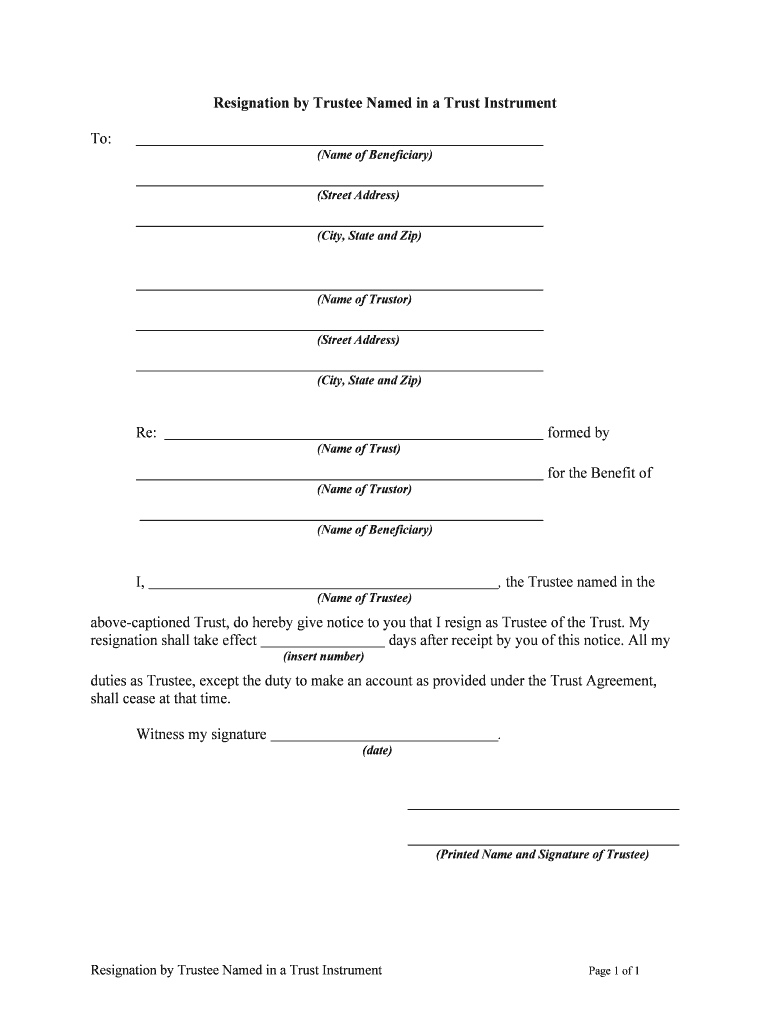
Resignation Clause

Explicit outgoing trustee resignation language should note the effective date, any retained liabilities, and instructions for transferring records to prevent post-resignation disputes.

Acceptance Clause

A signed acceptance by the successor trustee affirms consent to serve, acknowledges fiduciary duties, and lists any conditions or limits on authority to reduce future challenges.

Notary Block

Provide space for notary acknowledgement or RON certificate including jurisdiction, seal, and commission expiration to satisfy institutional and recorder requirements.

Asset Schedule

Attach or reference a schedule of accounts, real property, and titled assets to guide transfers and prevent omission of assets during operational updates.

Recording Guidance

When changes affect real property title, include recording instructions and county recorder details so deeds or conveyances are recorded properly and title reflects the trustee change.

Download Options and Supporting Documents

Provide multiple export formats and include commonly required supporting documents alongside the Change of Trustee Form to simplify institutional acceptance and recordkeeping.

Export Formats

Offer signed documents as PDF/A and Word DOCX; PDF/A is preferred for long-term archiving and compatibility with title companies and courts.

Supporting Documents

Attach trust agreement excerpts, prior trustee resignation, EIN documentation, and corporate resolutions for entity trustees to substantiate authority during institutional review.

Record Copies

Provide recording-ready PDF with notarization block for county recorders or title companies when a deed or conveyance is required.

Audit Evidence

Include a certificate of completion with timestamps, signer IPs, and authentication method to substantiate the signing process in disputes.

Typical Timing and Deadlines to Track

Key deadlines for execution, recording, and notification following a trustee change vary by asset type and state.

Effective Date of Change:

As stated on form; controls when successor assumes duties

Acceptance Deadline:

Successor should sign promptly; within 30 days recommended

Notarization Timing:

Obtain notarization before distribution or recording

Recordation for Real Property:

Record deed within county-specific timeframe to update title

Institution Notification Window:

Notify banks and custodians within 30 days of effective date

Common Preparation Mistakes to Avoid

  • Using inconsistent names or abbreviations between trustee identification and government ID causes banks and custodians to reject the change and may trigger identity verification delays.
  • Failing to obtain the successor trustee’s written acceptance or signature creates ambiguity about authority and risks continued actions by the outgoing trustee.
  • Neglecting to notarize or witness the form where required leads to rejection by title companies or courts and can impede property transfers.
  • Not updating asset titles and account registrations after trustee change produces operational friction and potential tax reporting errors for beneficiaries.

Potential Consequences of Incorrect or Incomplete Forms

Invalid transfer: May be void without proper acceptance
Fiduciary breach: Liability for improper asset management
Tax exposure: Delayed reporting or withholding obligations
Property transfer defects: Unrecorded changes block title updates
Probate complications: Trust disputes can lead to litigation
Regulatory rejection: Missing notarization may invalidate filing

Real-World Examples of Electronic Trustee Changes

Organizations use eSigning and RON to streamline trust administration, reduce travel, and maintain compliant records during trustee transitions.

Martin Properties

A property management firm digitized trustee-change paperwork to avoid in-person signings and speed title updates.

  • Used remote notarization for deeds and accounts.
  • "I can process and execute all of these documents online with 100% compliance and built-in security. Whether on mobile or working offline, I can get forms back to their necessary parties efficiently."

Fertility Centers of Illinois

A healthcare practice integrated eSigning into administrative workflows to accelerate trustee appointment documentation while protecting sensitive information.

  • Integrated with EMR workflows under HIPAA BAA.
  • "The airSlate SignNow team has been exceptional, responsive, the API has been great, and we're extremely happy that we chose airSlate SignNow as a company."

eSignature Vendor Pricing and Feature Snapshot

Comparative pricing and capability overview for common eSignature vendors. signNow is listed first; verify vendor plans for feature limits and billing terms before purchase.

signNow DocuSign Adobe Sign PandaDoc HelloSign
Starting Price $8/user/mo $15/user/mo $14/user/mo $19/user/mo $15/user/mo
Free Trial 7-day free trial, no credit card required Varies by vendor Varies by vendor Varies by vendor Varies by vendor
Bulk Send Yes (Business Premium) Yes Yes Yes Varies
Audit Trail Yes Yes Yes Yes Yes
HIPAA Compliant Yes Yes Yes No No
Envelope Cap No cap 100 envelopes/user/year Varies Varies Varies

Frequently Asked Questions

Answers to common legal, notarization, and practical questions about preparing and executing a Change of Trustee Form.


Need help? Contact support

be ready to get more
Join over 28 million airSlate SignNow users