Establishing secure connection…Loading editor…Preparing document…

Virginia Motion to Dismiss Chapter 13 Bankruptcy Case

This template is fully customizable. Edit the text, fill out the fields, and send it for signature. Give it a try!
Virginia Motion to Dismiss Chapter 13 Bankruptcy Case

What the Virginia Motion to Dismiss Chapter 13 Bankruptcy Case Is

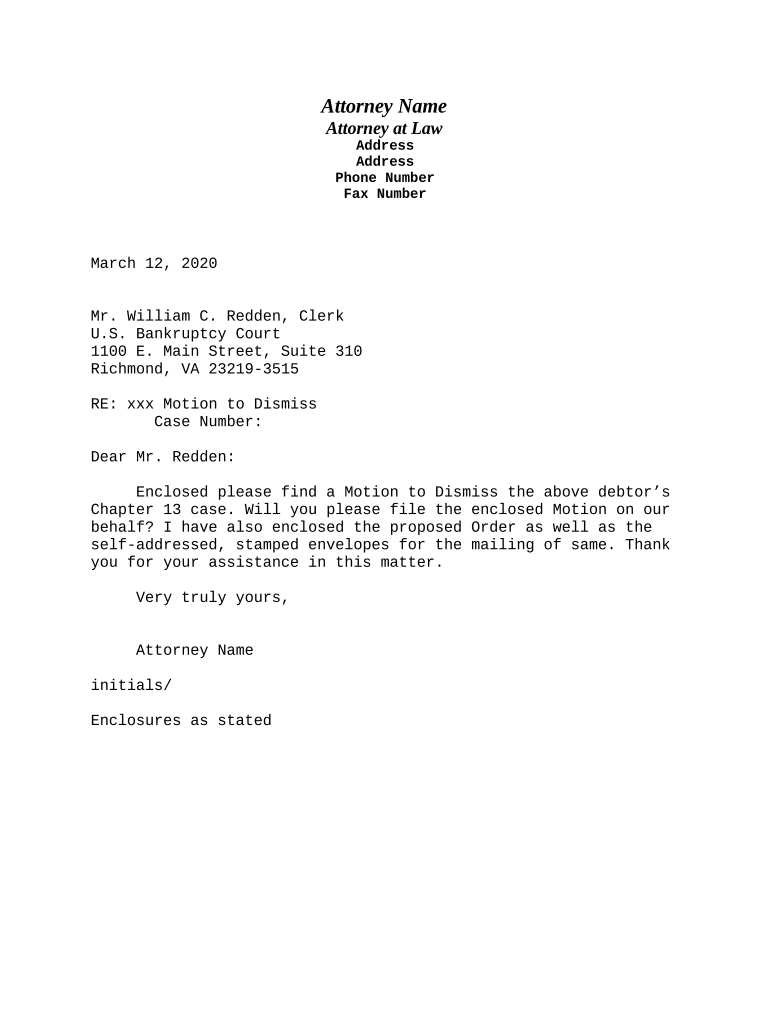
A Virginia Motion to Dismiss Chapter 13 Bankruptcy Case is a written request filed in the bankruptcy court asking the court to end a Chapter 13 case before plan completion. The motion identifies statutory or procedural grounds for dismissal, summarizes relevant facts, cites the legal basis for relief, and proposes an order. In Virginia practice the pleading must also comply with the Federal Rules of Bankruptcy Procedure, local bankruptcy court rules, and proper service on the trustee, creditors, and the U.S. Trustee. Drafting should be precise and supported by evidence to withstand procedural review and potential objections.

Why a Motion to Dismiss Matters in Chapter 13 Practice

A motion to dismiss resolves whether the debtor’s plan or conduct justifies ending Chapter 13 protection and clarifies parties’ rights; it preserves creditor remedies and helps courts manage case administration efficiently.

Why a Motion to Dismiss Matters in Chapter 13 Practice

Who Typically Prepares and Files This Motion

This motion is usually prepared by parties with standing and knowledge of bankruptcy rules; it must identify movant status and service recipients before filing.

  • Creditors and secured lenders who assert plan defaults or lack of feasibility
  • Chapter 13 trustees who move to dismiss for failure to timely fund a plan or to prosecute the case
  • Debtors who request dismissal voluntarily to stop plan payments or pursue alternatives

Attorneys represent most parties in contested motions; pro se debtors may file but should follow local rules closely and confirm service and notice requirements.

Core Parts of a Professional Motion to Dismiss

A well-structured motion makes the court’s task straightforward: concise facts, clear legal grounds, supporting evidence, and a proposed order tailored to the requested relief.

Caption

Complete case caption with court, district, case number, and party names to ensure correct docket placement and service routing.
Statement of Facts

Clear, chronological facts describing plan performance, missed payments, creditor actions, or other conduct supporting dismissal.

Legal Grounds

Cite the statutory authority for dismissal, including 11 U.S.C. §1307 and any applicable bankruptcy rules or local authorities.

Evidence

Attach declarations, payment histories, trustee reports, and exhibits that substantiate the factual assertions in the motion.

Proposed Order

Provide a short, specific proposed order that sets the relief, effective date, and any directions to the clerk or trustee.

Service Certificate

A certificate of service listing served parties, method, and date to demonstrate compliance with FRBP and local rules.

Step-by-Step: Preparing and Filing the Motion

Follow a sequential approach to reduce defects: confirm case data, draft and attach evidence, serve parties, then file with required notices.

  • 01
    Confirm Docket: Verify case number, chapter, and party names on the court docket before drafting.
  • 02
    Draft Motion: Prepare caption, facts, legal grounds, exhibits, and proposed order in editable PDF or Word.
  • 03
    Serve Parties: Serve the trustee, U.S. Trustee, debtor’s counsel, and creditors in accordance with FRBP and local rules.
  • 04
    File with Court: Upload the motion and certificate of service to the court’s CM/ECF system or file per local procedures.

How to Configure an Online Workflow for This Motion

When using an online editor and eSignature tool, set up fields, signer roles, authentication, and attachments to mirror court requirements.

Field Configuration
Template Name Use a descriptive name like 'Chapter 13 Dismissal Motion' for version control.
Signer Roles Define roles: Movant/Attorney, Trustee/Recipient; set signing order where needed.
Authentication Require email verification or SMS code for signer attribution and audit trail.
Attach Exhibits Include payment records, trustee reports, and declarations as separate, clearly labeled PDFs.

Digital Signing and eSubmission Considerations

Courts accept signed PDFs produced by eSignature platforms when local rules and CM/ECF requirements are met; ensure format and audit data are retained.

  • File Format: Use PDF/PDF-A for filings to preserve appearance and metadata.
  • Integrations: Store signed PDFs in cloud systems like Box or Google Drive for secure retrieval.
  • Authentication: Use verifiable signer authentication (email, SMS) and preserve audit trails.

Generate a complete signed PDF and retain the audit trail; upload the signed document to CM/ECF per the local bankruptcy court's e-filing requirements and attach a service certificate.

Where to File and Who Must Receive the Motion

Correct filing and service routes are essential; follow the court’s CM/ECF rules and local notice provisions to ensure due process and avoid delays.

  • Bankruptcy Court: File electronically through the district’s CM/ECF portal under the correct event code.
  • Chapter 13 Trustee: Serve the trustee by CM/ECF or the method required in the trustee’s local rules.
  • U.S. Trustee: Provide notice to the U.S. Trustee where required by statute or local rule.
  • Affected Creditors: Serve creditors listed on the debtor’s matrix, observing service methods and timing set by FRBP.

Timing and Typical Deadlines to Watch

Motions follow both federal bankruptcy deadlines and local notice periods; verify the district's calendar for hearing scheduling and objection windows before filing.

Notice Period:

Objection periods commonly range from 14 to 21 days depending on local rules.

Service Deadline:

Serve all required parties in time to meet the court’s filing and notice requirements.

Hearing Scheduling:

Hearing dates are set per court calendar after filing and notice; expect at least a two-week lead time.

Response Time:

Opposing parties typically have the stated objection period to respond; check local rules for exact timing.

Post-Hearing Orders:

The court may issue a written order following the hearing; monitor the docket for entry and further deadlines.

Key Milestones from Draft to Docket Resolution

Expect a short sequence: prepare, serve, file, and appear for hearing; each milestone affects whether the court will grant dismissal.

01

Draft and Attach Exhibits

Assemble declarations, trustee reports, and payment history to support factual assertions.

02

Serve Parties

Deliver the motion per FRBP and local rule service methods to all required recipients.

03

File via CM/ECF

Upload the motion, certificate of service, and exhibits to the court’s e-filing system.

04

Attend Hearing

Be prepared to argue factual and legal grounds; the court may rule at hearing or take matter under advisement.

Common Mistakes to Avoid When Preparing the Motion

  • Failing to verify the case number or party names before filing, causing misdocketing or service errors.
  • Omitting a certificate of service or listing incorrect recipients, which can lead to continuance or denial.
  • Relying on unsupported allegations without attaching declarations or trustee reports to substantiate claims.
  • Misstating statutory grounds or citing inapplicable authority instead of 11 U.S.C. §1307 where appropriate.

Consequences and Legal Risks of an Improper Motion

Sanctions: Court may impose sanctions for frivolous or unsupported filings (see Fed. R. Bankr. P. 9011).
Waived Arguments: Procedural defects can cause substantive arguments to be waived or disregarded.
Delay: Incorrect service or missing exhibits often lead to continuances and increased costs.
Denial of Relief: Insufficient factual support commonly results in denial of the motion to dismiss.
Adverse Orders: Court may enter alternative relief such as conversion rather than dismissal.
Reputational Risk: Repeated deficient filings can harm credibility with the court and opposing parties.

Who Can Sign the Motion and Affirmations

Movant — Attorney

The attorney of record signs on behalf of an institutional or creditor movant; the signature certifies compliance with local rules and professional responsibility obligations and should include bar number and contact information.

Individual Movant — Debtor/Creditor

A debtor or creditor may sign if unrepresented. The signer must provide a declaration under penalty of perjury where factual statements are made and ensure proper service is completed.

Supporting Documents to Attach with the Motion

Attach clear, labeled exhibits. Proper supporting documents shorten judicial review and reduce opportunities for factual dispute.

Trustee Report

Include the most recent trustee account or report showing plan payment status and arrearages for the court’s factual context.

Payment Records

Attach bank statements, payment histories, or other documents that verify missed or late plan payments.

Declarations

A sworn declaration from the movant or a custodian of records summarizing exhibits and evidentiary chain is critical.

Proposed Order

Provide a concise proposed order for the judge to adopt if the court grants the requested relief.

Practical Examples of Digital Document Use in Legal Workflows

These concise examples show how digital signing and templates can simplify complex legal filings and internal approvals.

Optica Ventures LLC

A small legal operations team standardized pleading templates to ensure consistent captions and service lists.

  • They used digital signatures for attorney approvals.
  • Standardized files cut administrative review time, reduced versioning errors, and made final PDF bundles ready for CM/ECF upload.

Martin Properties

A property management firm consolidated mortgage-related pleadings into a single template to track defaults.

  • They used electronic signers for internal confirmations.
  • The process improved recordkeeping for creditor correspondence and ensured exhibits were attached in the correct order for filing.

Essential Case and Filing Information to Include

Case Number: Exact docket number and chapter to place the motion correctly.
Court Name: Full bankruptcy court name and division for jurisdiction clarity.
Debtor Identifiers: Full legal name and last four of SSN or identifier where required.
Movant Contact: Movant or counsel name, address, phone, and email for service.
Trustee Name: Chapter 13 trustee’s name to ensure proper service.
Proposed Order: Attach a clean, editable proposed order for the judge.

Practical Tips for Accurate and Efficient Completion

Follow these practical checks to reduce the chance of procedural defects and to improve the motion’s clarity for the court and opposing parties.

Verify Docket Entries
Cross-check the case number, party names, and recent docket activity to ensure the motion references current facts and prior orders.
Use Declarations
Attach concise, dated declarations that authenticate exhibits and provide a sworn factual basis for the motion.
Keep Exhibits Organized
Label exhibits (Exhibit A, B, etc.), reference them in the motion, and attach a consolidated exhibit index.
Preserve Audit Trails
If using eSignature, retain the full audit trail (timestamps, IP, authentication) in case the court requires verification.

eSignature Vendor Pricing and Compliance Snapshot

Typical eSignature vendor pricing and feature availability can help counsel or administrators choose a platform for internal signing and document preparation; signNow appears first for comparison.

signNow DocuSign Adobe Sign PandaDoc HelloSign
Starting Price $8/user/mo $15/user/mo $14/user/mo $19/user/mo $15/user/mo
Free Trial 7-day free trial Varies by vendor Varies by vendor Varies by vendor Varies by vendor
Bulk Send Yes Yes Yes Yes No
Audit Trail Yes Yes Yes Yes Yes
HIPAA Compliant Yes Yes Yes No No

Frequently Asked Questions About Motions to Dismiss in Chapter 13

Common procedural and eSignature questions are answered below to address issues that most filers encounter when preparing a motion to dismiss.


Need help? Contact support

be ready to get more
Join over 28 million airSlate SignNow users