Establishing secure connection…Loading editor…Preparing document…

Complaint for Bad Faith

This template is fully customizable. Edit the text, fill out the fields, and send it for signature. Give it a try!
Complaint for Bad Faith

What a Complaint for Bad Faith Is and When it’s Used

A Complaint for Bad Faith is a civil pleading filed when a party alleges that an insurer, contracting party, or other counterparty intentionally or recklessly failed to honor duties of good faith and fair dealing. The document frames factual allegations, identifies legal claims (statutory and common law), quantifies alleged damages, and requests relief from the court. It is drafted to satisfy pleading standards under applicable state or federal rules and begins the litigation timeline, triggering service, discovery, and motion practice. Precise facts, dates, and supporting exhibits strengthen the complaint’s procedural and substantive footing.

Why Filing a Proper Complaint for Bad Faith Matters

A well-drafted complaint defines the legal theory, preserves claims and remedies, notifies the defendant of alleged misconduct, and establishes a focused discovery plan. It positions the plaintiff for interlocutory relief, settlement discussions, or trial and reduces the risk of procedural dismissal or sanctions when factual specificity and statutory citations are present.

Why Filing a Proper Complaint for Bad Faith Matters

Who Typically Prepares and Uses This Complaint

Parties must confirm local court formatting and service rules before filing; many jurisdictions require electronic case filing and specific signature blocks or verification language.

  • Plaintiffs and insureds asserting damages from insurer misconduct or contractual bad faith.
  • Civil litigators and defense counsel who respond, move, or oppose discovery requests.
  • Claims departments and in-house counsel preserving rights prior to settlement talks.

Representative Users and Signatories

Plaintiff Attorney

A licensed civil litigator who drafts allegations, cites statutes and case law, signs the complaint and files with the court, and usually verifies the complaint under oath when required by local rules.

Policyholder Client

The insured or injured party whose factual account and documents (policies, correspondence, claim files) provide the evidentiary basis; this person reviews facts, signs verification statements, and supplies exhibits supporting damages.

Security, Privacy, and Compliance Considerations

Encryption: TLS 1.2/1.3 and AES-256
Audit Trail: Detailed signing metadata
HIPAA: BAA required for PHI
ESIGN / UETA: Federal and state compliance
21 CFR Part 11: Support for FDA-regulated records
SOC 2 / ISO: SOC 2 Type II and ISO 27001

Key Risks and Potential Consequences of Errors

Dismissal Risk: Failure to plead specifics
Sanctions: For frivolous allegations
Statute Bar: Missed limitations period
Evidence Loss: Poor preservation practices
Service Defect: Invalid service of process
Confidentiality Breach: Unredacted PHI disclosure

Common Preparation Pitfalls to Avoid

  • Vague factual allegations lacking dates and specific acts that prevent meaningful discovery or defeat a motion to dismiss.
  • Failing to attach or reference key documentary evidence, such as policy language, claim correspondence, or denial letters.
  • Incorrect caption or party names that lead to service problems or administrative rejection by the court clerk.
  • Overlooking statutory notice prerequisites or administrative claim procedures that bar or delay a court action.

Step-by-Step: Drafting and Filing the Complaint

Follow a logical sequence from facts to filing: assemble evidence, draft allegations with dates and actors, calculate damages, comply with venue rules, and file using the court’s e-filing system.

  • 01
    Assemble Records: Gather policy, claim file, and communications.
  • 02
    Draft Claims: Plead bad faith elements with specificity.
  • 03
    Attach Exhibits: Include denial letters and policy excerpts.
  • 04
    File & Serve: E-file per local rules and effect service.

Where the Complaint Goes and What Happens Next

Filing the complaint initiates the civil case: the court issues a case number, the defendant is served, and the litigation calendar begins with deadlines for response and discovery.

  • Clerk’s Office: Receives filing and assigns case number.
  • Service: Defendant must be properly served with complaint.
  • Response: Defendant answers or moves to dismiss.
  • Discovery: Parties exchange documents and depositions.

Essential Sections to Include in a Professional Complaint for Bad Faith

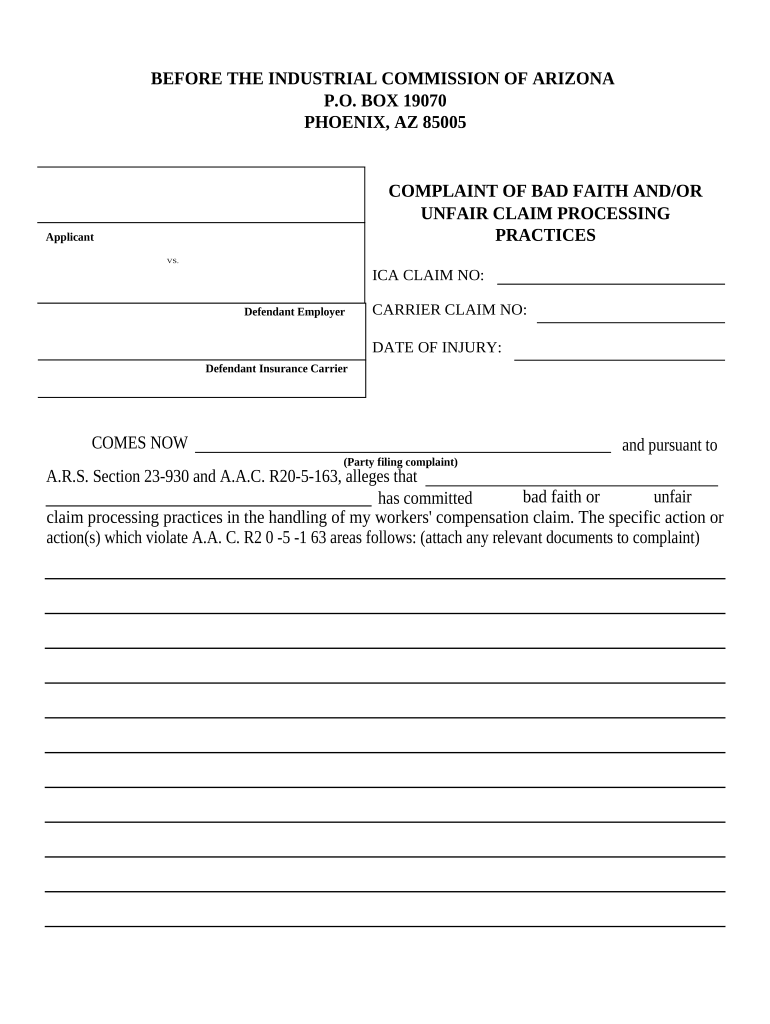
A complete complaint blends procedural formality with detailed factual narrative. Include a proper caption, jurisdictional statements, clear factual allegations, statutory and common-law counts, a damages schedule, and a specific demand for relief.

Caption

Court name, party names, case number placeholder and correct venue to avoid clerical rejection and ensure proper jurisdictional alignment.
Jurisdiction

Short statement grounding subject-matter and personal jurisdiction, including statutory or contractual bases for venue and applicable monetary thresholds.

Factual Allegations

Chronological, date-stamped narrative describing defendant actions, communications, and internal claim handling that constitute bad faith.

Causes of Action

Numbered counts for bad faith and related claims (e.g., breach of contract, statutory penalties) with elements stated clearly.

Damages

Itemized compensatory, consequential, statutory, and punitive damages as permitted; include any attorney’s fees or costs requested.

Prayer for Relief

Specific remedies sought, alternative relief formulations, and a demand for jury trial if applicable under local rules.

Typical Digital Workflow Settings for Online Completion

When completing the complaint electronically, choose settings that preserve signature audit trails, attach exhibits as numbered PDFs, and enforce signer authentication.

Field Configuration
Signature Block Require signer name, bar ID, and date field
Exhibit Attachments Attach as labeled PDF annexes
Authentication Email + optional SMS code for signers
Audit Trail Capture IP, timestamp, and actions

Digital Filing and eSubmission Requirements

Maintain a preserved copy of the signed complaint and the signing audit trail; verify whether the court accepts e-signed filings or requires counsel’s wet signature on any attachments.

  • Accepted Formats: PDF/A and court-specified PDFs
  • Authentication: Court may require e-filing account
  • Integrations: Works with case management systems

Key Deadlines and Timing to Track

Timely filing and service are critical. Track statute of limitations, federal service periods, and discovery deadlines to avoid forfeiture of claims or procedural sanctions.

Federal Service Period:

FRCP 4(m): serve within 90 days of filing

Statute of Limitations:

Typically 3–6 years depending on tort or contract; check state code

Initial Disclosures:

FRCP 26(a)(1) sequence begins early in litigation

Preservation Notice:

Issue litigation hold immediately upon counsel engagement

Local Filing Rules:

Some courts require a contemporaneous civil cover sheet

Sample Use Cases and Typical Complaint Scenarios

Practical examples show how factual narratives convert to pleading elements and evidentiary exhibits in common bad-faith claims.

Insurance Denial Example

Plaintiff alleges insurer denied a covered claim after receiving proof of loss

  • insurer failed to investigate over six months
  • complaint attaches denial letter, claim file excerpts, and itemized damages to support punitive and compensatory relief.

Contractual Bad Faith Example

Business alleges counterparty intentionally withheld payment and obstructed remedies

  • patterns show repeated breaches and refusal to cure
  • complaint includes contract, correspondence, and calculated lost-profits schedule.

Practical Tips for Accurate, Efficient Complaint Preparation

Apply consistent formatting, preserve metadata, and validate all names, dates, and exhibits before filing to reduce rejections and avoid delay.

Fact Checklist
Create a chronological checklist of events and supporting documents to ensure every allegation is corroborated by a numbered exhibit.
Proofread & Verify
Confirm party names, venue, and statutory citations; clerical errors are a common cause of administrative rejection.
Preserve Evidence
Send an immediate litigation hold and collect original electronic files with metadata for potential spoliation concerns.
E-Filing Prep
Convert exhibits to court-acceptable PDF/A, compress files per local limits, and include a separate exhibit index.

How a Bad Faith Complaint Differs from Related Pleadings

Compare the Complaint for Bad Faith with common alternative pleadings to ensure you select the correct cause of action and evidence plan.

Criteria Bad Faith Breach of Contract
Primary Focus insurer misconduct contract terms
Remedies punitive/statutory compensatory only
Proof Needed pattern/intent evidence contract breach proof
Typical Evidence claims file signed agreement

Frequently Asked Questions About the Complaint for Bad Faith

Answers to common questions about drafting, filing, signing, and preserving a Complaint for Bad Faith in U.S. civil practice.


Need help? Contact support

be ready to get more
Join over 28 million airSlate SignNow users