Establishing secure connection…Loading editor…Preparing document…

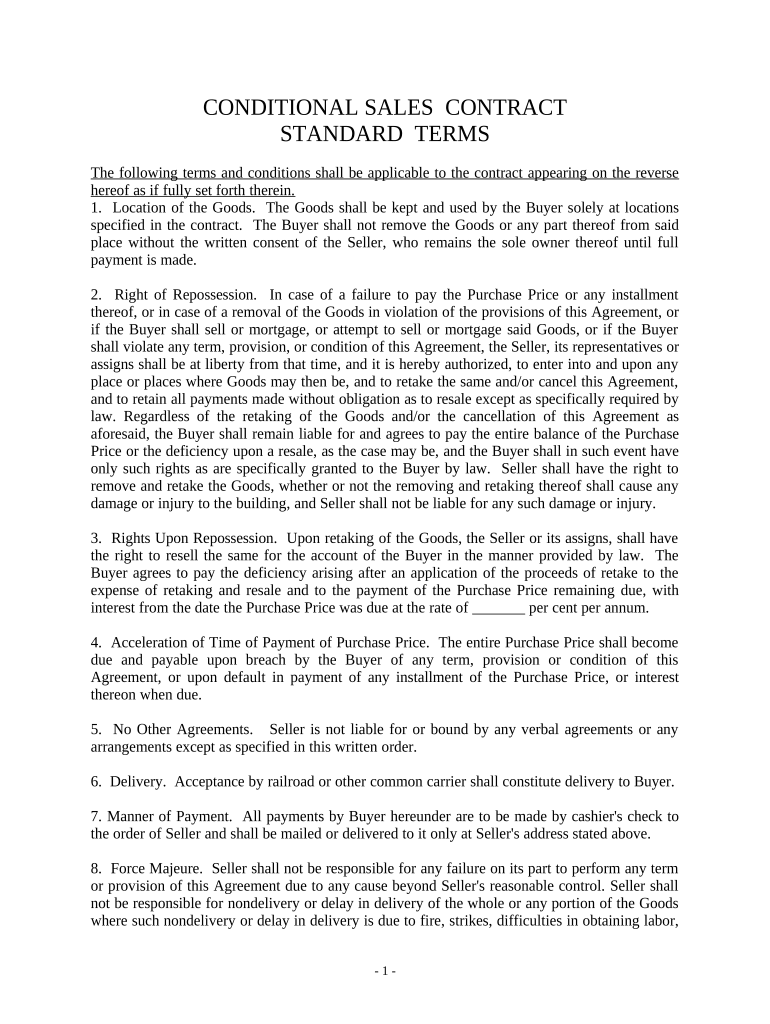
Conditional Contract

This template is fully customizable. Edit the text, fill out the fields, and send it for signature. Give it a try!
Conditional Contract

What a Conditional Contract Is and when it applies

A Conditional Contract is a legally binding agreement whose obligations or performance are triggered, limited, or extinguished by one or more specified conditions. Commonly the contract will state a condition precedent (an event that must occur before duties arise) or a condition subsequent (an event that ends an existing obligation). Conditional Contracts are used across transactions where outcomes depend on financing, inspections, regulatory approvals, third-party consents, or the happening of a specific event. Properly drafted conditions reduce ambiguity about rights, timelines, and remedies if the stated contingencies are not satisfied or are waived.

Why using a clear Conditional Contract matters

A well-drafted Conditional Contract allocates risk, sets measurable triggers for performance, and helps parties avoid disputes by defining who must act, what must happen, and when obligations begin or end. Clear conditions also simplify compliance checks, permit conditional closing procedures, and preserve remedies if a contingency fails.

Why using a clear Conditional Contract matters

Who commonly prepares and signs Conditional Contracts

Parties should confirm authority to bind the organization, applicable signing rules, and any notarization or witness requirements before execution.

  • Real estate agents and buyers managing purchase contingencies such as inspections, appraisals, and loan approval timelines.
  • Lenders and corporate finance teams conditioning funding on due diligence, regulatory approvals, or collateral perfection.
  • General counsel and procurement teams placing performance obligations on receipt of permits, third-party approvals, or successful testing.

Essential elements to include in a professional Conditional Contract

A robust Conditional Contract groups clauses that define the condition, assign responsibility to satisfy it, and prescribe remedies and timelines to limit uncertainty and litigation risk.

Condition clause

Describe the triggering event precisely, including measurable standards, documentation required to prove satisfaction, and any deadlines for fulfillment or notice.
Parties and scope

Identify each contracting party clearly by legal name and capacity, and limit obligations to specified goods, services, property, or funds to avoid ambiguity about who must perform.

Timing and notices

Set explicit deadlines for satisfying conditions, provide notice procedures for performance or failure, and include cure periods where appropriate to reduce disputes.

Waiver and termination

State whether a party may waive conditions, how waivers must be documented, and the effects of non-satisfaction including termination, refund, or liquidated damages.

Representations

Include representations and warranties tied to the condition so a breach gives rise to remedies if a party misstates facts material to satisfaction.

Remedies and allocation

Specify remedies (rescission, specific performance, damages) and any limitations on liability, indemnities, or escrow arrangements for conditional funds.

Required factual and administrative details

Full legal names: Exact registered entity name
Effective date: MM/DD/YYYY format
Condition description: Precise, measurable trigger
Deadline(s): Dates and cure periods
Notice procedure: Delivery method and contact
Signature block: Delegate title and date

Step-by-step: complete and execute a Conditional Contract

Follow this sequence to prepare the contract, confirm contingencies, and obtain enforceable signatures.

  • 01
    Draft condition: Define the triggering event and required proof.
  • 02
    Assign responsibility: Specify which party must satisfy or waive the condition.
  • 03
    Set timelines: Add deadlines, cure periods, and notice rules.
  • 04
    Execute and retain: Obtain signatures and preserve the signed record.

Configure an online conditional workflow

Set up a digital workflow that tracks conditions, automates notices, and captures evidence of satisfaction or waiver.

Field Configuration
Condition Field Use a text area with attachment capability for proof
Deadline Field Date picker with calendar reminders
Notice Field Email + optional SMS routing
Approval Field Role-based signer with required checkbox

Where to send signed Conditional Contracts and how routing works

Knowing recipients and storage points ensures timely performance and preserves evidence of condition satisfaction.

  • Primary recipient: Counterparty and in-house counsel
  • Escrow agent: When funds depend on condition completion
  • Lender or insurer: For financing or policy conditions
  • Records system: Corporate repository or cloud storage

Digital signing and delivery considerations

Use a platform that meets applicable compliance requirements (ESIGN/UETA, HIPAA where relevant) and integrates with your document management or ERP systems for reliable retention and retrieval.

  • Authentication: Email, SMS, or stronger verification
  • Audit trail: Timestamp, IP, and action log
  • File formats: PDF or DOCX with attachments

Key timing rules to include and monitor

Setting explicit deadlines reduces uncertainty and helps parties track condition performance and expiry.

Condition satisfaction date:

Calendar date or interval triggering obligations

Waiver deadline:

Final date to waive unmet conditions

Cure period:

Time allowed to remedy a breach

Escrow release date:

When conditional funds will be distributed

Notice deadlines:

Time limits for delivering required notices

Typical lifecycle milestones for a Conditional Contract

Track milestones in order to ensure conditions are satisfied, waived, or the agreement is terminated according to plan.

01

Draft and negotiate

Parties agree on conditions and timelines

02

Signature and effective date

Contract becomes legally binding on the effective date

03

Condition fulfillment window

Period in which condition must be satisfied

04

Resolution or termination

Parties execute waiver, performance, or termination

Common drafting and execution mistakes to avoid

  • Ambiguous conditions that lack measurable standards or required proof invite disagreement and litigation over whether a condition was satisfied.
  • Missing or vague notice procedures can lead to disputes about when a condition was deemed satisfied or when a waiver was effective.
  • Failing to assign who pays for verification or required third-party reports creates downstream disputes and unexpected costs.
  • Relying on verbal assurances rather than written waiver language can render a condition unenforceable or create evidentiary gaps.

Legal and commercial risks of incorrect or incomplete Conditional Contracts

Contract voiding: Incorrect conditions may render obligations unenforceable
Financial exposure: Unclear timing can trigger unexpected payments
Regulatory risk: Noncompliance with sector rules may occur
Dispute costs: Litigation and arbitration expenses
Recordkeeping failures: Lose evidence required for enforcement
Tax reporting issues: Incorrect timing can affect reporting obligations

Real-world examples of Conditional Contracts in practice

These case summaries illustrate typical uses and outcomes where conditional language clarified performance and reduced dispute risk.

Optica Ventures (Purchase contingency)

The buyer included a detailed inspection condition tied to third-party reports

  • Condition required a signed inspection report
  • Clear proof standards and a defined cure period enabled rapid resolution and closing when issues were addressed.

Martin Properties (Lease conditional on financing)

A landlord accepted an offer subject to tenant financing approval

  • Financing commitment was specified as documented lender approval
  • Definite evidence requirements and a firm waiver deadline prevented ambiguity and sped final execution.

Typical signers and their authority

General Counsel

Provides legal review, confirms condition language protects the organization, and usually approves waiver authority or delegates it in writing to a named officer.

Authorized Officer

An officer with delegated signing authority who executes on behalf of the entity and documents scope of authority in corporate records.

Frequently asked questions about Conditional Contracts

Answers to common questions about drafting, signing, and enforcing Conditional Contracts in the United States.


Need help? Contact support

Representative eSignature vendor comparison for conditional-contract workflows

Platform selection should consider price, bulk send, compliance (HIPAA), audit trails, and any envelope or session limits when managing conditional workflows.

signNow DocuSign Adobe Sign PandaDoc HelloSign
Starting Price $8/user/mo $15/user/mo $14/user/mo $19/user/mo $15/user/mo
Free Trial 7-day free trial Varies by plan Varies by plan Varies by plan Varies by plan
Bulk Send Yes Yes Yes Yes Varies
Audit Trail Yes Yes Yes Yes Yes
HIPAA Compliant Yes Yes Yes No No
Envelope Cap No cap 100 envelopes/user/year Varies by plan Varies by plan Varies by plan
be ready to get more
Join over 28 million airSlate SignNow users