Establishing secure connection…Loading editor…Preparing document…

Letter of Condolence

This template is fully customizable. Edit the text, fill out the fields, and send it for signature. Give it a try!
Letter of Condolence

What a Letter of Condolence Is and When to Use It

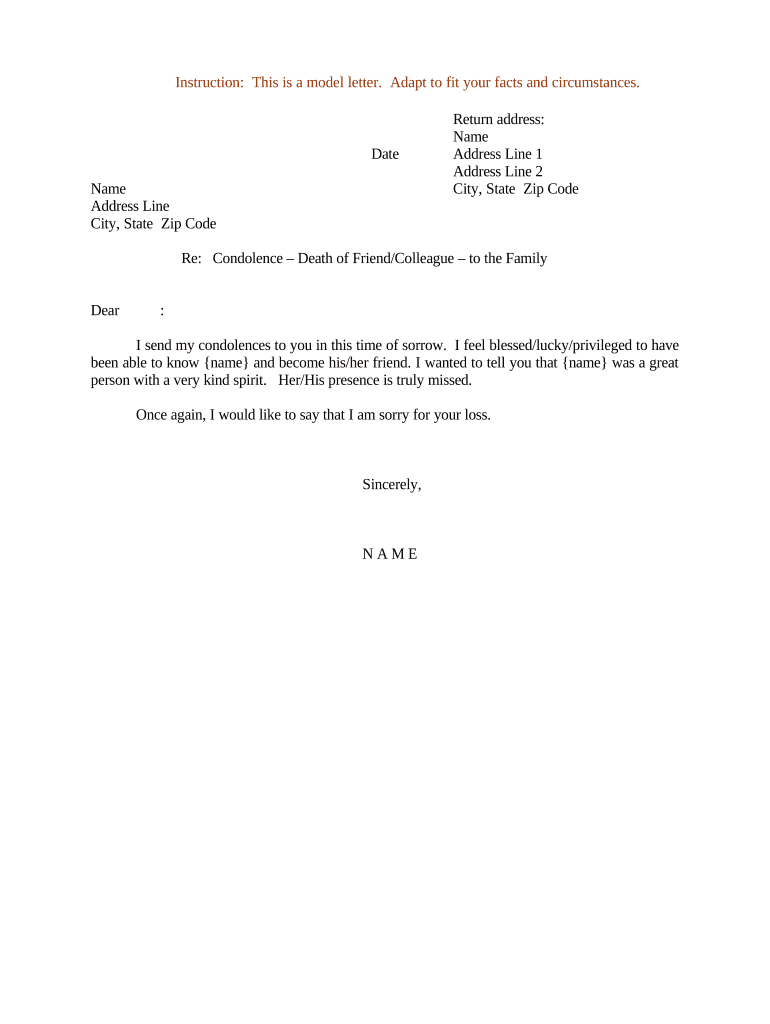
A Letter of Condolence is a written expression of sympathy sent to someone grieving a death or serious loss. It conveys personal support, offers practical help, and preserves a respectful record of communication. Organizations and individuals use these letters in personal, workplace, and community contexts; they can be sent as printed mail, email, or an electronically signed document when appropriate.

Purpose and Practical Benefits of a Thoughtful Letter

A clear, considerate letter provides emotional support, documents outreach, and helps maintain relationships during sensitive times. It reduces ambiguity about offers of assistance and records when and how condolences were expressed, which can be important for employers, institutions, and family representatives.

Purpose and Practical Benefits of a Thoughtful Letter

Who Typically Sends or Receives a Letter of Condolence

Match sender identity and relationship to the tone and level of detail in the letter to keep the message appropriate and respectful.

  • Family members and friends — Personal messages expressing shared memories and offers of practical help.
  • Employers and HR teams — Professional condolence noting company support, leave options, and points of contact.
  • Organizations and community groups — Brief, formal messages acknowledging loss and outlining any organizational assistance.

Key Elements to Include in a Professional Letter of Condolence

A well-crafted letter balances empathy and clarity. Include identification of sender and recipient, a brief sincere message, a personal memory if appropriate, an offer of assistance, a respectful closing, and the date. Keep sensitive details to a minimum and avoid medical specifics unless the recipient has expressly shared them.

Sender ID

Include your full name and relationship to the deceased or recipient so the message is immediately contextualized for the reader.
Opening Line

Begin with a clear expression of sympathy naming the deceased and stating your condolences in a single, sincere sentence.

Personal Memory

If appropriate, share a short, specific memory or quality you admired; keep it concise and focused on comfort rather than detail.

Offer of Assistance

State any specific help you can provide—meals, childcare, paperwork assistance—with brief contact instructions or availability windows.

Closing Sentiment

Conclude with a respectful phrase—for example, 'With sympathy' or 'Sincerely'—followed by your printed name and title where applicable.

Date and Format

Date the letter and choose mailing format (printed, email, or e-signed PDF) appropriate to the relationship and situation.

Step-by-Step: Drafting and Sending the Letter

Follow a simple sequence to create a respectful, accurate letter and deliver it through the appropriate channel.

  • 01
    Draft: Write a short, sincere message and include sender identification.
  • 02
    Review: Check for tone, privacy concerns, and any sensitive content requiring consent.
  • 03
    Sign: Choose handwritten or electronic signature per recipient context and platform support.
  • 04
    Deliver: Send by mail, email, or secure eSignature platform depending on preference and sensitivity.

Realistic Examples You Can Adapt

Two concise templates illustrate tone and structure for different relationships and organizational contexts.

Personal Example

I was saddened to hear of your loss and wanted to express my deepest sympathies.

  • I remember their kindness at last summer's gathering.
  • Please let me know if I can help with meals or errands; I am available weekday evenings and can coordinate with friends to provide support when needed.

Employer Example

On behalf of the team, I extend our sincere condolences to you and your family.

  • We valued their contributions to our work.
  • HR will follow up about bereavement leave and benefits; please contact our benefits coordinator if you need immediate assistance or adjustments to your schedule.

Configuring an Online Template for Digital Completion

Recommended field settings and workflow steps for converting the letter into a fillable online document.

Field Recommended Setting
Recipient Name Required text field; single-line
Date Date picker; MM/DD/YYYY enforced
Body Multi-line text area; character limit 1,200
Signature E-signature field; optional handwritten image upload

Typical Digital Completion Flow

A short workflow overview for sending and completing the letter electronically.

  • Upload: Add the letter template as a PDF or DOCX.
  • Place Fields: Insert name, date, body, and signature fields where required.
  • Add Signer: Enter recipient email or generate a signing link.
  • Send: Dispatch via email or secure platform with optional authentication.

Distribution Options and Integration Considerations

For institutional senders, integrate with CRM or HR systems to track distributions and follow-up respectfully and consistently.

  • Email: Fast and familiar; encrypt if message contains private details.
  • Printed Mail: Traditional and often appreciated for close relations.
  • Secure eSignature: Use eSignature platforms that support PDF/DOCX and audit trails.

Timing: When to Send a Letter of Condolence

There is no legal deadline for sending condolences, but timing affects reception and sensitivity; choose a considerate window.

Immediate Response:

Within a few days for close family—keep messages brief and heartfelt.

Short Window:

One to two weeks is appropriate for acquaintances and colleagues.

Delayed Outreach:

Later outreach (months) can still be meaningful if framed sensitively.

Organizational Notices:

Coordinate timing with HR or leadership to avoid conflicting communications.

Sensitive Details:

Avoid discussing medical or coroner information; confirm facts before including them.

Common Mistakes to Avoid

  • Overly formal or legalistic language that distances the recipient and undermines sincerity.
  • Including medical specifics, cause of death, or other private details without explicit family consent.
  • Sending at an insensitive time, such as immediately before a memorial service or during active family notifications.
  • Failing to provide clear contact details or realistic offers of help; vague promises create confusion.

Privacy and Legal Risks to Consider

Privacy Breach: Disclosing PHI could cause legal and reputational harm.
HIPAA Risk: Avoid sharing protected health information without authorization.
Employment Risks: Incorrect internal notices may violate company policies.
Defamation Risk: Avoid speculative or unverified statements about the deceased.
Emotional Harm: Insensitive wording can exacerbate grief.
Recordkeeping: Poor tracking complicates follow-up and legal responses.

Who Can Sign a Letter of Condolence

HR Manager

A Human Resources manager may sign on behalf of an employer to express company condolences and to convey information about leave, benefits, or available support. Keep the text factual, avoid disclosing personal data, and coordinate with leadership for tone.

Family Representative

Immediate family members or designated representatives normally sign personal condolence letters. Their signature signals a close relationship and should match the name and role referenced in the message to prevent confusion during follow-up.

eSignature Vendor Pricing Snapshot for Condolence Letters

Compare baseline pricing and core capabilities for common eSignature vendors when preparing electronically signed condolence letters. Pricing shown reflects common starting plans and typical capability availability.

signNow DocuSign Adobe Sign PandaDoc HelloSign
Starting Price $8/user/mo $15/user/mo $14/user/mo $19/user/mo $15/user/mo
Free Trial 7-day free trial No No Yes, limited Yes, limited
Bulk Send Yes Yes Yes Yes No
Audit Trail Yes Yes Yes Yes Yes
HIPAA Compliant Yes Yes Yes No No

Frequently Asked Questions About Letters of Condolence

Answers to common questions about tone, electronic delivery, privacy, and recordkeeping for Letters of Condolence.


Need help? Contact support

be ready to get more
Join over 28 million airSlate SignNow users