Establishing secure connection…Loading editor…Preparing document…

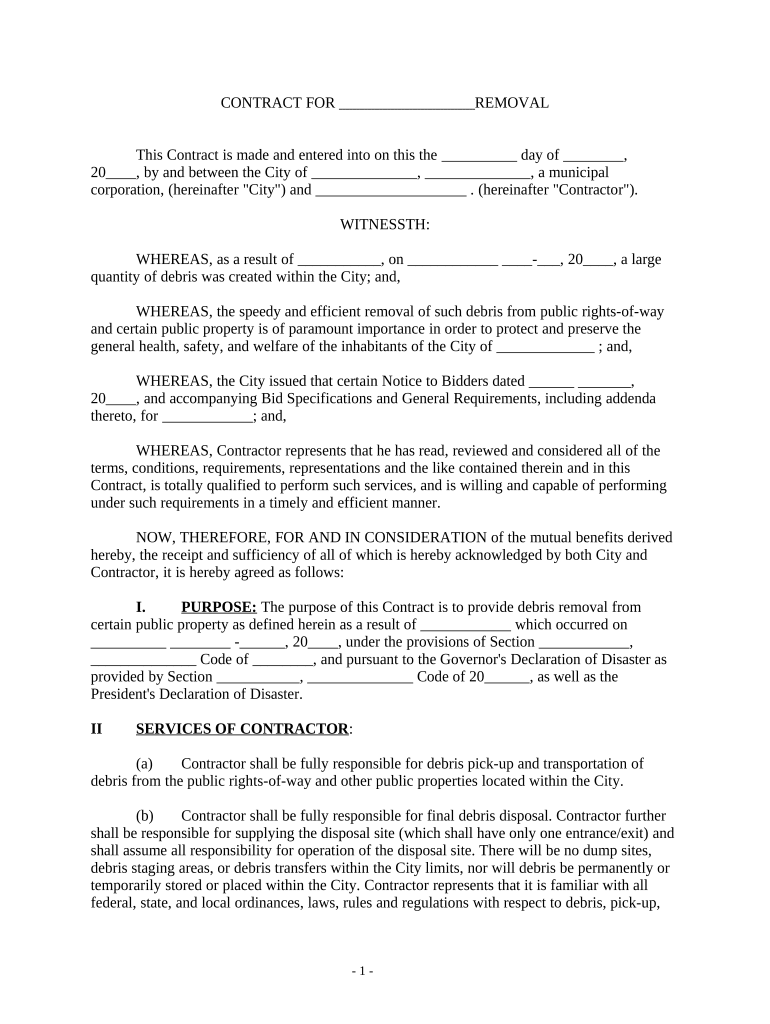
Hurricane Debris Removal Contract

This template is fully customizable. Edit the text, fill out the fields, and send it for signature. Give it a try!
Hurricane Debris Removal Contract

What a Hurricane Debris Removal Contract Is and when it applies

A Hurricane Debris Removal Contract is a legally binding agreement between a public agency or private property owner and a contractor to remove, transport, and dispose of storm-generated debris following a hurricane. The contract defines scope of work, pricing or unit rates, safety and environmental requirements, insurance and indemnity obligations, permitting and regulatory compliance, notice and documentation standards for reimbursement, and acceptance criteria for completed work. Contracts frequently incorporate FEMA procurement and reimbursement rules, emergency procurement clauses, and procedures for change orders, inspections, and final closeout to support auditability and potential federal funding.

Why a clear contract matters for debris removal

A well-drafted Hurricane Debris Removal Contract reduces ambiguity about responsibilities, speeds recovery by defining mobilization and clearance milestones, and preserves eligibility for federal reimbursement where applicable. Clear pricing, documentation and insurance requirements protect both the contracting agency and the contractor from disputes and audit disallowances.

Why a clear contract matters for debris removal

Who typically prepares and signs these contracts

Each signer should confirm authority and that required insurance, bonds, and permitting are current before work begins.

  • Local government procurement teams that coordinate emergency response and FEMA reimbursement
  • Licensed debris removal contractors providing equipment, labor, and disposal services
  • Insurance adjusters and property managers overseeing insurer-accepted clearances

Core sections to include in a professional debris removal contract

A complete contract organizes responsibilities, pricing, schedule, safety, environmental controls, document retention, dispute resolution, and termination rights so parties can perform quickly and consistently.

Scope of Work

Detailed description of debris types, collection zones, removal methods, hauling and disposal destinations, and any prohibited materials to ensure consistent performance and invoice validation.
Pricing and Payment

Unit prices, lump-sum items, mobilization/demobilization fees, retainage, invoice submittal requirements, and timing for progress and final payments to control cost and support audits.

Insurance and Bonds

Commercial general liability, automobile, workers' compensation, pollution liability, and performance/payment bonds with minimum limits and certificate delivery deadlines to protect public exposure.

Compliance and Permits

Environmental controls, landfill/disposal authorizations, DOT overweight permits, and OSHA/safety standards to reduce regulatory risk and downstream liabilities.

Documentation and Audit Trail

Daily logs, load tickets, equipment timesheets, manifests, photos, and signed acceptance forms required for internal records and FEMA/insurer reimbursement reviews.

Change Orders and Disputes

Procedure for approving scope changes, price adjustments, differing site conditions, and an explicit dispute resolution clause to limit delays during recovery operations.

Essential information to capture in the contract

Party Names: Full legal names
Scope Identifier: Project area ID
Effective Date: MM/DD/YYYY
Pricing Method: Unit or lump sum
Insurance Limits: Policy minimums
Signatory Authority: Title and contact

Step-by-step: completing a Hurricane Debris Removal Contract

Follow a consistent sequence to prepare and approve the contract so mobilization is not delayed by missing approvals or documentation.

  • 01
    Prepare draft: Assemble scope, maps, and required schedules for review.
  • 02
    Insurance review: Verify certificates and bond amounts meet contract minimums.
  • 03
    Procurement approval: Obtain procurement officer and legal sign-off per local rules.
  • 04
    Sign and mobilize: Execute by authorized signers and record execution date.

How to configure an online contract workflow

Set up a digital workflow that enforces required fields, signer order, and document retention to reduce errors and preserve audit evidence.

Field Configuration
Required Signature Enforce signer order and initials at key clauses
Conditional Fields Show bond or insurance fields if certain thresholds apply
Attachment Requests Require certificates and permits before final sign
Retention Policy Set automatic archival after project closeout

Where to send and file the executed contract

Define submission destinations for originals, signed copies, and supporting documents so invoices and reimbursement requests are traceable.

  • Contract File: Retain executed original in procurement records and a secure digital archive.
  • Contractor Copy: Provide contractor a fully executed copy with change order procedure.
  • Insurance Certificates: Send to risk management for verification and file.
  • Reimbursement Packets: Assemble load tickets, manifests, and signed acceptance for FEMA/insurer submission.

Sharing and signing options for the contract

Ensure the chosen delivery method meets public records retention and any funding partner requirements before relying on electronic copies.

  • Email Delivery: Direct signed PDF copies via secure mail
  • Secure Portal: Host documents with role-based access
  • eSign & RON: Support remote notarization when local rules permit

Typical timing and deadlines to include

Spell out key dates for mobilization, milestone completion, invoicing and final closeout to avoid ambiguity during emergency operations.

Contract Effective Date:

Date work may begin and obligations take effect

Mobilization Window:

Days allowed to mobilize equipment and crews

Interim Milestones:

Planned checkpoints for phased clearances and removals

Final Completion:

Date for substantial completion and final punch list

Invoice Submission:

Schedule for periodic and final invoice delivery

Common preparation mistakes to avoid

  • Failing to specify accepted debris types leads to contested invoices and disposal rejections.
  • Using vague pricing (e.g., “reasonable rates”) prevents clear invoice verification and creates audit exposure.
  • Omitting environmental controls can cause regulatory fines and rejected landfill receipts.
  • Accepting verbal change orders without written documentation undermines enforceability and reimbursement claims.

Potential penalties and legal risks

Reimbursement Denial: Loss of FEMA or insurer payment
Contract Breach: Claims for damages and termination
Regulatory Fines: Environmental or DOT penalties
Insurance Gap: Liability for uninsured losses
Audit Disallowance: Costs for unsupported invoices
Debris Misclassification: Civil penalties or cleanup remobilization

Realistic scenarios for how the contract is used

Examples show typical public and private workflows where clear contract terms prevent disputes and speed recovery.

Municipal Rapid Clearance

A county issues an emergency contract with unit pricing for curbside woody debris

  • Mobilization occurs within 48 hours of execution
  • Detailed load tickets and daily equipment logs support FEMA reimbursement and closeout audits.

Private Property Bulk Removal

A property owner hires a licensed contractor with indemnity and insurance proof required

  • Contractor submits COI and disposal manifests prior to final payment
  • Signed acceptance forms and manifests validate insurance or claim payouts.

Frequently asked questions about Hurricane Debris Removal Contracts

Answers to common legal and practical questions encountered when preparing, signing, and executing debris removal agreements.


Need help? Contact support

eSignature vendor comparison for signing and managing debris removal contracts

Comparison of common eSignature plan attributes to consider when selecting a platform for contract execution and secure recordkeeping.

signNow DocuSign Adobe Sign PandaDoc HelloSign
Starting Price $8/user/mo $15/user/mo $14/user/mo $19/user/mo $15/user/mo
Free Trial 7-day free trial No No Yes, limited Yes, limited
Bulk Send Yes Yes Yes Yes No
Audit Trail Yes Yes Yes Yes Yes
HIPAA Compliant Yes Yes Yes No No
be ready to get more
Join over 28 million airSlate SignNow users