Establishing secure connection…Loading editor…Preparing document…

Contract for the International Sale of Goods

This template is fully customizable. Edit the text, fill out the fields, and send it for signature. Give it a try!
Contract for the International Sale of Goods

What the Contract for the International Sale of Goods Is

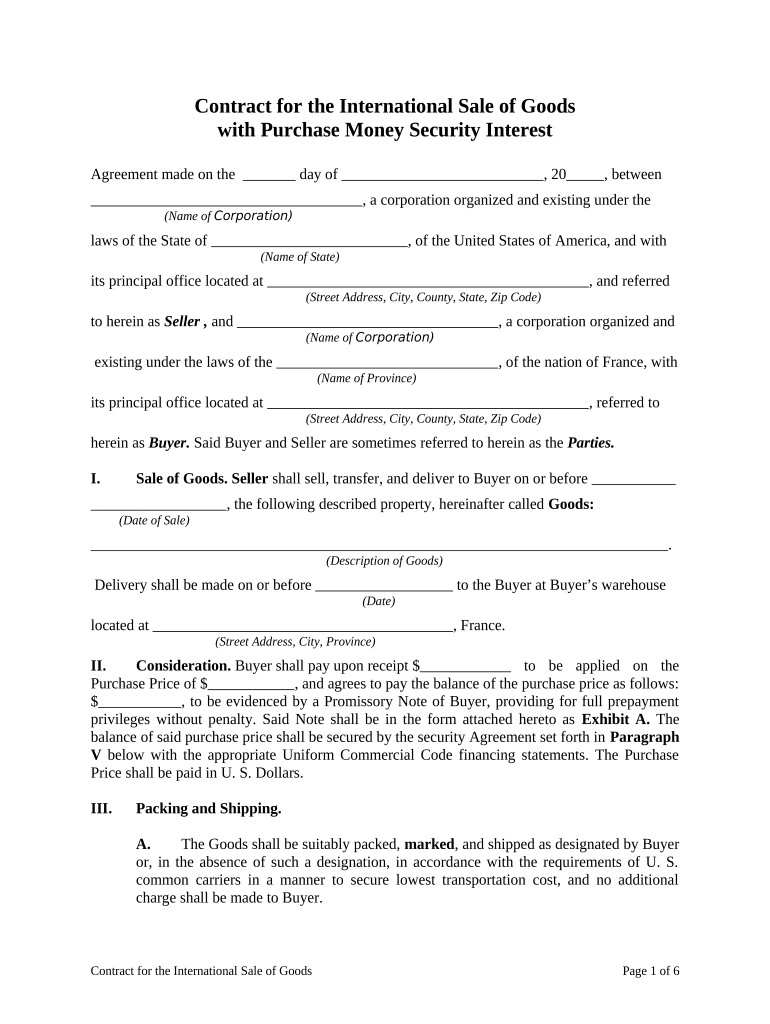
Contract for the International Sale of Goods is a formal agreement that sets terms for cross-border sale and delivery of tangible goods between parties in different countries. It specifies parties, description and quantity of goods, price, delivery terms (Incoterms), risk of loss, inspection and acceptance procedures, payment terms, warranties, dispute resolution and governing law. For international transactions, drafters often reference the United Nations Convention on Contracts for the International Sale of Goods (CISG) and applicable domestic statutes; ensure clauses that address export controls, customs, and insurance are included.
Why a Clear International Sales Contract Matters

Use this Contract for the International Sale of Goods to allocate commercial and legal risk, define delivery and payment obligations, ensure compliance with export/import rules, and create enforceable remedies for breach. Clear terms reduce disputes and support enforceability across jurisdictions.

Why a Clear International Sales Contract Matters

Who Prepares and Signs These Contracts

Common users and roles involved in preparing and signing these international sale contracts include commercial counsel, exporters, importers, logistics managers, and procurement officers.

  • Exporters and sellers who ship goods across borders and negotiate terms with overseas buyers.
  • Importers and buyers responsible for payment, customs clearance, and acceptance of delivered goods.
  • In-house legal teams, external counsel, freight forwarders, banks, and insurers involved in performance.

Typical Signatory Roles

Export Sales Manager

Typically the primary negotiator for sale terms, responsible for product specifications, Incoterm selection, coordinating shipment, and liaising with logistics and customs teams. May need delegated authority to accept buyer amendments and sign contracts up to a company-approved threshold.

Corporate Counsel

Reviews cross-border legal risks, ensures compliance with CISG, export controls, and sanctions, drafts dispute resolution and choice-of-law clauses, advises on liability and warranty language, and often provides signature authority or certifies delegated signing limits.

Core Clauses to Include in the Contract for the International Sale of Goods

Essential clauses and structural elements that a professional Contract for the International Sale of Goods should include to manage price, delivery, risk allocation, compliance, and dispute resolution.

Parties

Identify legal names and capacities of seller and buyer; include registered business names, addresses, contact points, and entity type. Accurate party identification prevents enforcement issues and supports tax, customs, and banking processes.

Description of Goods

Specify quantity, quality standards, model numbers, packaging, and inspection criteria. Attach technical specifications or samples as exhibits to avoid ambiguity and to support claims if goods fail to conform.

Price & Payment

State currency, total price, payment schedule, accepted methods, and any escrow or documentary collections. Clarify taxes, duties, and who bears payment-related bank charges to prevent disputes over net amounts received.

Delivery & Incoterms

Include delivery point, transfer of risk, carrier responsibilities, and specify applicable Incoterm (e.g., FOB, CIF). Address delay remedies, partial shipments, and packaging required for international transport.

Warranties & Inspection

Set warranty scope, acceptance procedures, inspection windows, and remedy options for nonconforming goods. Define notice periods and return shipment responsibilities to streamline claims handling and limit exposure.

Governing Law & Dispute Resolution

Specify choice of law, exclusive jurisdiction or arbitration rules (e.g., ICC or UNCITRAL), place of arbitration, and interim relief provisions. Clarity reduces enforcement risk across borders.

Essential Fields to Capture in the Contract

Seller Name: Registered legal entity name
Buyer Name: Registered legal entity name
Goods Description: Quantity, specifications, packaging details
Price and Currency: Total, unit price, and currency
Payment Terms: Due dates, method, bank details
Delivery Terms: Incoterm, place, and date

Key Risks and Penalties to Watch For

Late Delivery: Liquidated damages or claim exposure
Incorrect HS Code: Customs fines, delays
Nonconforming Goods: Rejection and replacement costs
Payment Default: Collection expenses, interest
Sanctions Violation: Criminal and civil penalties
Jurisdictional Uncertainty: Enforcement risk abroad

Common Preparation Mistakes

  • Failure to specify Incoterms leading to unclear obligations and disputes about who pays duties, arranges carriage, or bears risk at key transit points.
  • Ambiguous goods descriptions that omit specifications, tolerances, or acceptable inspection standards, causing costly rejections or disagreement on conformity.
  • Missing export control or sanctions clauses, which can expose parties to regulatory penalties and shipment embargoes if restricted items or destinations are involved.
  • Relying on informal email confirmations without a signed agreement can weaken enforcement, complicate proof of terms, and increase litigation risk.

Step-by-Step: How to Complete the Contract

Follow these steps to complete a Contract for the International Sale of Goods accurately, with attention to trade, payment, and dispute clauses.

  • 01
    Gather Parties Info: Collect legal names, addresses, and contact details.
  • 02
    Describe Goods: Attach specs, part numbers, and packaging details.
  • 03
    Set Terms: Specify Incoterm, price, and payment schedule.
  • 04
    Sign & Distribute: Obtain signatures, retain originals, and send copies.

How to Configure an Electronic Completion Workflow

Configure an electronic workflow that enforces field completion, supports conditional routing, and captures an audit trail for compliance and recordkeeping.

Form field configuration and settings Configuration
Auto-detect and map form fields Use Magic fields to speed entry
Conditional routing and approver sequencing Route based on values or signer actions
Two-factor authentication and signer verification Require SMS, email, or KBA
Audit trail retention and export settings Capture timestamps, IP, and action log

Where to File, Send, or Submit the Signed Contract

Typical destinations and routing options for a signed international sales contract, including parties, customs agents, banks, and filing authorities.

  • Seller and Buyer: Each party retains a signed original or certified copy.
  • Customs Broker: Provide contract copy for customs valuation and classification.
  • Banks / Payment: Send documents for letter of credit or payment processing.
  • Regulatory Filings: Submit to agencies for export licenses or compliance reviews.

Digital Signing and eSubmission Requirements

Digital signing and eSubmission require secure platforms that support audit trails, authentication, and exportable signed records compliant with ESIGN and UETA.

  • File formats: PDF/A, DOCX, or XML supported
  • Integrations: Connectors for Salesforce, NetSuite, and Google Workspace
  • Authentication: Email, SMS, SSO, and advanced options

Key Dates and Deadlines to Track

Key contract dates and typical deadlines to track during negotiation, execution, shipment, and post-delivery acceptance periods for international sale contracts.

Effective date and contract term:

Enter date in MM/DD/YYYY; term duration clarifies obligations.

Delivery window and estimated arrival time:

State shipment deadlines and acceptable delivery variance in days.

Payment due dates and grace periods:

List invoice dates, payment terms, and late interest rates.

Inspection, acceptance, and rejection period:

Specify inspection window and required notice form for claims.

Customs clearance, documentation, and compliance deadlines:

Allow time for filing export declarations and obtaining licenses.

How International Sale Contracts Differ from Domestic Agreements

How this international sales contract differs from domestic sales contracts and other similar agreement types in scope, obligations, and regulatory requirements.

Contract comparison: International vs Domestic International Domestic
Applicable legal framework and scope cisg or chosen law state law only
Use of Incoterms standard clauses incoterms standard incoterms optional
Customs, export controls, and duties cross-border compliance domestic taxes and duties
Dispute resolution and cross-border enforcement arbitration common local courts common

eSignature Plan Comparison for Executing This Contract

Compare commonly used eSignature plans for executing the Contract for the International Sale of Goods, focusing on pricing, bulk send, audit trail, HIPAA, and envelope limits.

signNow DocuSign Adobe Sign PandaDoc HelloSign
Starting Price $8/user/mo $15/user/mo $14/user/mo $19/user/mo $15/user/mo
Free Trial Yes, 7-day free trial No No Yes, limited Yes, limited
Bulk Send Yes Yes Yes Yes No
Audit Trail Yes Yes Yes Yes Yes
HIPAA Compliant Yes Yes Yes No No

Practical Use Cases for the Contract

Two practical scenarios showing how a Contract for the International Sale of Goods is used to resolve trade, payment, and compliance needs across borders.

Manufacturer to Distributor

A U.S. manufacturer selling components to an EU distributor specifies Incoterm, inspection protocol, and shipment schedule to align delivery expectations.

  • Use documentary letter of credit for secure payment.
  • Contract also includes export compliance warranties and HS codes attached as exhibits. Clear terms enabled quick customs clearance, reduced inspection disputes, and provided a contractual basis for claim resolution when a partial shipment was damaged during transit.

Exporter with Bank

An exporter required bank documentation for a CIF shipment appended the contract with payment terms and precise packing lists to satisfy banking and customs requirements.

  • Bank accepted documents and released payment upon presentation.
  • Detailed documentary requirements in the contract streamlined the letter-of-credit process, limited discrepancies, and reduced bank rejection risk. The exporter retained signed contract copies and digital evidence for audit, supporting both tax compliance and dispute defense.

Frequently Asked Questions and Troubleshooting

Answers to common questions about validity, signing, notarization, and electronic submission for Contracts for the International Sale of Goods.


Need help? Contact support

be ready to get more
Join over 28 million airSlate SignNow users