Establishing secure connection…Loading editor…Preparing document…

Counterclaim Petition

This template is fully customizable. Edit the text, fill out the fields, and send it for signature. Give it a try!
Counterclaim Petition

Definition and role of a Counterclaim Petition in litigation

A Counterclaim Petition is a formal pleading filed by a defendant in response to a plaintiff's complaint that asserts one or more claims back against the plaintiff or a third party. It sets out factual allegations, the legal basis for relief, and the specific remedies sought, putting the defendant in the role of a claimant on separate causes of action. Counterclaims can be compulsory—arising from the same transaction or occurrence as the plaintiff's claim—or permissive, which address unrelated disputes. Proper drafting frames issues for discovery and trial and affects jurisdiction, service, and potential settlement dynamics.

Why a clear Counterclaim Petition matters

A well-structured Counterclaim Petition preserves affirmative defenses, creates leverage in settlement negotiations, and ensures the court considers related disputes together. It clarifies remedies and deadlines so the defendant protects legal rights efficiently.

Why a clear Counterclaim Petition matters

Who prepares and files Counterclaim Petitions

Counterclaim Petitions are prepared by defendants, defense counsel, or in pro se cases by litigants responding to a complaint.

  • Defense attorneys representing corporate or individual defendants asserting offsetting claims or damages.
  • Pro se litigants who must respond and assert cross-claims without counsel.
  • In-house counsel or claims teams in insurance and financial services managing litigation exposure.

Selecting the correct signatory, service method, and filing venue is essential; the next sections explain required fields, timelines, and state variations.

Core components to include in a professional Counterclaim Petition

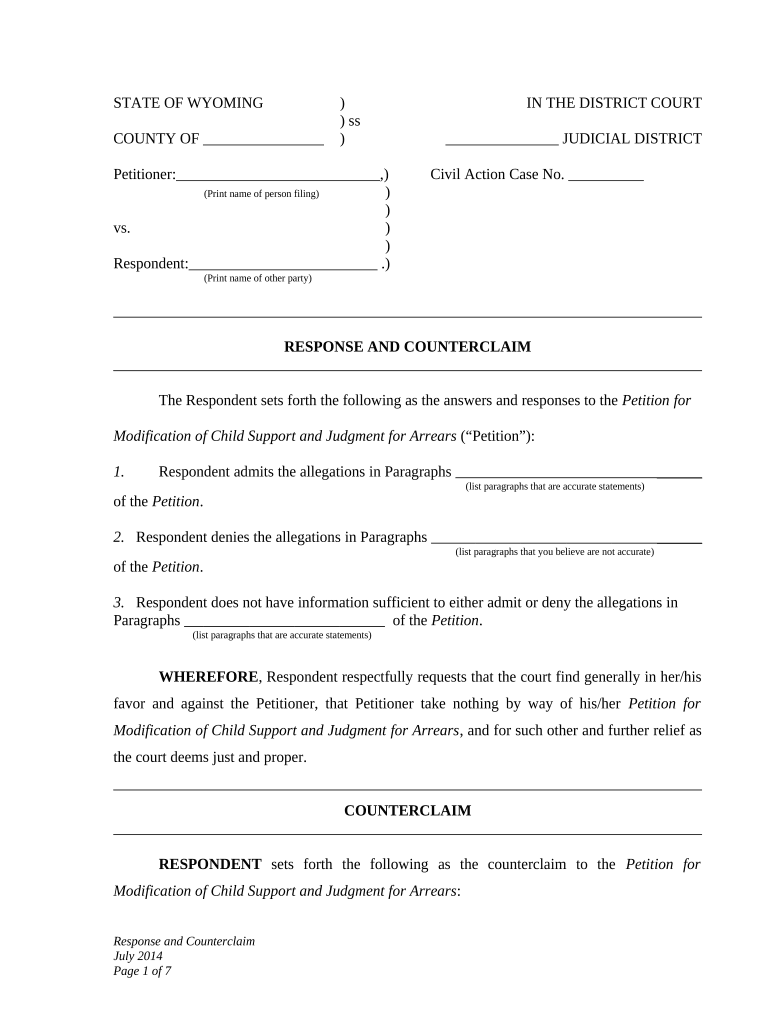
A complete Counterclaim Petition organizes jurisdictional facts, parties, causes of action, factual allegations, requested relief, and required signatures so the court and opposing parties can respond without procedural ambiguity.

Caption

Court name, case number, party designations, and title identifying the pleading as a Counterclaim Petition.
Jurisdiction

Allege subject-matter and personal jurisdiction and statutory or contractual basis for the counterclaims.

Statement of Facts

Chronological, specific factual allegations tying legal elements to evidence and dates.

Causes of Action

List each counterclaim separately with elements and how facts satisfy those elements.

Prayer for Relief

Specify damages, injunctive relief, attorneys' fees, costs, and any equitable remedies requested.

Verification & Signature

Signature block, attorney contact information, and any required verification or certification under local rules.

Step-by-step: preparing and filing a Counterclaim Petition

Follow these sequential steps to draft, verify, serve, and file a Counterclaim Petition while meeting procedural and jurisdictional requirements.

  • 01
    Draft: Compose factual allegations, legal claims, and the prayer for relief.
  • 02
    Review: Check for statute of limitations issues and compulsory vs permissive counterclaims.
  • 03
    Sign: Have the counsel or party sign and verify the pleading as required by local rules.
  • 04
    Serve & File: Serve opposing parties per rule and file with the clerk before applicable deadlines.

Typical procedural flow for a Counterclaim Petition

This outline shows the main routing steps after filing so you can anticipate service, responses, and case management scheduling.

  • File: Clerk accepts and assigns a docket entry and date of filing.
  • Serve: Provide notice to plaintiff and any third-party defendants per civil procedure rules.
  • Response: Opposing party may answer, move to dismiss, or counter with other pleadings.
  • Case Management: Court may schedule conferences, set discovery deadlines, and issue scheduling orders.

Configuring an online workflow to complete and submit a Counterclaim Petition

Set up a digital template and routing rules so required fields, signatures, and service steps occur automatically and consistently.

Field Configuration
Caption Template Auto-populate court name and case number from case intake.
Party Data Use single-source party records to fill names/addresses.
Signature Order Define signer roles and whether attorney signature is required first.
Service Rules Trigger email and certified mail steps per jurisdictional requirements.

Consequences of procedural errors in a Counterclaim Petition

Dismissal Risk: Court may dismiss claims for failure to state a claim.
Waiver: Untimely or omitted compulsory counterclaims can be waived.
Sanctions: Frivolous allegations can trigger fee sanctions.
Service Defect: Improper service can delay or nullify filing effect.
Statute of Limitations: Expired claims cannot be revived by counterclaim.
Default Exposure: Failure to respond may lead to default judgment.

Common drafting and filing mistakes to avoid

  • Vague factual allegations that fail to meet legal elements and invite dismissal.
  • Asserting permissive counterclaims that belong in separate jurisdiction without proper venue allegations.
  • Mismatching party names or incorrect case numbers on the caption causing clerk rejection.
  • Failing to check for the defendant's compulsory counterclaims tied to the original complaint.

Digital signing and e-filing considerations

Use secure eSignature and document management that comply with ESIGN and state e-transaction laws to preserve enforceability.

  • File Formats: PDF or court-acceptable formats
  • Authentication: Email token or multi-factor options
  • Integrations: Court e-filing portals and case management systems

Ensure the platform supports audit trails, tamper-evident signatures, and exportable certified copies for court submission and service records.

Deadlines and timing to track for counterclaim practice

Key calendar dates affect whether counterclaims are compulsory, service timing, and response windows; monitor statutes of limitations and local rule deadlines.

Answer/Response Deadline:

Typically 21 days after service under federal rules unless state rules differ

Counterclaim Deadline:

File as part of the answer or in the timeframe allowed by local rules

Statute of Limitations:

Depends on the claim type; verify specific statutes for each cause of action

Service Deadline:

Service must complete per state civil procedure to validate filing date

Appeal Period:

Post-judgment appeal windows vary; track notices of appeal promptly

Practical examples of Counterclaim Petitions in common scenarios

These brief case sketches show how counterclaims attach to typical disputes and the practical outcomes they seek.

Contract Dispute Example

A defendant alleged nonpayment by the plaintiff after delivering goods

  • Counterclaim for breach of contract and setoff asserted
  • The counterclaim included invoices and delivery receipts as exhibits and sought damages and attorney fees, leading to negotiated settlement including mutual releases.

Tort and Contribution Example

A defendant named alongside a plaintiff's negligence claim alleged third-party fault

  • Counterclaim sought indemnity and contribution
  • The counterclaim added the third party, preserved subrogation rights, and clarified allocation of potential liabilities before discovery.

Frequently asked questions about Counterclaim Petitions

Answers to common practical and procedural questions about drafting, service, and enforceability of counterclaims.


Need help? Contact support

be ready to get more
Join over 28 million airSlate SignNow users