Establishing secure connection…Loading editor…Preparing document…

Revolving Credit and Term Loan Agreement

This template is fully customizable. Edit the text, fill out the fields, and send it for signature. Give it a try!
Revolving Credit and Term Loan Agreement

What a Revolving Credit and Term Loan Agreement Is

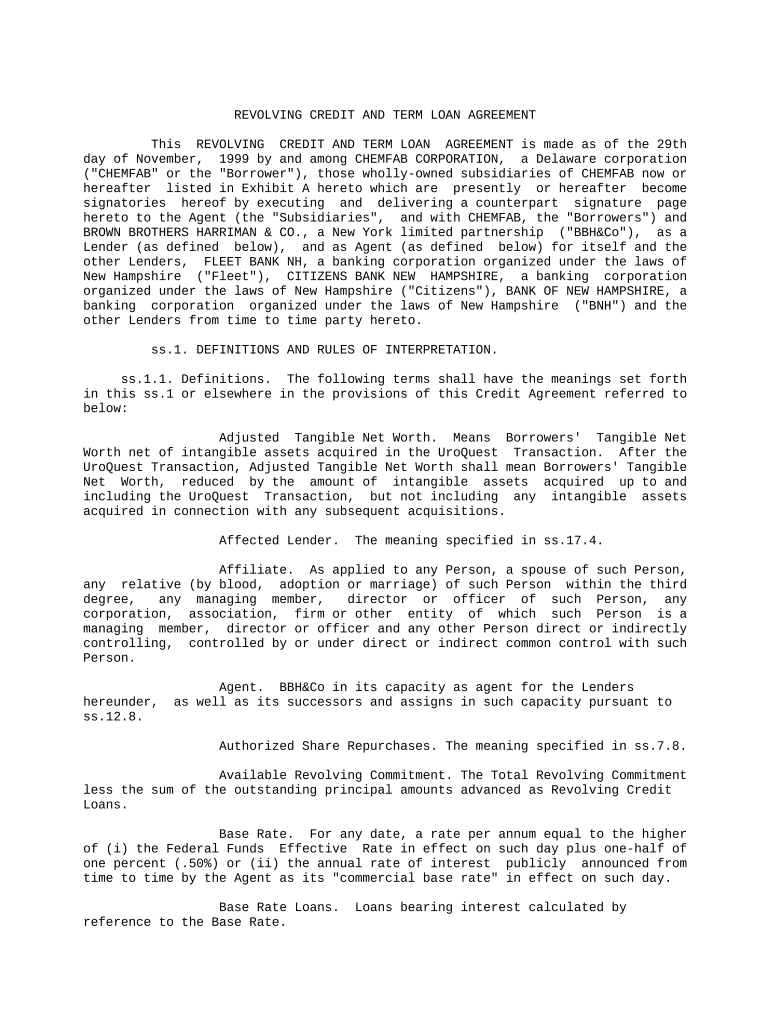
The Revolving Credit and Term Loan Agreement is a single financing contract that documents a lender's commitment to a revolving credit facility together with one or more term loan tranches. It sets borrower and lender identities, borrowing limits, interest rates, repayment schedules, amortization, mandatory prepayments, reporting and covenant requirements, events of default, remedies, and any collateral or guarantee structure. The combined format clarifies interplay between short‑term working capital availability and longer amortizing debt and establishes procedures for draws, repayments, and enforcement.

Why parties use a combined revolver and term loan agreement

A single agreement reduces duplication, aligns repayment priority and collateral, and streamlines covenant monitoring. It gives lenders enforceable remedies and borrowers coordinated access to working capital plus scheduled term financing under consistent terms.

Why parties use a combined revolver and term loan agreement

Who prepares and signs this financing agreement

Borrowers, lenders, and their legal and finance teams commonly prepare and negotiate these agreements.

  • Borrowers: middle-market and enterprise companies combining short-term liquidity with longer amortizing debt.
  • Lenders: banks, credit funds, and syndicates underwriting revolver and term tranches.
  • Advisors: corporate counsel, tax advisors, and administrative agents managing documentation and compliance.

Who may sign on behalf of each party

Authorized Officer

An officer with corporate authority signs to bind the borrower. Lenders frequently request board resolutions, officer certificates, or corporate incumbency proof to verify authority and avoid challenges to execution or to security perfection.

Loan Agent

A designated administrative agent signs for lender coordination, notices, and enforcement actions. The agent role, indemnities, fee structure, and authority to act on behalf of syndicate members should be explicitly detailed in agency provisions.

Security, compliance, and technical safeguards to consider

Encryption: TLS 1.2/1.3 in transit; AES-256 at rest
Audit Trail: Comprehensive timestamps, IP, and action logs
HIPAA: BAA required for protected health data
SOC 2: SOC 2 Type II certification available
21 CFR Part 11: Compliant options for FDA-regulated records
ESIGN / UETA: Legal e-signature framework for U.S. transactions

Key legal and commercial risks to watch

Default Interest: Higher rates and accelerated payments
Cross-Default: Triggers from other agreements
Misrepresentation: Rescission or damages risk
Security Loss: Lien priority disputes may arise
Tax Reporting: 1099 or documentary tax exposure
Enforceability: Incorrect execution may void agreement

Common drafting and execution mistakes

  • Failing to attach schedules or exhibits that set loan amounts, repayment terms, or collateral descriptions causes ambiguity and can delay funding or enforcement.
  • Using informal signature methods without clear intent or proper authentication increases litigation risk over signature validity in contested defaults.
  • Mismatched party names between corporate records, certificates, and the agreement can require reexecution or impair security perfection.
  • Incomplete collateral descriptions or omitted UCC filings leave lenders unsecured and reduce recovery prospects on default.

Real-world examples of electronic execution in finance

These short examples show how firms combine digital signing with corporate processes to close secured financings and reduce administrative delays.

Tech Data financing

Large distributor converted paper credit documents to digital workflows to speed internal approvals and external processing.

  • Used e-signatures and centralized templates for lender packages.
  • Bob Dutkowsky, CEO of Tech Data, said airSlate SignNow improved internal and external customer service while increasing speed to revenue, demonstrating how execs may accelerate close and onboarding without extra manual steps.

Martin Properties closing

Real estate firm digitized lease and loan signature flows for property acquisitions to reduce on-site signings and courier delays.

  • Implemented mobile signing for remote stakeholders.
  • Tim Martin, Founder of Martin Properties, noted he can process and execute documents online with compliance and security, enabling faster closings across multiple properties without repeated in-person signings.

Step-by-step: preparing and executing the agreement

Follow these core stages to draft, approve, and close a combined revolver and term loan facility with clear roles and controls.

  • 01
    Draft: Assemble term sheet, schedules, and collateral descriptions for lender review.
  • 02
    Negotiate: Agree on pricing, covenants, and security package with lenders.
  • 03
    Execute: Obtain authorized signatures, notarizations, and officer certificates.
  • 04
    Fund: Lender delivers proceeds after closing conditions are satisfied.

How a digital signing workflow typically flows

A documented digital process speeds routing, strengthens auditability, and centralizes storage for lender and borrower records.

  • Upload: Import final PDF or DOCX to the signing platform.
  • Assign Roles: Designate borrower, lender, agent, and witnesses to fields.
  • Authenticate: Use email, SMS, or advanced methods to verify signers.
  • Complete: Signed copies and audit trail distributed to parties automatically.

Core provisions to include and review carefully

A thorough agreement balances borrower flexibility with lender protections through clear commercial and legal mechanics.

Parties

Identify borrower, lender, administrative agent, guarantors, and obligors with full legal names, organizational details, and signing authority to avoid later capacity disputes.
Commitments

Specify revolver maximum, availability period, borrowing mechanics, and term loan principal so parties understand when and how funds may be drawn or repaid.

Interest & Fees

Set base rate, margins, default interest, fees, and calculation methods, including day count convention, payment dates, and compounding rules to prevent disputes.

Covenants

Include affirmative, negative, and financial covenants with measurement dates, testing procedures, and cure mechanisms for covenant breaches and reporting obligations.

Events of Default

Define triggers such as nonpayment, covenant breaches, insolvency, or cross-default and outline acceleration, remedies, and lender discretion to enforce.

Security & Priority

Describe collateral, perfection steps, priority among creditors, intercreditor arrangements, and UCC filing responsibilities to protect lender recovery rights.

Recommended digital workflow settings for execution

Configure your eSignature workflow to reflect signer roles, required authentication, and retention rules for legal robustness.

Field Configuration
Authentication Method Email with optional SMS code
Template Use Create templates for schedules and exhibits
Bulk Send Use for multiple lender sign-offs
Audit Trail Enable full logs and PDF certificates

Technical and integration considerations for e-signing

Confirm document formats, signer authentication options, and integration points before electronic execution.

  • Integrations: Salesforce, NetSuite, Microsoft 365, Google Workspace
  • File Formats: PDF and DOCX supported for export
  • Access Controls: SSO, role-based permissions, and 2FA

Key dates and recurring filing obligations

Track the agreement lifecycle dates and recurring reporting to maintain compliance and avoid defaults.

Effective Date:

Date when the agreement becomes legally binding and obligations commence.

Funding Date:

Date lender advances initial proceeds after closing conditions are satisfied.

Maturity Date:

Final repayment date for term loans and end of the revolver commitment.

Covenant Reporting:

Quarterly or monthly financial reporting deadlines set by covenant schedules.

Audit / Statements:

Annual audited statements due as specified in reporting covenants.

Milestones from negotiation to post-closing administration

A sequential view of primary milestones helps teams coordinate approvals, signatures, and ongoing compliance tasks.

01

Term Sheet Agreement

Parties confirm economic terms and preliminary covenants before full documentation.

02

Document Negotiation

Counsel finalize legal language, schedules, and security descriptions.

03

Execution and Closing

Signatures obtained, officer certificates exchanged, and conditions precedent satisfied.

04

Post-Closing Compliance

File UCCs, monitor covenants, and deliver financial reports.

eSignature vendor comparison for executing loan documentation

Select a platform that meets legal, security, and volume needs; the table summarizes common price and compliance considerations.

signNow DocuSign Adobe Sign PandaDoc HelloSign
Starting Price $8/user/mo $15/user/mo $14/user/mo $19/user/mo $15/user/mo
Free Trial 7-day free trial Varies by plan Varies by plan Varies by plan Varies by plan
Bulk Send Yes Yes Yes Yes No
Audit Trail Yes Yes Yes Yes Yes
HIPAA Compliant Yes Yes Yes No No
Envelope Cap No cap 100 envelopes/user/year Varies by plan Varies by plan Varies by plan

Frequently asked questions about executing and enforcing this agreement

Answers address validity, authentication, corrections, notarization, revocation, and recordkeeping for combined revolver and term loan agreements.


Need help? Contact support

be ready to get more
Join over 28 million airSlate SignNow users