Establishing secure connection…Loading editor…Preparing document…

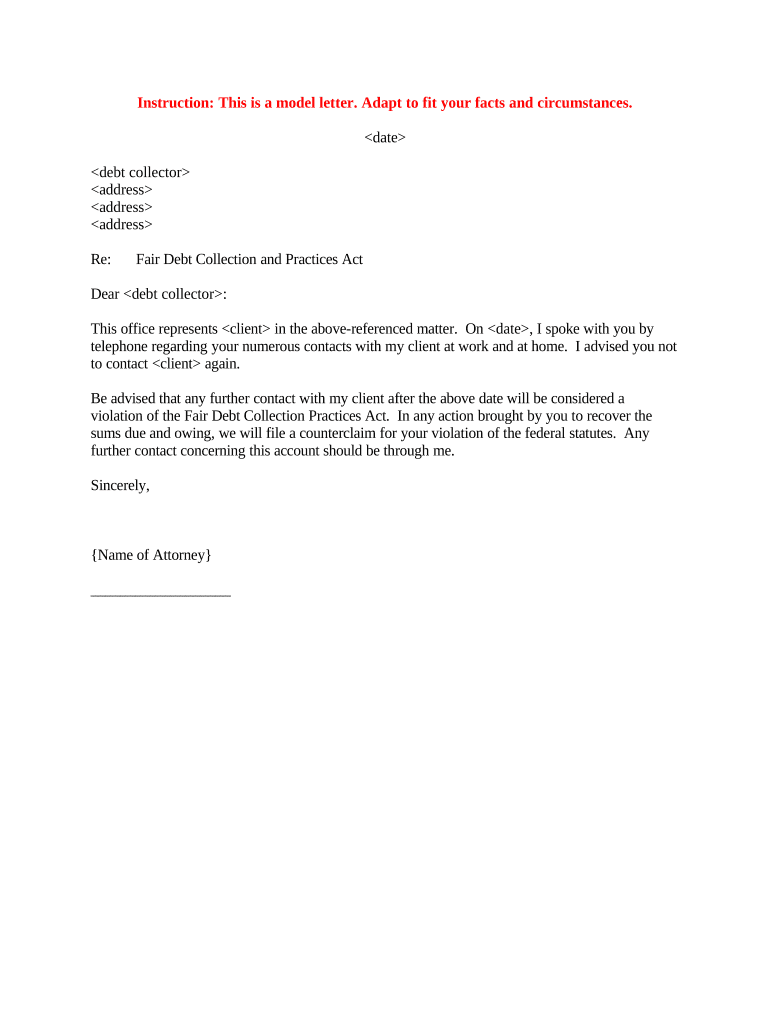
Debt Collection Email Template

This template is fully customizable. Edit the text, fill out the fields, and send it for signature. Give it a try!
Debt Collection Email Template

What the Debt Collection Email Template Is and When It’s Used

A Debt Collection Email Template is a reusable message format that organizations use to notify a debtor of an outstanding obligation, summarize the balance, and provide payment options. It standardizes language for accuracy, traces communications for compliance, and reduces time spent drafting repeated notices while preserving a consistent record for collections teams and legal review.

Primary Purpose and Practical Benefits

The template ensures clarity, minimizes disputes by documenting amounts and dates, and supports consistent adherence to federal and state collection laws. It reduces drafting errors, shortens collection cycles, and helps maintain a defensible record of notices sent to customers.

Primary Purpose and Practical Benefits

Typical Teams and Roles That Use This Template

The Debt Collection Email Template is used by teams that manage receivables, customer accounts, or legal follow-up.

  • Accounts receivable teams handling past-due invoices and payment plans for business customers.
  • Collection agencies and third-party servicers communicating standard demand notices to consumers.
  • In-house legal or contract teams coordinating escalation steps and preparing documentation for potential litigation.

Use by these roles supports consistent messaging, improves auditability of communications, and centralizes version control for compliance review.

Who Signs or Approves These Messages

Accounts Receivable Manager

Typically reviews and authorizes template updates, ensures amounts and account details match internal ledgers, and approves escalation language before emails are sent to debtors.

Collection Counsel

Legal reviewers confirm compliance with the Fair Debt Collection Practices Act and relevant state law, advise on required disclosures, and approve any language that could affect litigation or regulatory risk.

Essential Elements of a Professional Debt Collection Email Template

A compliant, effective template balances clear account information, concise payment instructions, and legally necessary notices while keeping tone factual and non-coercive.

Subject Line

Clear, neutral subject referencing account or invoice number and 'Account Notice' allows recipients to identify the email quickly while avoiding language that could be perceived as threatening or misleading.
Opening Statement

A brief factual opening that identifies the creditor, states the outstanding balance, and specifies the invoice or account reference in straightforward language to reduce confusion.

Amount and Account Details

Exact outstanding balance, currency, account or invoice number, original due date, and any applicable fees or interest should be itemized to support verification and dispute handling.

Payment Options

Provide permitted payment methods, step-by-step instructions or a secure payment link, and contact details for alternative arrangements such as installment plans.

Dispute and Contact Instructions

Explain how the recipient can dispute the debt, request validation, or contact the collections team; include response timelines and required documentation types.

Legal Notice

A concise notice referencing relevant consumer protections and any statutory rights, phrased to comply with the Fair Debt Collection Practices Act and applicable state requirements.

Required Account and Contact Fields

Account Number: Unique internal ID
Outstanding Balance: Exact USD amount
Original Due Date: MM/DD/YYYY
Debtor Contact: Email and phone
Creditor Contact: Name and department
Dispute Instructions: How to request validation

Step-by-Step: Drafting and Sending the Email

Follow these sequential steps to prepare and dispatch a compliant debt collection email.

  • 01
    Verify Account: Confirm balance, dates, and legal owner in your system.
  • 02
    Insert Template Fields: Populate name, account number, amount, and due date.
  • 03
    Add Payment Options: Include secure link or instructions and contact details.
  • 04
    Send and Log: Send via tracked email and save the message to account records.

How to Configure an Online Workflow for Collection Emails

Set up automation rules, authentication, and archival paths to standardize sending and to capture evidence of delivery.

Field Configuration
Authentication Email link | Optional SMS code
Template Name Debt Collection Email | Versioned
Reminder Schedule 7 days | 14 days | 30 days
Archive Folder Collections/YYYY-MM | Retain copy

Delivery Formats, Integrations, and Authentication Options

Choose delivery channels and security controls that balance low friction and reliable auditability.

  • Supported Formats: PDF, DOCX, HTML
  • Integrations: Salesforce, Microsoft 365, NetSuite
  • Authentication: Email link, SMS code, KBA

Ensure the chosen platform provides an audit trail (timestamp, IP, delivery status) and stores copies securely to support dispute resolution and regulatory review.

Typical Digital Workflow for an Email Notice

A standard online process captures every step from template selection to signed or acknowledged receipt.

  • Upload or Select Template: Choose the correct version from the template library.
  • Populate Fields: Auto-fill from CRM or ledger for accuracy.
  • Authenticate Recipient: Send secure link or SMS code for confirmation.
  • Send and Record: Log delivery status and save the message archive.

Timing Considerations and Typical Deadlines

Pay attention to statutory limits, internal escalation windows, and timing for subsequent notices to preserve remedies and compliance.

Statute of Limitations Check:

Confirm applicable state SOL before sending escalation notices.

Initial Demand:

Send the first formal notice as soon as balance is verified.

Reminder Cadence:

Schedule follow-ups at 7, 14, and 30 days unless paid or disputed.

Escalation to Counsel:

Refer to legal team after defined internal threshold or nonresponse.

Record Retention:

Preserve emails for the retention period required by policy and law.

Common Mistakes to Avoid

  • Sending unclear balance details that lack invoice references, increasing dispute rates and follow-up work.
  • Omitting dispute instructions or validation rights, which can trigger regulatory complaints and slow resolution.
  • Using coercive or misleading language that risks Fair Debt Collection Practices Act violations and consumer complaints.
  • Failing to log delivery status and message content, leaving the organization without proof of notice.

Potential Consequences of Incorrect or Noncompliant Notices

Regulatory Complaint: Enforcement action or consumer complaint
Civil Liability: Damages and statutory penalties
Data Privacy Risk: Unauthorized disclosures or breach
Contract Challenges: Disputed amounts impair collection
Reputational Harm: Negative customer outcomes
Evidence Gaps: Inability to prove notice delivery

eSignature Vendor Comparison for Debt Collection Workflows

Pricing and feature availability influence platform selection for high-volume collection emails and evidence retention; signNow is listed first per vendor comparison conventions.

signNow DocuSign Adobe Sign PandaDoc HelloSign
Starting Price $8/user/mo $15/user/mo $14/user/mo $19/user/mo $15/user/mo
Free Trial 7-day free trial Varies Varies Varies Varies
Bulk Send Yes Yes Yes Yes No
Audit Trail Yes Yes Yes Yes Yes
HIPAA Compliant Yes Yes Yes No No
Envelope Cap No envelope cap 100 envelopes/user/year Varies by plan Varies by plan Varies by plan

Practical Tips for Accurate and Efficient Completion

Adopt these best practices to reduce disputes, improve collections, and maintain compliance across jurisdictions.

Standardize Language and Version Control
Keep a single source of truth for templates, track version changes, and require legal review for any language affecting rights or remedies to avoid conflicting notices.
Automate Field Population
Populate account numbers, amounts, and dates from your ledger to minimize manual entry errors and speed dispatch while preserving an audit log of data sources.
Provide Clear Dispute Paths
Include explicit instructions, required documentation, and contact timelines to reduce back-and-forth and to demonstrate good-faith collection efforts in case of complaints.
Capture Delivery Evidence
Use platforms that record timestamps, IP addresses, and delivery/read receipts to provide defensible proof of notice and to support downstream litigation if necessary.

Concrete Use Cases for Debt Collection Email Templates

The following scenarios illustrate how organizations apply templates in real collection contexts.

Small Business Invoice Follow-Up

A bookkeeping firm automates monthly past-due notices using a template to include invoice number and precise balance

  • Sends reminders at 7 and 30 days after due date
  • This reduced manual drafting time and provided a consistent audit trail for client accounts without changing collection tone.

Healthcare Patient Balance

A clinic sends a patient balance email that includes explanation of charges and insurance adjustments

  • Offers an online payment link and contact for billing disputes
  • That approach clarified patient obligations and centralized dispute documentation for billing staff.

Frequently Asked Questions About Debt Collection Email Templates

Answers to common operational and compliance questions when creating or sending debt collection emails.


Need help? Contact support

be ready to get more
Join over 28 million airSlate SignNow users