Caption
Court name, case number, decedent name, and official caption matching probate filings to ensure proper docketing.
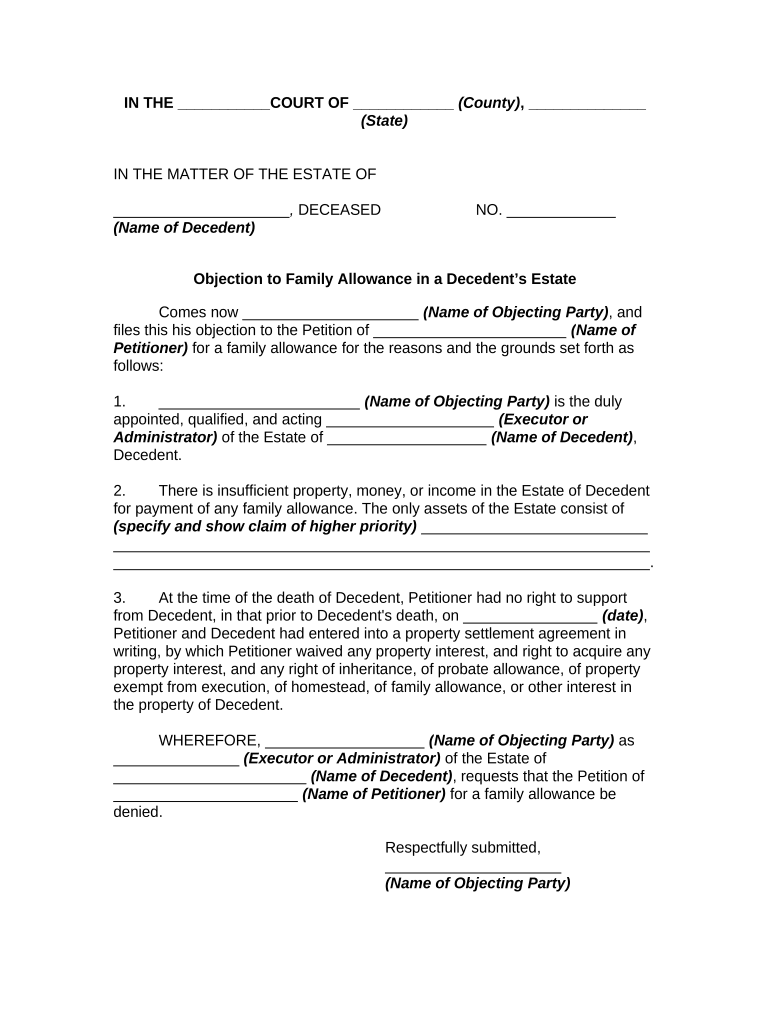
A properly drafted objection preserves rights, creates a clear record for the court, and can prevent an improper depletion of estate assets before creditor claims are resolved. It frames legal issues for hearing and reduces the risk of default allowances that could unfairly disadvantage creditors or other beneficiaries.

Parties should confirm local probate procedures and service rules before filing to ensure the objection is timely and properly served.
Personal Representative (Executor/Administrator). The court-appointed fiduciary who files estate papers and can respond to objections; may sign stipulations, filings, or proposed orders regarding family allowance.
Objecting Party (Creditor/Beneficiary). A creditor or beneficiary who prepares and signs the objection, certifies its factual basis, and may appear at hearing or authorize counsel to act on their behalf.
Court name, case number, decedent name, and official caption matching probate filings to ensure proper docketing.
Names and addresses of the objector, personal representative, petitioner for allowance, and attorneys of record for service and clarity.
Concise, chronological facts supporting the objection including dates, amounts, and prior distributions or claims against the estate.
Cite statutory or case law basis for objection (e.g., lack of entitlement, bankruptcy priority, insufficiency of assets) and relevant probate code sections.
Clear request: deny allowance, reduce amount, require security, or set hearing for contested allowance.
Signature, printed name, date, and contact information for objector or counsel; include certificate of service showing parties served.
| Field | Configuration |
|---|---|
| Authentication Method | Email + optional SMS code for signer verification |
| Signature Type | Typed or drawn electronic signature with audit trail |
| Document Format | Upload as PDF/A for court compatibility |
| Retention Policy | Store signed PDF with certificate for minimum retention period |
Preserve a certified copy of the signed objection and associated audit trail for court audit or later evidentiary needs.
Often 30–60 days to respond; check local probate code
Court may set hearing within 30–90 days after filing
Service usually required before the hearing date
Electronic filings often docket same day; in-person filings vary
Some claims governed by statute of limitations — verify state law
Prepare objection with exhibits and counsel review before filing.
Clerk assigns case entry and a docket number for the objection.
Provide proof of service to the court and opposing parties.
Attend hearing; court issues written order resolving the objection.
| signNow | DocuSign | Adobe Sign | PandaDoc | HelloSign | |
|---|---|---|---|---|---|
| Starting Price | $8/user/mo | $15/user/mo | $14/user/mo | $19/user/mo | $15/user/mo |
| Free Trial | 7-day trial | Varies | Varies | Varies | Varies |
| Bulk Send | Yes | Yes | Yes | Yes | No |
| Audit Trail | Yes | Yes | Yes | Yes | Yes |
| HIPAA Compliant | Yes | Yes | Yes | No | No |