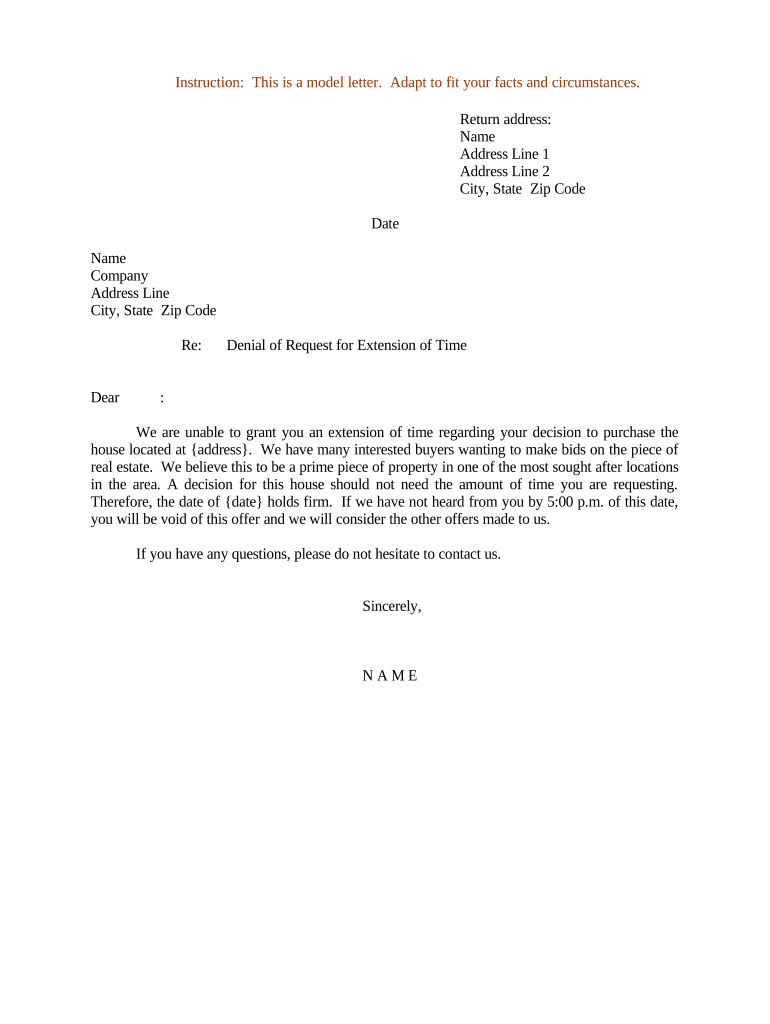
Denial Letter
What a Denial Letter Is and When It’s Used
Why a Clear Denial Letter Matters
A well‑crafted Denial Letter reduces confusion, creates a documented audit trail, supports compliance, and preserves the issuer’s position if the decision is appealed or litigated.
Typical Senders and Recipients
Organizations and officials who make eligibility, claims, or application decisions prepare Denial Letters to document outcomes and advise recipients of options.
- Insurance companies and claims teams that document claim denials and outline appeal rights and required supporting documentation.
- Banks and lenders that refuse credit, loans, or underwriting and must disclose reasons and regulatory notices.
- Human resources and benefits administrators issuing benefit or accommodation denials with legal appeal and review instructions.
Recipients include applicants, claimants, borrowers, employees, students, or their authorized representatives who need a clear record to decide whether to appeal or seek counsel.
Who Signs Denial Letters — Typical Roles
Claims Manager
A Claims Manager reviews evidence, authorizes the denial decision, and signs to certify accuracy. This person documents the policy basis, cites claim numbers, and provides appeal routing information to ensure the recipient can respond within any required deadlines.
HR Director
An HR Director or benefits administrator signs employment or benefits denial notices, records the reason code, confirms applicable policy citations, and ensures the notice complies with internal procedures and any applicable federal or state consumer disclosure rules.
Step-by-Step: Prepare and Issue a Denial Letter
-
01Gather Evidence: Collect case files, policies, and supporting documents.
-
02Draft Reasoning: State factual findings and the policy basis.
-
03Include Appeals: Describe appeal process, deadlines, and contact details.
-
04Sign and Send: Apply authorized signature and choose secure delivery.
How Delivery and Recordkeeping Typically Work
-
Create Document: Draft text and attach supporting exhibits.
-
Approve Internally: Obtain necessary managerial or legal sign-off.
-
Deliver Notice: Send via mail or secure electronic channel.
-
Archive Record: Store signed copy with audit trail for retention.
Configuring an Online Denial Letter Workflow
| Template | Create reusable Denial Letter template with required fields |
|---|---|
| Conditional Fields | Show or hide sections based on denial reason |
| Authentication | Choose signer verification: email, SMS, or advanced methods |
| Routing Order | Define reviewer and approver sequence for sign-off |
| Attachments | Attach evidence files and retain as part of record |
Technical Delivery and File Compatibility
Denial Letters should be deliverable in standard formats and integrate with records systems for retention.
- Supported Formats: PDF, DOCX, HTML, Excel
- Integrations: Salesforce, NetSuite, Microsoft 365, Google Workspace
- Storage Options: Box, Egnyte, Google Drive compatibility
Choose a platform that produces tamper-evident signed PDFs, preserves audit trails, and connects to your document management system.
Timing Considerations and Expected Turnaround
Issue Promptly:
Send the denial as soon as the decision is final, typically within business days
State Appeal Windows:
Appeal periods vary by program — include exact day counts in the letter
Document Retention:
Retain the signed denial according to your retention policy and legal requirements
Acknowledge Receipt:
Request or track confirmation of receipt for official notice
Extensions and Corrections:
Document any agreed extensions or corrected notices in writing
Key Milestones From Decision to Final Record
Decision Finalized
Document the date and basis of the decision in the file
Draft Notice Prepared
Prepare denial text, cite policy and include appeal rights
Notice Sent
Deliver signed notice and capture proof of receipt
Record Closed
Archive signed notice and supporting files per retention schedule
Common Preparation Errors to Avoid
- Omitting the specific reason for denial or citing an incorrect policy section leaves recipients without a clear path to appeal.
- Failing to include appeal instructions, deadlines, or required forms can forfeit claimants’ review rights and increase dispute risk.
- Using ambiguous language or subjective descriptions invites challenges and may undermine the agency’s position in disputes.
- Not preserving a signed copy with an audit trail or not recording delivery proof creates evidentiary gaps during litigation or audits.
Potential Consequences of an Incorrect or Late Denial Letter
How a Formal Denial Letter Compares with a Rejection Email
| Criteria | Formal Denial | Rejection Email |
|---|---|---|
| Legal Notice | usually no | |
| Appeal Instructions | explicit | often brief |
| Signature Required | rarely | |
| Retention Standard | high | variable |
eSignature Vendor Comparison for Executing Denial Letters
| signNow | DocuSign | Adobe Sign | PandaDoc | HelloSign | |
|---|---|---|---|---|---|
| Starting Price | $8/user/mo | $15/user/mo | $14/user/mo | $19/user/mo | $15/user/mo |
| Free Trial | 7-day free trial | Varies | Varies | Varies | Varies |
| Bulk Send | Yes | Yes | Yes | Yes | No |
| Audit Trail | Yes | Yes | Yes | Yes | Yes |
| HIPAA Compliant | Yes | Yes | Yes | No | No |
| Envelope Cap | No cap | 100 envelopes/user/year | Varies | Varies | Varies |
Two Common Denial Letter Scenarios
Insurance Claim Denial
An insurer documents a benefits denial with policy citation and claim number
- Provides required appeal steps and deadlines
- The letter attaches the claim file summary, cites exclusions, explains the appeal process, and offers contact details for a representative to request reconsideration or submit additional evidence.
Loan Application Denial
A lender states credit or underwriting reasons and lists adverse action information
- Includes COA and next steps
- The notice identifies factors influencing the decision, supplies consumer disclosure language, and explains how to request a copy of the credit report or dispute inaccurate data.
Practical Tips for Accurate, Efficient Denials
Frequently Asked Questions About Denial Letters
-
Can a Denial Letter be e-signed?
Yes. Electronic signatures are legally enforceable under the ESIGN Act (15 U.S.C. ch. 96) and UETA in most U.S. jurisdictions provided intent, consent, attribution, and retention requirements are met.
-
What must the letter include?
Include clear reason(s) for denial, case or account identifier, decision date, appeal instructions and deadlines, contact information, and an authorized signature to create a defensible record.
-
How should it be delivered?
Deliver by secure electronic channel with proof of receipt or by certified mail when required; record delivery method and retain signed copies and audit trails for compliance.
-
Can recipients appeal the decision?
Many programs provide an administrative appeal; specify how to appeal, required evidence, and exact deadline. Appeal rules vary by program and statute.
-
Is notarization ever required?
Notarization is uncommon for ordinary denial letters but may be required for specific legal filings; verify with counsel and state law for exceptional cases.
-
How do I correct an error after sending?
Issue a corrected notice in writing that clearly references the original, documents the correction, and preserves both versions in the official record.