Establishing secure connection…Loading editor…Preparing document…

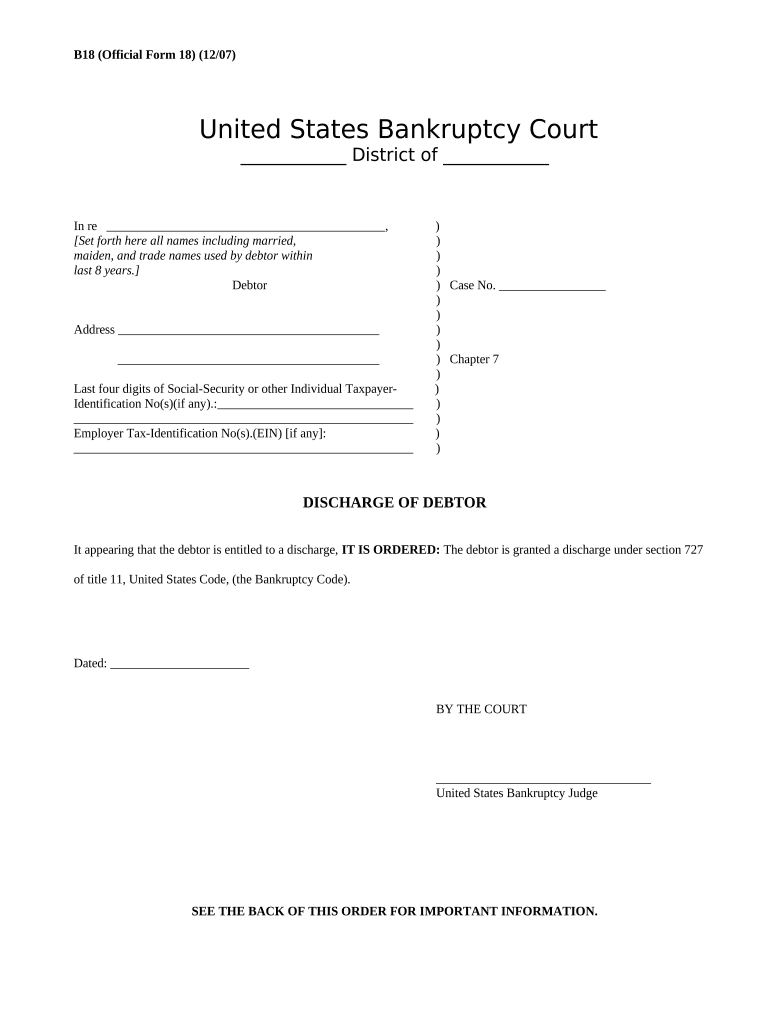
Discharge of Debtor

This template is fully customizable. Edit the text, fill out the fields, and send it for signature. Give it a try!
Discharge of Debtor

What a Discharge of Debtor document is and when it applies

A Discharge of Debtor is a written instrument that records release of liability, satisfaction of a lien, or court-ordered discharge of obligations owed by an individual or business. It memorializes that a creditor no longer asserts the listed claim, and it is typically prepared after payment in full, settlement, or bankruptcy discharge. The document may be recorded with a county recorder or filed in a court docket to provide public notice and prevent future enforcement. Accurate party identification, proper notarization, and correct recording details are essential for enforceability and title clarity.

Why a clear Discharge of Debtor matters legally and operationally

A properly executed Discharge of Debtor protects the debtor from future claims, clears encumbrances on title or credit records, and preserves evidence of settlement or discharge for audits and regulatory review.

Why a clear Discharge of Debtor matters legally and operationally

Who typically prepares and relies on a Discharge of Debtor

Organizations and individuals use this document to confirm release of debt or lien and to update public records.

  • Lenders and servicers who need to record lien releases after loan payoff or settlement.
  • Debtors (individuals or businesses) seeking proof that obligations have ended and liens are cleared.
  • Attorneys and title companies relying on recorded discharges to close real estate transactions or resolve claims.

Representative roles that interact with this document

Alex Carter, Loan Servicing Manager

Manages payoff processing and prepares discharge paperwork to clear lender liens. Coordinates notary, confirms payoff amounts, and submits recorded discharge to county recorder for title updates and borrower records.

Patricia Gomez, Debtor Representative

Signs and receives the discharge as evidence of release of liability. Keeps recorded copies for tax, audit, and future title transfer needs and verifies that public records reflect the discharge.

Step-by-step: completing and recording a Discharge of Debtor

Follow these core steps to prepare, sign, notarize, and record a discharge correctly.

  • 01
    Prepare Document: Populate names, reference numbers, and effective date precisely.
  • 02
    Obtain Signatures: Have authorized creditor sign in presence of notary or witnesses as required.
  • 03
    Notarize: Complete notary acknowledgement or jurat per state rules.
  • 04
    Record: File with county recorder where the original instrument was recorded.

How electronic completion and submission works in practice

Digital workflows mirror the paper process but add audit metadata and optional signer authentication.

  • Upload: Sender uploads PDF or DOCX of discharge.
  • Place Fields: Add signature, date, and notarization fields to the document.
  • Authenticate: Signer confirms identity via email, SMS, or stronger methods.
  • Submit: Signed file returned with audit trail and can be recorded or printed.

Typical configuration choices for an online discharge workflow

Configure these settings to match your compliance, authentication, and recordkeeping needs.

Field Configuration
Document Type PDF or Word DOCX with fillable fields enabled
Signer Order Sequential creditor then debtor, or simultaneous as appropriate
Authentication Email link, SMS code, or KBA for higher assurance
Notifications Automatic copies to title company and recorder if required

Technical considerations for eSigning and eRecording

Ensure the platform supports the file formats, authentication strength, and audit details your jurisdiction requires.

  • File Formats: PDF, DOCX, or flattened PDF
  • Integrations: Google Workspace, Microsoft 365, NetSuite
  • Security: TLS and AES-256 encryption

Common eSignature vendor pricing and feature snapshot for discharge workflows

Platform pricing and caps affect high-volume discharge processing. Below is a concise comparison focusing on starting price, trials, bulk send, audit trails, HIPAA status, and envelope caps.

signNow DocuSign Adobe Sign PandaDoc HelloSign
Starting Price $8/user/mo $15/user/mo $14/user/mo $19/user/mo $15/user/mo
Free Trial 7-day free trial Varies Varies Varies Varies
Bulk Send Yes Yes Yes Yes No
Audit Trail Yes Yes Yes Yes Yes
Envelope Cap No cap 100 envelopes/user/year Varies Varies Varies

Core elements to include in a professional Discharge of Debtor

A complete discharge combines accurate identifiers, legal recital language, explicit release language, effective dates, signature and notarization blocks, and recording references.

Identification

Full legal names, entity identifiers, and contact details that match public records and original instruments to avoid ambiguity.
Reference

Exact recording book/page or instrument number linking the discharge to the original lien, mortgage, or judgment being released.

Release Clause

Clear language stating the creditor releases all rights to the specified obligation or collateral upon the effective date.

Consideration

If applicable, cite the payment, settlement terms, or court order that supports the discharge to document legal basis.

Signatures

Authorized creditor signature, printed name, title, and date; include debtor signature when required by local practice.

Notary Acknowledgement

State-specific notary block or jurat completed per jurisdictional rules to enable recording and authentication.

Security and compliance checkpoints for electronic discharge documents

Encryption in transit: TLS 1.2/1.3
Encryption at rest: AES-256
Audit trail: Timestamped history
ESIGN / UETA: Legal framework compliance
HIPAA readiness: BAA available if needed
SOC 2 / ISO: SOC 2 Type II and ISO-27001

Key risks and potential consequences of incorrect discharge paperwork

Invalid Release: May leave lien in place
Recording Rejection: County may reject submissions
Notary Defect: Authentication challenge risk
Fraud Allegations: Criminal or civil liability
Title Issues: Delayed closings or disputes
Costs: Re-recording and legal fees

Common preparation errors to avoid when drafting a discharge

  • Using abbreviated or inconsistent party names that do not match the original instrument, which delays recording and title clearance.
  • Omitting the original recording reference (book/page or instrument number), making it difficult for recorders and title companies to link the release.
  • Failing to follow state-specific notarization or witness requirements, causing the county recorder to reject the document as noncompliant.
  • Not obtaining an authorized signature from the correct creditor representative or corporate officer with authority, which can render the discharge voidable.

Recommended timing and processing expectations for a Discharge of Debtor

Record promptly after execution to ensure public notice; local recorders may take additional days to index and post the document.

Execution to Recording:

Record as soon as possible; many practitioners recommend within 30 days

Notary Timing:

Complete notarization at signing session to avoid discrepancies

County Processing:

Indexing and posting can take 1–10 business days depending on county

Bankruptcy Context:

Follow court's discharge order effective date when filing related notices

Retention Start:

Keep original recorded copy permanently or per retention schedule

Key milestones from payoff to public notice

Sequential milestones show the path from settlement to recorded discharge and final title clearance.

01

Payoff Confirmed

Creditor verifies receipt of funds and final accounting

02

Discharge Drafted

Prepare release with exact instrument references

03

Execution & Notary

Authorized signer executes and notary completes acknowledgement

04

File for Recording

Submit discharge to county recorder for public indexing

Real-world examples of Discharge of Debtor use cases

These brief examples show how different organizations use discharge documents to close obligations and update records.

Case Study 1

Tim Martin's property company used an electronic discharge to clear a mortgage after payoff, speeding closing by eliminating in-person steps.

  • The e-signed and notarized file included a recorded reference.
  • The recorded copy prevented title encumbrance issues and enabled a faster resale while preserving a clear audit trail for the lender and borrower.

Case Study 2

Brian Fitzgibbons' investment firm standardized discharge templates to streamline lien releases after asset sales.

  • Templates captured precise instrument references.
  • Standardization reduced recording errors, cut administrative time, and provided consistent documentation for auditors and title examiners.

Practical tips for accurate and efficient discharge handling

Adopt consistent templates, verify identity, and confirm recording details to minimize rework and legal risk.

Use Standard Templates
Maintain version-controlled templates with mandatory fields for names, instrument references, effective dates, and notary blocks to reduce omissions and inconsistent language.
Verify Parties
Confirm debtor and creditor legal names match original documents and public records before signature to avoid rejection and re-filing.
Confirm Notary Requirements
Check state-specific notary and witness rules, and use remote online notarization where authorized and accepted by the recorder.
Keep Audit Trails
Retain signed copies with verified timestamps, signer authentication records, and recording receipts to support title searches and audits.

Frequently asked questions about Discharge of Debtor

Answers to common questions about validity, recording, notarization, and electronic signing of discharge instruments.


Need help? Contact support

be ready to get more
Join over 28 million airSlate SignNow users