Establishing secure connection…Loading editor…Preparing document…

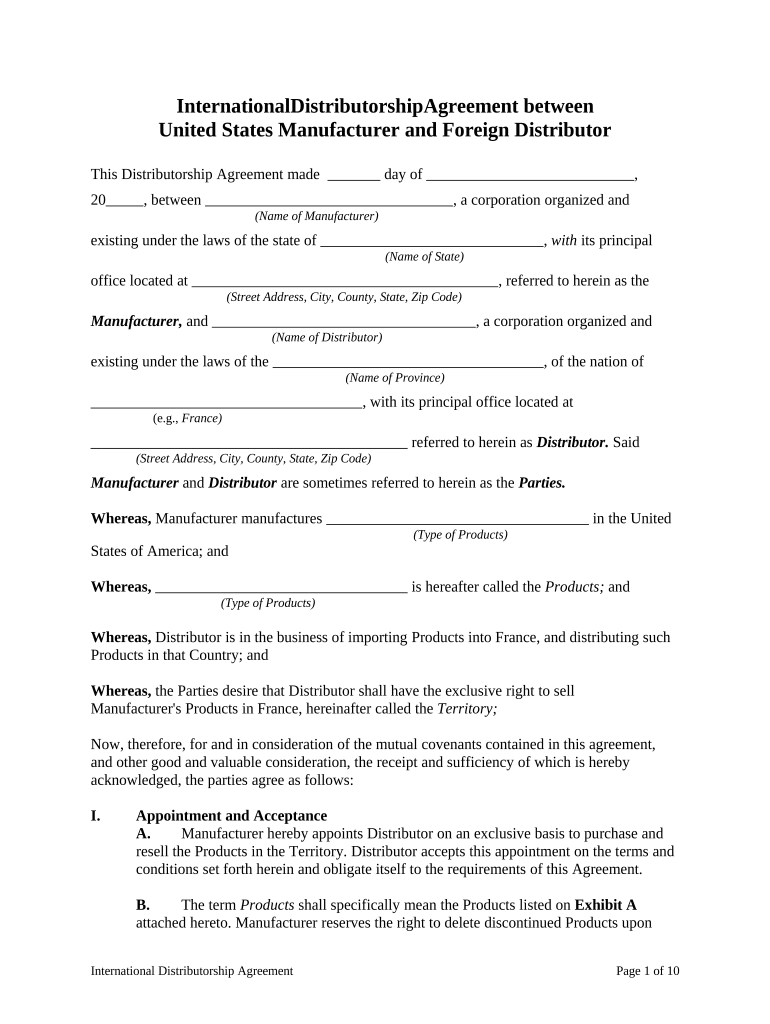
Distributorship Agreement

This template is fully customizable. Edit the text, fill out the fields, and send it for signature. Give it a try!
Distributorship Agreement

What a Distributorship Agreement Is and When Parties Use It

A Distributorship Agreement is a written contract between a supplier (manufacturer or wholesaler) and a distributor that defines the rights and obligations for marketing, selling, storing, and delivering specified products within an agreed territory or channel. Typical provisions address exclusivity, territory boundaries, pricing and discounts, minimum purchase or sales targets, ordering and delivery procedures, product warranties, intellectual property licensing, performance reporting, duration and renewal, termination rights, and dispute resolution. The agreement serves to allocate commercial risk, protect brand and IP, and set measurable performance expectations between parties operating independently.

Why a Clear Distributorship Agreement Matters

A precise agreement reduces disputes by documenting territory, pricing, minimums, and termination processes; it protects IP and clarifies commercial obligations for both supplier and distributor.

Why a Clear Distributorship Agreement Matters

Who Typically Prepares and Signs These Agreements

Organizations on both sides of a supply chain commonly prepare distributorship agreements to govern ongoing commercial relationships and channel management.

  • Manufacturers and Suppliers — Legal and Sales teams draft terms, define territory and IP licensing.
  • Independent Distributors — Operations and purchasing teams evaluate minimums, margins, and logistics obligations.
  • In-house Counsel and External Attorneys — Review compliance, termination clauses, and franchise law exposure.

Key Signatories and Their Roles

Distributor — Operations Manager

Typically responsible for confirming territory logistics, minimum purchase commitments, warehousing capacity, and ensuring the distributor can meet reporting and sales targets specified in the agreement.

Supplier — Authorized Signatory

Usually a senior sales or legal representative who confirms product specifications, pricing schedules, IP license grants, warranty limits, and the supplier's rights to audit and suspend shipments for noncompliance.

Core Clauses to Include in a Professional Distributorship Agreement

A complete agreement balances commercial detail with enforceable legal protections. The following components are standard and help reduce ambiguity during the term and at termination.

Territory

Define geographic and channel limits, exclusivity scope, and any protected customer segments with clear boundaries and examples.
Products and Prices

List covered products, SKU references, pricing formulae, discount tiers, and how price changes will be communicated and applied.

Minimums and Forecasts

State minimum purchase requirements, forecasting cadence, and remedies or penalties for failure to meet minimums.

Intellectual Property

Grant limited trademark and marketing rights, specify permitted uses, control over brand guidelines, and termination effects on licensed IP.

Term and Termination

Set initial term, renewal mechanics, notice periods, cure periods for breaches, and post-termination obligations like inventory buyback.

Compliance and Dispute Resolution

Include governing law, arbitration or court forum, export controls, anti-corruption representations, and audit rights.

Step-by-Step: Prepare, Review, and Execute the Agreement

Follow these sequential steps to draft, negotiate, sign, and store a distributorship agreement with clarity and compliance.

  • 01
    Draft Terms: Assemble clauses: territory, pricing, minimums, IP, term, and termination.
  • 02
    Internal Review: Have sales, operations, and legal review for commercial and compliance issues.
  • 03
    Negotiate and Revise: Track changes, confirm redlines, and document agreed modifications in writing.
  • 04
    Execute and Store: Obtain authorized signatures, record effective date, and archive the final signed PDF with audit trail.

How Execution and Delivery Typically Flow

A standard process streamlines signature collection and ensures both parties receive authenticated copies with an audit trail.

  • Prepare Document: Populate contract fields and attach exhibits and schedules.
  • Assign Signers: Specify signer order and roles for signature and initialing.
  • Deliver for Signature: Send securely via email or signing link with authentication.
  • Store Copies: Save final signed PDF with timestamps and audit logs.

Recommended Digital Workflow Settings for Online Completion

Configure your e-signature workflow to match the agreement's parties, signer order, and authentication requirements.

Field Configuration
Signer Order Sequential or parallel based on negotiation needs
Authentication Email + SMS code or organization SSO for high-assurance
Required Fields Make signature, date, and key commercial fields mandatory
Document Versioning Lock final PDF after execution to prevent tampering

Technical Considerations for eSigning and Integration

Choose a platform that supports required security, audit trails, and your integration needs.

  • Format Support: PDF and DOCX compatibility
  • Integrations: Salesforce, NetSuite, Google Workspace
  • Authentication: SMS codes, SSO, and advanced options

Ensure the provider supports retention, export formats, and compliance controls relevant to your industry and chosen governing law.

Typical eSignature Vendor Costs for Contract Execution

Comparison of common vendor pricing and core features relevant to signing and managing distributorship agreements; signNow is listed first per vendor convention.

signNow DocuSign Adobe Sign PandaDoc HelloSign
Starting Price $8/user/mo $15/user/mo $14/user/mo $19/user/mo $15/user/mo
Free Trial 7-day trial, no card No No Yes, limited Yes, limited
Bulk Send Yes Yes Yes Yes No
Audit Trail Yes Yes Yes Yes Yes
HIPAA Compliant Yes Yes Yes No No
Envelope Cap No cap 100 envelopes/user/year Varies by plan Varies by plan Varies by plan

Common Legal and Commercial Risks to Watch For

Unclear Territory: Leads to channel conflicts and lost sales
Vague Pricing: Creates disputes over margins and rebates
Franchise Exposure: Mischaracterized relationships can trigger disclosure rules
IP Gaps: Insufficient trademark controls risk brand misuse
Termination Ambiguity: May create inventory or reimbursement disputes
Noncompliance: Breach can lead to damages or injunctive relief

Practical Pitfalls When Preparing the Agreement

  • Failing to define channel restrictions clearly increases litigation risk and strained distributor relationships.
  • Using ambiguous performance metrics without measurement methods makes enforcement difficult and harms forecasting accuracy.
  • Neglecting export control or sanctions checks can expose both parties to regulatory penalties and supply interruptions.
  • Skipping a documented right to audit inventory and sales undermines the supplier’s ability to verify minimums and royalties.

Practical Tips for Accurate and Efficient Completion

Adopt standard templates, require a single definitive exhibit list, and keep redline history to simplify negotiations and onboarding.

Use Defined Terms
Define capitalized terms like Territory, Products, and Net Sales once and reuse them to avoid ambiguity.
Attach Exhibits
Include price lists, product specs, and delivery schedules as exhibits that are incorporated by reference.
Limit Oral Modifications
Require written amendments signed by authorized representatives to avoid conflicting expectations.
Preserve Audit Trails
Keep executed PDFs with timestamps and signer attribution for enforcement and dispute resolution.

How Distributorship Agreements Are Used: Example Scenarios

Real-world examples show how provisions address inventory, exclusivity, and IP in different commercial contexts.

Regional Food Distributor

A supplier appointed a distributor for five Midwestern states with exclusive rights for retail grocery sales.

  • The contract imposed quarterly minimum purchases and monthly reporting obligations.
  • After two missed quarters the supplier exercised a cure period provision, then reallocated certain SKUs to alternate channels while preserving limited nonexclusive product lines.

Industrial Equipment Supplier

An equipment manufacturer licensed trademarks to a national distributor for resale to contractors.

  • The agreement required authorized marketing materials and warranty handling.
  • The contract included audit rights and a termination buyback at fair market value, which reduced disputes and simplified transition planning.

Frequently Asked Questions About Distributorship Agreements

Answers to common legal, signing, and compliance questions related to distributorship agreements and electronic execution.


Need help? Contact support

be ready to get more
Join over 28 million airSlate SignNow users