Establishing secure connection…Loading editor…Preparing document…

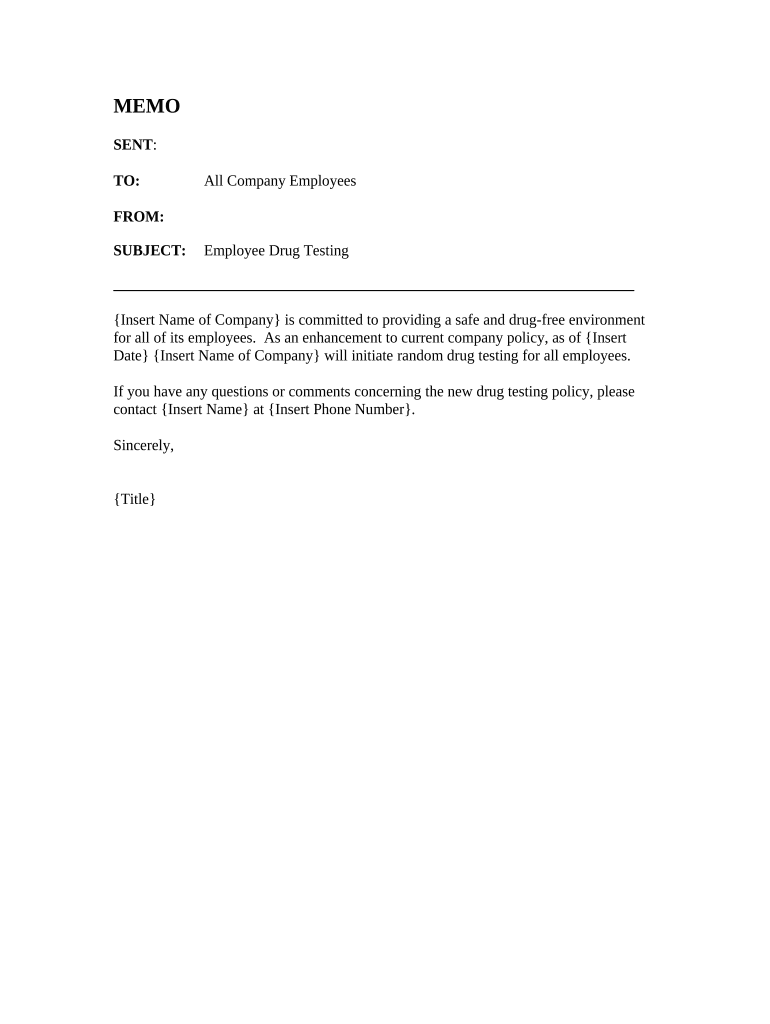
Drug Testing Form

This template is fully customizable. Edit the text, fill out the fields, and send it for signature. Give it a try!
Drug Testing Form

What a Drug Testing Form Is and when it’s used

A Drug Testing Form documents consent, testing reason, chain-of-custody, and reported results for workplace, clinical, or regulatory drug screening. It typically records the tested person’s identity, collection site details, specimen type, collector and laboratory information, and signatures from the donor and authorized personnel. Employers and medical reviewers use the form to track specimen transfer, ensure procedural compliance, and preserve an audit trail for disputes, regulatory review, or employment decisions. Proper completion protects privacy, supports defensible decisions, and creates a reproducible record for investigators and auditors.

Why a clear Drug Testing Form matters and how legal rules apply

A complete Drug Testing Form reduces legal exposure by documenting consent, identity verification, chain-of-custody, and test results while supporting regulatory compliance such as DOT rules for safety-sensitive roles. Electronic execution is generally enforceable under the ESIGN Act (15 U.S.C. §7001) and UETA where adopted, but specific exceptions and sector rules (for example, DOT testing) may impose additional process or evidence requirements.

Why a clear Drug Testing Form matters and how legal rules apply

Who prepares or signs this form and why it matters

Employers, medical review officers, collectors, laboratories, and tested individuals commonly complete portions of the Drug Testing Form.

  • Employers: Request and retain records to support safety policies and disciplinary actions.
  • Collectors: Record collection details, specimen ID, and chain-of-custody entries.
  • Laboratories/MROs: Document test methods, confirmations, and final determinations.

Each signer has a distinct role; clear role assignment and accurate entries help preserve evidentiary value and reduce disputes.

Typical signers and their responsibilities

HR Manager

HR Managers request tests, record employer authorization, and retain copies per company policy and applicable law; they coordinate follow-up and ensure privacy safeguards are in place.

Collector / Technician

The collector documents donor identity verification, specimen labeling, chain-of-custody transfers and signs to certify proper collection and handling procedures were followed.

Core sections every professional Drug Testing Form should include

A robust form groups identity, collection details, specimen tracking, authorization, laboratory processing, and final report fields to support compliance and defensibility.

Donor Identity

Full legal name, date of birth, government ID number, and contact details to link results reliably to the individual tested.
Collection Record

Date/time, collection site, specimen type, and collector name with signatures to document the exact moment and conditions of sampling.

Chain of Custody

Sequential custody entries with initials, timestamps, and package seals to preserve continuity between collector, transport, and laboratory receipt.

Laboratory Processing

Lab accession number, testing methods, confirmatory assays, and analyst or lab director identification for result validation.

Medical Review

MRO determinations, documented explanations for positive or invalid results, and recorded contact attempts with the donor.

Authorization

Consent checkboxes or signed authorization specifying purpose (pre-employment, random, reasonable suspicion) and Notice of Rights/Privacy statements.

Step-by-step: completing the form at collection

Follow these four actions at the collection site to ensure a defensible record and maintain chain-of-custody integrity.

  • 01
    Verify Identity: Inspect ID and record details.
  • 02
    Record Collection: Note date, time, and specimen type.
  • 03
    Seal and Label: Affix accession labels and tamper seals.
  • 04
    Document Transfer: Log transfer to courier or lab.

Where the completed Drug Testing Form goes next

After collection, route the form and specimen through defined custody steps to preserve integrity and enable review.

  • Local Retention: Collector retains copy until shipment.
  • Laboratory Intake: Lab logs specimen and links to accession.
  • Medical Review Officer: MRO reviews positives and contacts donor.
  • Employer Record: Employer keeps required records per policy and law.

Configuring an online workflow for Drug Testing Forms

Set up an electronic workflow that preserves chain-of-custody fields, enforces required entries, and records an audit trail.

Field Configuration
Authentication Email + SMS code or enterprise SSO
Required Fields Make identity and collection fields mandatory
Conditional Logic Show MRO fields only if positive
Audit Trail Enable IP, timestamp, and action logging

Digital delivery options and platform needs

Choose a platform that supports secure file types, audit trails, and industry-specific authentication methods.

  • File Formats: PDF and PDF/A preserve layout and signatures
  • Integrations: Connectors to HR, LMS, and lab portals reduce manual entry
  • Authentication: Support for SMS codes, SSO, and higher-assurance methods

Ensure the platform can export complete, tamper-evident records and log every action to support audits and disputes.

Common timing expectations for testing and recordkeeping

Timely actions protect specimen integrity and meet administrative obligations; exact deadlines vary by program and lab.

Specimen Transport:

Ship to laboratory promptly, typically within 24–72 hours.

Lab Processing:

Initial screening completed often within 24–72 hours.

MRO Review:

MRO typically completes review within several business days.

Employee Notice:

Provide result notices per company policy and applicable law.

Record Retention:

Retain for statutorily required periods per federal or state rules.

Key milestones from request to final report

A sequential view of mandatory stages helps track responsibilities and handoffs during a test cycle.

01

Test Authorization

Employer or clinician authorizes testing and documents reason.

02

Collection Event

Specimen is collected with ID verification and signatures.

03

Laboratory Analysis

Specimen is screened and, if necessary, confirmed.

04

Final Determination

MRO issues final result and employer is notified.

Common preparation and processing mistakes to avoid

  • Incomplete identity information that prevents accurate donor matching and delays MRO review.
  • Transcription errors in specimen or accession numbers that break the chain-of-custody link.
  • Missing collector signatures or seal compromises defensibility of the specimen in disputes.
  • Failing to record collection time or temperature when required for certain specimen types.

Risks and potential consequences of an incorrect or incomplete form

Regulatory Risk: Program noncompliance
Employment Risk: Wrongful termination claims
Privacy Risk: HIPAA exposure if PHI mishandled
Evidence Risk: Results excluded in hearings
Operational Delay: Extended investigation time
Financial Risk: Fines, legal fees, or settlements

Comparison of common eSignature pricing options for managing Drug Testing Forms

Vendor pricing differs by plan features such as bulk send, HIPAA support, and envelope caps; signNow is listed first for direct comparison.

signNow DocuSign Adobe Sign PandaDoc HelloSign
Starting Price $8/user/mo $15/user/mo $14/user/mo $19/user/mo $15/user/mo
Free Trial Yes, 7-day trial No No Yes, limited Yes, limited
Bulk Send Yes Yes Yes Yes No
Audit Trail Yes Yes Yes Yes Yes
HIPAA Compliant Yes Yes Yes No No

How to download, save, and share signed Drug Testing Forms

Maintain copies in interoperable formats and use export settings that preserve signatures, metadata, and audit trails for legal and operational needs.

PDF Export

Export the signed form as a PDF or PDF/A to preserve visual layout and embedded signature metadata for long-term storage and court submission.

DOCX Backup

Keep a DOCX or editable copy for administrative edits and template updates while ensuring signed versions remain immutable for evidentiary use.

CSV/Database

Export key structured fields (names, dates, accession numbers) as CSV for reporting, analytics, and integration with HR or safety systems.

Secure Archive

Store signed records in encrypted cloud storage with access controls and versioning to meet retention and audit requirements.

Frequently asked questions about completing and eSigning Drug Testing Forms

Practical answers to common legal, technical, and procedural questions about form completion, eSignature validity, and recordkeeping.


Need help? Contact support

be ready to get more
Join over 28 million airSlate SignNow users