Parties
Identify each party by full legal name, business entity type, principal address, and contact details to ensure valid attribution and service of notices.
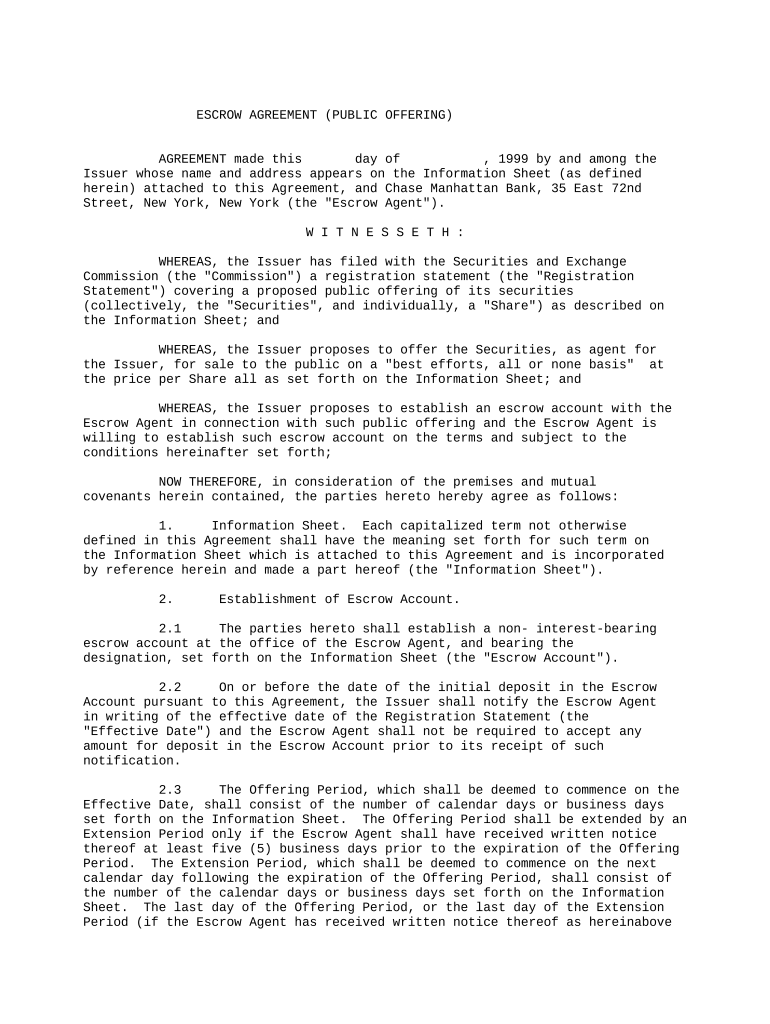
Escrow Agreements minimize counterparty risk by placing funds or documents with an impartial agent and defining clear release conditions and dispute processes. They create a neutral mechanism to complete conditional transfers while preserving evidence of intent and reducing litigation triggers.

Escrow Agreements are used by buyers, sellers, brokers, lenders, developers, attorneys, and other stakeholders who need conditional custody of assets.
An escrow officer or licensed escrow agent administers deposits, maintains records, disburses funds per written instructions, and often provides notarization or remote online notarization services. The officer must document identity verification and keep an audit trail to show compliance with the agreement.
The contracting parties (buyer and seller) authorize the escrow agent by signing the agreement and providing required funds or documents. They must confirm identities, agree to release conditions, and supply supporting paperwork like title commitments or transfer documents.
Identify each party by full legal name, business entity type, principal address, and contact details to ensure valid attribution and service of notices.
Name the agent, include license or registration details where applicable, provide contact information, and state any agent fees and authority limits.
Describe the assets to be held (funds, deeds, source documents), including exact amounts, account instructions, and acceptable deposit forms.
List the precise conditions for release (documents recorded, inspections passed, approvals received) and the procedures for confirming those conditions.
Specify duties, standard of care, indemnities, limitation of liability, and procedures for resigned or incapacitated agents to prevent custody gaps.
Provide an escrow dispute process (holdbacks, interpleader, arbitration, jurisdiction) and state the governing law for interpretation.
| Field | Configuration |
|---|---|
| Escrow Agent Contact | Include name, email, phone for direct delivery |
| Signature Order | Set signing sequence: parties first, then agent |
| Authentication Level | Require SMS code or ID verification for signer |
| Record Retention | Store final PDF and audit trail securely |
Choose an eSignature platform that supports required authentication, audit trails, file formats, and integrations with title, CRM, or storage systems.
Ensure the platform provides tamper-evident signed PDFs, an immutable audit trail, and role-based access controls to meet recording and compliance requirements.
Date the agreement begins; triggers obligations and retention timing
Funds typically due by the closing or a specified calendar date
Supporting documents due within a specified number of days after effective date
Agent reviews release conditions within a defined period, often 3–10 business days
Deeds or releases to be recorded within the timeframe specified in the agreement
A buyer deposited purchase funds pending lien clearance and final inspection
A licensee funded milestone payments held by escrow until source code escrow conditions were verified