Business Identification
Legal business name, DBA if applicable, and employer identification (EIN or tax ID) to match official records and reduce verification friction.
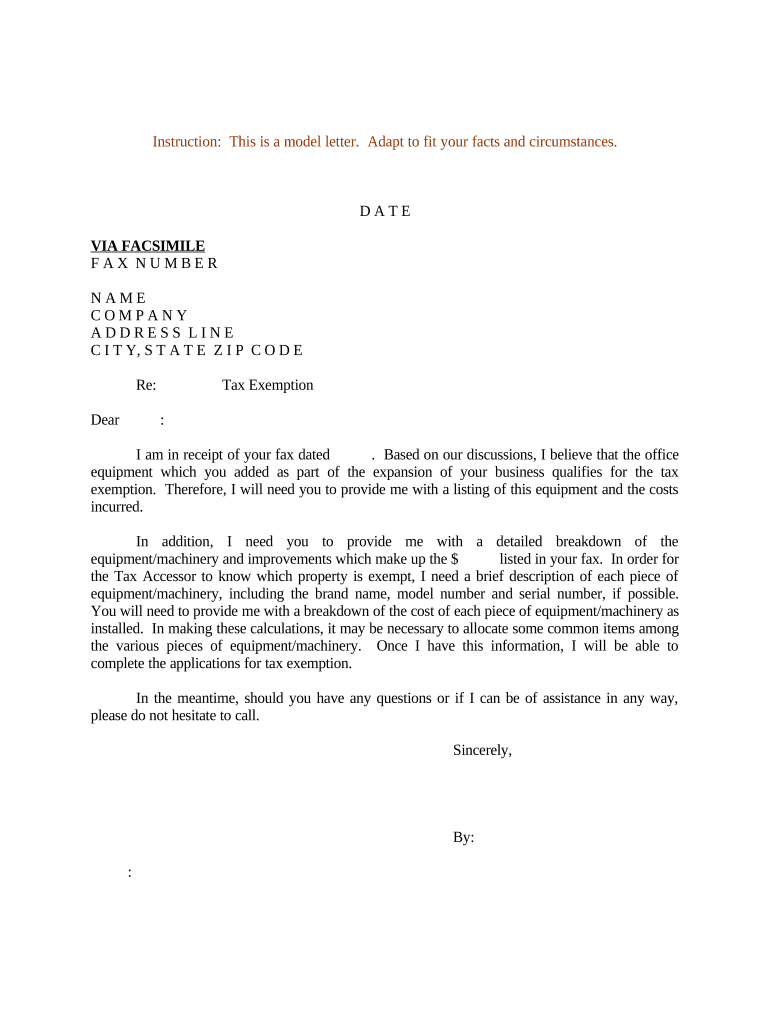
A properly completed exemption letter reduces the risk of enforcement actions, supports employee travel and access, and documents the legal basis for operations under emergency rules. Maintain records that demonstrate intent and authority to operate in case of inspections or disputes.

Organizations preparing exemption letters range from small local businesses to multi-state firms; HR, compliance, and operations teams commonly assemble the needed details.
Keep a single authoritative version on file and distribute authenticated copies to employees, contractors, and local enforcement as appropriate.
The business owner or CEO can sign when they hold legal authority to represent the company. Their signature confirms corporate authorization and is typically accepted by local enforcement or contracting parties.
An officer or manager with written delegation (e.g., board resolution or power of attorney) may sign. Include a line identifying the delegation and keep supporting documentation available.
Legal business name, DBA if applicable, and employer identification (EIN or tax ID) to match official records and reduce verification friction.
Physical street address of the premises where essential activities occur; include suite numbers and county to align with local orders.
A clear description of essential activities performed, linked to specific language in the local or state emergency order when possible.
Job titles and brief descriptions of duties that qualify employees for travel or on-site work under the exemption.
Reference the relevant executive order, public health directive, or statute that the exemption relies on, including date and jurisdiction.
Name, title, signature, and execution date; include contact email and phone for rapid verification by authorities.
| Field | Configuration |
|---|---|
| Business Name | Auto-fill from company profile |
| Effective Date | Date picker MM/DD/YYYY |
| Signer | Role-based signer assignment |
| Verification | Enable email or SMS authentication |
Use an eSignature platform that supports legal compliance, strong authentication, and an audit trail to prove intent and attribution.
Preserve signed copies in secure storage with retained audit records; when handling protected health information, ensure a Business Associate Agreement is in place for HIPAA compliance.
| signNow | DocuSign | Adobe Sign | PandaDoc | HelloSign | |
|---|---|---|---|---|---|
| Starting Price | $8/user/mo | $15/user/mo | $14/user/mo | $19/user/mo | $15/user/mo |
| Free Trial | 7-day free trial | Varies | Varies | Varies | Varies |
| Bulk Send | Yes | Yes | Yes | Yes | No |
| Audit Trail | Yes | Yes | Yes | Yes | Yes |
| HIPAA Compliant | Yes | Yes | Yes | No | No |
Determine whether the receiving authority requires notarization or witness signatures.
Use a commissioned notary when jurisdiction or recipient demands a notarized acknowledgement.
Follow state-specific witness counts when required by local practice or recipient policy.
Use RON where authorized; verify state RON status and notary requirements beforehand.
RON typically requires credential analysis, KBA, or government ID plus multi-factor authentication.
Many RON rules mandate A/V recording and multi-year retention of the session.
Notary journals and RON recordings should be retained per state rules, often 5–10 years.
Confirm county or municipal practices which may add requirements beyond state law.
Save as a searchable PDF to preserve layout and allow officials to view a tamper-evident copy alongside the audit trail.
Use PDF/A for long-term archival to ensure consistent rendering over time and support retention requirements.
Keep an editable DOCX master for internal revisions; do not circulate editable copies as official versions once signed.
Download the full audit trail (timestamps, IP addresses, signer details) and store with the signed document for evidentiary purposes.