Establishing secure connection… Loading editor… Preparing document…
Navigation

Fill and Sign the Findings Law Form
Fill and Sign the Findings Law Form

How it works

Open the document and fill out all its fields.
Apply your legally-binding eSignature.
Save and invite other recipients to sign it.

Rate template

4.5
50 votes
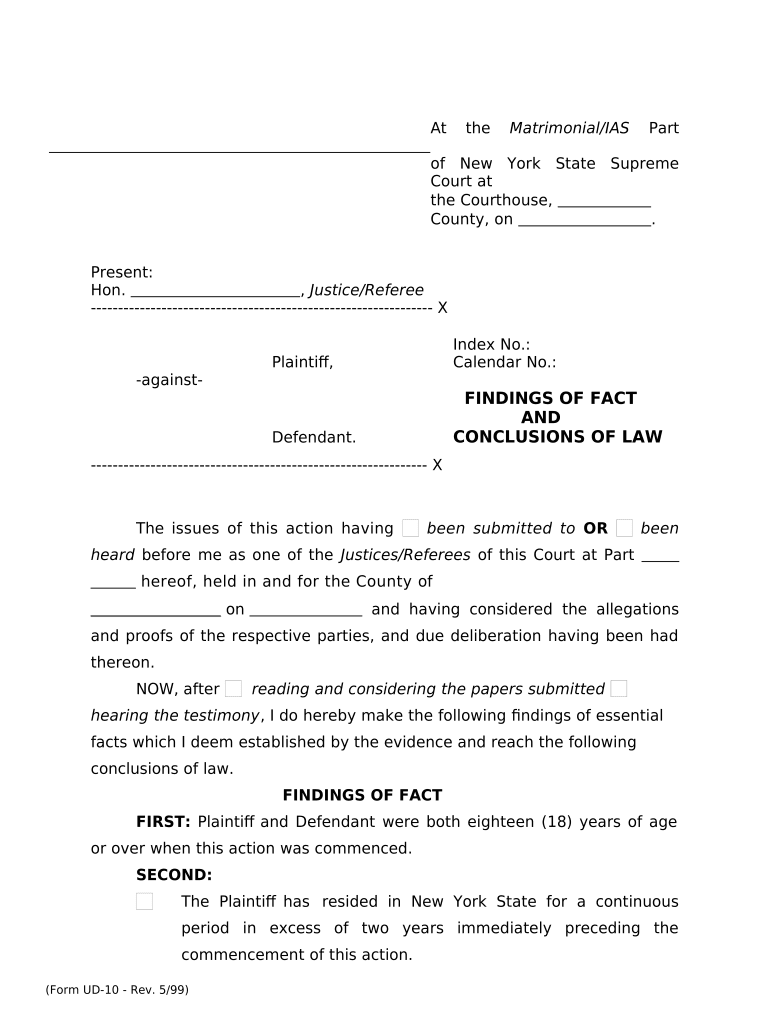
At the Matrimonial/IAS Part       of New York State Supreme Court at the Courthouse,       County, on       . Present: Hon.       , Justice/Referee --------------------------------------------------------------- X       Index No.:       Plaintif, Calendar No.:       -against- FINDINGS OF FACT            AND Defendant. CONCLUSIONS OF LAW -------------------------------------------------------------- X The issues of this action having been submitted to OR been heard before me as one of the Justices/Referees of this Court at Part       hereof, held in and for the County of            on       and having considered the allegations and proofs of the respective parties, and due deliberation having been had thereon. NOW, after reading and considering the papers submitted hearing the testimony , I do hereby make the following fndings of essential facts which I deem established by the evidence and reach the following conclusions of law. FINDINGS OF FACT FIRST: Plaintif and Defendant were both eighteen (18) years of age or over when this action was commenced. SECOND: The Plaintif has resided in New York State for a continuous period in excess of two years immediately preceding the commencement of this action. (Form UD-10 - Rev. 5/99) OR The Defendant has resided in New York State for a continuous period in excess of two years immediately preceding the commencement of this action. OR (Form UD-10 - Rev. 5/99) The Plaintif has resided in New York State for a continuous period in excess of one year immediately preceding the commencement of this action, and: a. the parties were married in New York State. b. the Plaintif has lived as husband or wife in New York State with the Defendant. c. the cause of action occurred in New York State. OR The Defendant has resided in New York State for a continuous period in excess of one year immediately preceding the commencement of this action; and: a. the parties were married in New York State. b. the Defendant has lived as husband or wife in New York State with the Plaintif. c. the cause of action occurred in New York State. OR The cause of action occurred in New York State and both parties were residents thereof at the time of the commencement of this action. THIRD: The Plaintif and the Defendant were married on the date of       in the City, Town or Village of       , County of       , State or Country of       ; in a civil OR religious ceremony. FOURTH: That no decree, judgment or order of divorce, annulment or dissolution of marriage has been granted to either party against the other in any Court of competent jurisdiction of this state or any other state, territory or country, and that there is no other action pending for divorce by either party against the other in any Court. FIFTH: That this action was commenced by fling the S ummons With Notice OR Summons and Verifed Complaint with the County Clerk on       . Defendant was served personally OR pursuant to Court order dated       with the above stated pleadings. Defendant defaulted in appearance OR appeared and waived his / her right to answer OR fled an answer / amended answer withdrawing any previous pleading, and neither admitting nor denying the allegations in plaintiffs complaint, and consenting to entry of judgment. SIXTH: That Defendant is not in the military service of the United States (Form UD-10 - Rev. 5/99) of America, the State of New York, or any other state. OR Defendant is a member of the military service of the       and has appeared by afdavit and does not oppose the action OR is in default. (Form UD-10 - Rev. 5/99) SEVENTH: There are no children of the marriage. OR there is/are       child(ren) of the marriage. Their name(s), social security number(s), address(es) and date(s) of birth are: Name & Social Security Number Date of Birth Address                                                                                           EIGHTH: The grounds for divorce that are alleged in the Verifed Complaint were proved as follows: Cruel and Inhuman Treatment (DRL §170(1)) : At the following times, none of which are earlier than (5) years prior to commencement of this action, the Defendant engaged in conduct that so endangered the mental and physical well being of the Plaintif, so as to render it unsafe and improper for the parties to cohabit (live together) as husband and wife. (State the facts that demonstrate cruel and inhuman conduct giving dates, places and specifc acts. Conduct may include physical, verbal, sexual or emotional behavior).                                           (Form UD-10 - Rev. 5/99)                   (Attach an additional sheet, if necessary). (Form UD-10 - Rev. 5/99) Abandonment (DRL 170(2): That commencing on or about       , and continuing for a period of more than one (1) year immediately prior to commencement of this action, the Defendant left the marital residence of the parties located at       , and did not return. Such absence was without cause or justifcation, and was without Plaintiffs consent. That commencing on or about       , and continuing for a period of more than one (1) year immediately prior to commencement of this action, the Defendant refused to have sexual relations with the Plaintif despite Plaintiffs repeated requests to resume such relations. Defendant does not sufer from any disability which would prevent her / him from engaging in such sexual relations with Plaintif. The refusal to engage in sexual relations was without good cause or justifcation and occurred at the marital residence located at       . That commencing on or about       , and continuing for a period of more than one (1) year immediately prior to commencement of this action, the Defendant willfully and without cause or justifcation abandoned the Plaintif, who had been a faithful and dutiful husband / wife , by depriving Plaintif of access to the marital residence located at             . This deprivation was without the consent of the Plaintif and continued for a period of greater than one year. Confnement to Prison (DRL §170())): (a) That after the marriage of Plaintif and Defendant, Defendant was confned in prison for a period of three or more consecutive years, to wit: that Defendant was confned in       prison on       , and has remained confned to this date; and (b) not more that fve (5) years elapsed between the end of the third year of imprisonment and the date of commencement of this action. Adultery (DRL §170(4)): (a) That on       , at the premises located at             the Defendant engaged in sexual intercourse with       without the procurement nor the connivance of the Plaintif and the Plaintif ceased to cohabit (live) with the Defendant upon the discovery of the adultery. (b) not more than fve (5) years elapsed between the date of said adultery and the date of commencement of this action. (Attach a corroborating afdadit of a third party witness or other additional proof). Liding Separate and Apart Pursuant to a Separation Decree or Judgment of Separation (DRL §170(5)): (Form UD-10 - Rev. 5/99) (a) That the       Court,       County,       (Country or State) rendered a decree or judgment of separation on       , under Index Number       ; and (b) that the parties have lived separate and apart for a period of one year or longer after the granting of such decree; and (c) that the Plaintif has substantially complied with all the terms and conditions of such decree or judgment. (Form UD-10 - Rev. 5/99) Liding Separate and Apart Pursuant to a Separation Agreement (DRL §170(6)): (a) That the Plaintif and Defendant entered into a written agreement of separation, which they subscribed and acknowledged on       , in the form required to entitle a deed to be recorded; and (b) that the agreement / memorandum of said agreement was fled             in the Ofce of the Clerk of the County of       , wherein Plaintif / Defendant resided; and (c) that the parties have lived separate and apart for a period of one year or longer after the execution of said agreement; and (d) that the Plaintif has substantially complied with all terms and conditions of such agreement. NINTH: A sworn statement pursuant to DRL §253 that Plaintif has taken all steps within his or her power to remove all barriers to Defendantfs remarriage following the divorce was served on the Defendant. A sworn statement as to the removal of barriers to remarriage is not required because the parties were married in a civil ceremony. A sworn statement as to the removal of barriers to remarriage is not required because Defendant waived the need for the statement in his or her afdavit. TENTH: The parties have agreed OR the court has determined that Plaintif OR Defendant will receive maintenance of $       per week OR bi weekly OR per month commencing on       pursuant to DRL §236(B)(6)(c). E L E V E N T H : T h e c h i l d r e n o f t h e m a r r i a g e n o w r e s i d e w i t h P l a i n t i f O R Defendant OR third party, namely       . T he Pla in ti f OR Defendant is entitled to visitation away from the custodial residence. The Plaintif OR Defendant OR Third Party, namely       is entitled to custody. OR No award of custody due to the child(ren) of the marriage not residing in New York State. OR Other custody arrangement (specify):             . (Form UD-10 - Rev. 5/99) TWELFTH: Equitable Distribution and ancillary issues shall be in accordance with the settlement agreement OR pursuant to the decision of the court OR Equitable Distribution is not an issue. THIRTEENTH: There is/are no unemancipated child(ren). OR The award of child support is based upon the following: (Form UD-10 - Rev. 5/99) (A) The children of the marriage entitled to receive support are: Name Date of Birth                                                             (B) (1) By order of       Court,       County, Index/Docket No.       dated       the Plaintif/Defendant was directed to pay the sum of $       per       for child support. Said Order shall continue. OR (2) The adjusted gross income of the Plaintif who is the custodial OR non -custodial parent is $       per year and the adjusted gross income of the Defendant who is the c ustodial OR non-custodial parent is $       per year and the combined parental annual income is $       . The applicable child support percentage is 17/25/29/31/35 %. The combined basic child support obligation attributable to both parents is $       per year on income to $80,000 and $       per year on income over $80,000. The Plaintiffs pro rata share of the combined parental income is       % and the Defendantfs pro rata share of the combined parental income is       %. The non-custodial parentfs pro rata share of the child support obligation on combined income to $80,000 is $       per year or $       per week bi-weekly per month . The non- custodial parentfs pro rata share of the child support obligation on combined income over $80,000 is $       per year or$       per week bi-weekly per month. The non-custodial parentfs pro rata share of future health care expenses not covered by insurance, child care expenses, educational or other extraordinary expenses is       %. OR (3) The parties entered into a stipulation/agreement on       wherein the Plaintif OR Defendant agrees to pay $       per week OR bi-weekly OR per month child support directly OR through the Support Collection Unit to Plaintif OR Defendant OR Third Party, namely       . The parties agree to waive OR apply the Child Support Standards Act to combined income over $80,000. The parties have agreed that health care expenses not covered by insurance shall be paid by Plaintif OR Defendant in the amount of $       per week OR bi-weekly OR per month OR       % of the uncovered expenses. The parties have agreed that child care expenses shall be paid by Plaintif OR Defendant to Plaintif OR Defendant in the amount of $       per week OR bi-weekly OR per month OR       % of said child care expenses. The parties have agreed that educational and extraordinary expenses shall be paid by Plaintif OR Defendant to Plaintif OR Defendant in the amount of $       per week OR bi-weekly OR per month OR       % of said educational and extraordinary expenses. Said agreement reciting in compliance with DRL §2401-b(h): The parties have been advised of the Child Support Standards Act. The basic child support obligation presumptively results in the correct amount of child support. The unrepresented party, if any, has received a copy of the Child Support Standards Chart promulgated by Commissioner of Social Services pursuant to Social Services Law Section 111-I. The presumptive amount of child support attributable to the non- custodial parent is $       per week OR bi- weekly OR per month . The amount of child support agreed to conforms with the non-custodial parentfs basic child support obligation OR deviates from the non-custodial parentfs basic child support obligation for the following reasons:                   FOURTEENTH: The Plaintiffs address is       , and social security number is       . The Defendantfs address is       , and social security number is       . There are no unemancipated children. OR There are no health plans available to the parties through their employment. OR The parties are covered by the following group health plans through their employment: Plaintif Defendant Group Health Plan:       Group Health Plan:       Address:       Address:       Identifcation Number:       Identifcation Number:       Plan Administrator:       Plan Administrator:       Type of Coverage:       Type of Coverage:       The parties have agreed or stipulated OR the court has determined that the Plaintif OR Defendant shall be the legally responsible relative and that the unemancipated child(ren) shall be enrolled in his / her group health plan as specifed above until the age of 21 years OR until the child(ren) is / are sooner emancipated. FIFTEENTH: The       Court entered the following order(s) under Index No(s). / Docket No(s).:             SIXTEENTH: Plaintif OR Defendant may resume use of the prior surname:       . CONCLUSIONS OF LAW FIRST: Residency as required by DRL §230 has been satisfed. SECOND: Plaintif OR Defendant is entitled to a judgment of divorce on the grounds of DRL §170 subd.       and granting the incidental relief awarded. Dated:       ______________________________________ J.S.C./Referee

Practical advice on finalizing your ‘Findings Law’ online

Are you fed up with the burden of managing paperwork? Look no further than airSlate SignNow, the premier eSignature solution for individuals and organizations. Wave goodbye to the monotonous task of printing and scanning documents. With airSlate SignNow, you can seamlessly finalize and endorse paperwork online. Utilize the robust features embedded in this user-friendly and affordable platform and transform your method of document management. Whether you need to approve forms or collect electronic signatures, airSlate SignNow manages it all effortlessly, with just a few clicks.

Adhere to this comprehensive guide:

  1. Sign in to your account or sign up for a free trial with our service.
  2. Click +Create to upload a file from your device, cloud, or our template library.
  3. Access your ‘Findings Law’ in the editor.
  4. Click Me (Complete Now) to finalize the document on your end.
  5. Add and assign fillable fields for other participants (if necessary).
  6. Continue with the Send Invite options to solicit eSignatures from others.
  7. Download, print your version, or convert it into a reusable template.

No need to worry if you need to collaborate with your team on your Findings Law or send it for notarization—our solution has everything you need to accomplish such tasks. Sign up with airSlate SignNow today and elevate your document management to new levels!

Here is a list of the most common customer questions. If you can’t find an answer to your question, please don’t hesitate to reach out to us.

Need help? Contact Support

The best way to complete and sign your findings law form
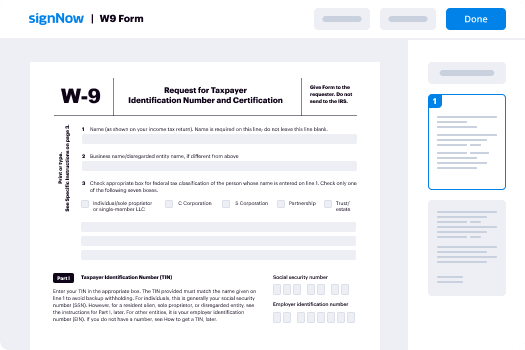
Save time on document management with airSlate SignNow and get your findings law form eSigned quickly from anywhere with our fully compliant eSignature tool.

How to Sign a PDF Online How to Sign a PDF Online

How to complete and sign paperwork online

In the past, dealing with paperwork took pretty much time and effort. But with airSlate SignNow, document management is quick and simple. Our powerful and easy-to-use eSignature solution enables you to effortlessly complete and electronically sign your findings law form online from any internet-connected device.

Follow the step-by-step guidelines to eSign your findings law form template online:

  • 1.Register for a free trial with airSlate SignNow or log in to your account with password credentials or SSO authorization option.
  • 2.Click Upload or Create and add a file for eSigning from your device, the cloud, or our form collection.
  • 3.Click on the file name to open it in the editor and utilize the left-side toolbar to fill out all the empty fields properly.
  • 4.Put the My Signature field where you need to approve your form. Type your name, draw, or upload a picture of your regular signature.
  • 5.Click Save and Close to accomplish modifying your completed document.

After your findings law form template is ready, download it to your device, export it to the cloud, or invite other individuals to electronically sign it. With airSlate SignNow, the eSigning process only takes a couple of clicks. Use our powerful eSignature tool wherever you are to manage your paperwork effectively!

How to Sign a PDF Using Google Chrome How to Sign a PDF Using Google Chrome

How to fill out and sign paperwork in Google Chrome

Completing and signing paperwork is easy with the airSlate SignNow extension for Google Chrome. Installing it to your browser is a quick and productive way to deal with your forms online. Sign your findings law form template with a legally-binding eSignature in just a few clicks without switching between programs and tabs.

Follow the step-by-step guidelines to eSign your findings law form in Google Chrome:

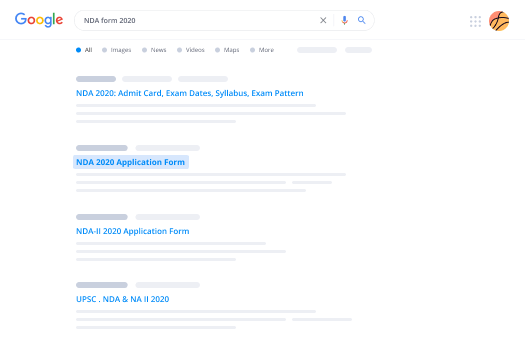
  • 1.Navigate to the Chrome Web Store, find the airSlate SignNow extension for Chrome, and add it to your browser.
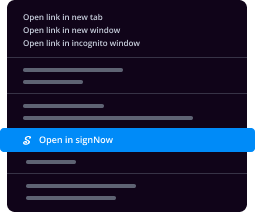
  • 2.Right-click on the link to a form you need to eSign and select Open in airSlate SignNow.
  • 3.Log in to your account with your password or Google/Facebook sign-in option. If you don’t have one, sign up for a free trial.
  • 4.Utilize the Edit & Sign toolbar on the left to fill out your sample, then drag and drop the My Signature field.
  • 5.Add an image of your handwritten signature, draw it, or simply type in your full name to eSign.
  • 6.Make sure all data is correct and click Save and Close to finish editing your paperwork.

Now, you can save your findings law form sample to your device or cloud storage, send the copy to other individuals, or invite them to electronically sign your document via an email request or a protected Signing Link. The airSlate SignNow extension for Google Chrome enhances your document workflows with minimum effort and time. Start using airSlate SignNow today!

How to Sign a PDF in Gmail How to Sign a PDF in Gmail How to Sign a PDF in Gmail

How to complete and sign forms in Gmail

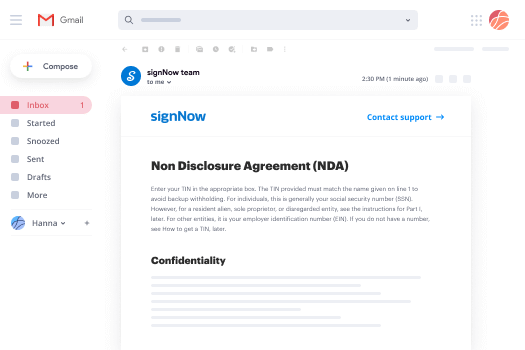
Every time you receive an email with the findings law form for approval, there’s no need to print and scan a file or save and re-upload it to another program. There’s a much better solution if you use Gmail. Try the airSlate SignNow add-on to rapidly eSign any documents right from your inbox.

Follow the step-by-step guidelines to eSign your findings law form in Gmail:

  • 1.Navigate to the Google Workplace Marketplace and locate a airSlate SignNow add-on for Gmail.
  • 2.Install the tool with a corresponding button and grant the tool access to your Google account.
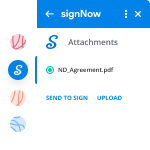
  • 3.Open an email containing an attached file that needs signing and use the S symbol on the right panel to launch the add-on.
  • 4.Log in to your airSlate SignNow account. Select Send to Sign to forward the document to other people for approval or click Upload to open it in the editor.
  • 5.Put the My Signature field where you need to eSign: type, draw, or upload your signature.

This eSigning process saves efforts and only takes a few clicks. Use the airSlate SignNow add-on for Gmail to adjust your findings law form with fillable fields, sign forms legally, and invite other people to eSign them al without leaving your mailbox. Boost your signature workflows now!

How to Sign a PDF on a Mobile Device How to Sign a PDF on a Mobile Device How to Sign a PDF on a Mobile Device

How to complete and sign forms in a mobile browser

Need to rapidly complete and sign your findings law form on a mobile phone while working on the go? airSlate SignNow can help without the need to set up extra software programs. Open our airSlate SignNow tool from any browser on your mobile device and add legally-binding electronic signatures on the go, 24/7.
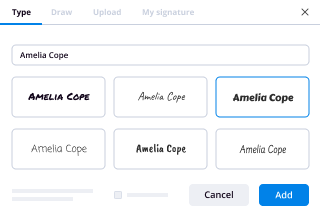
Follow the step-by-step guide to eSign your findings law form in a browser:

  • 1.Open any browser on your device and go to the www.signnow.com
  • 2.Register for an account with a free trial or log in with your password credentials or SSO authentication.
  • 3.Click Upload or Create and pick a file that needs to be completed from a cloud, your device, or our form collection with ready-to go templates.
  • 4.Open the form and fill out the empty fields with tools from Edit & Sign menu on the left.
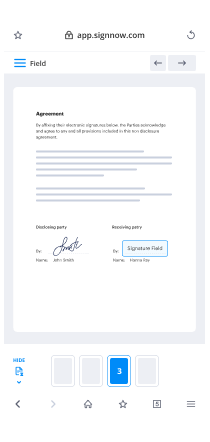
  • 5.Add the My Signature field to the form, then enter your name, draw, or add your signature.

In a few easy clicks, your findings law form is completed from wherever you are. When you're finished editing, you can save the document on your device, create a reusable template for it, email it to other individuals, or invite them electronically sign it. Make your paperwork on the go speedy and effective with airSlate SignNow!
How to Sign a PDF on iPhone How to Sign a PDF on iPhone

How to fill out and sign forms on iOS

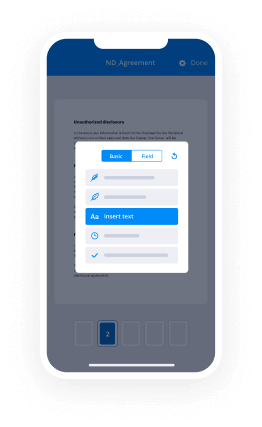
In today’s business community, tasks must be done rapidly even when you’re away from your computer. Using the airSlate SignNow app, you can organize your paperwork and approve your findings law form with a legally-binding eSignature right on your iPhone or iPad. Install it on your device to close deals and manage documents from anyplace 24/7.

Follow the step-by-step guide to eSign your findings law form on iOS devices:

  • 1.Open the App Store, search for the airSlate SignNow app by airSlate, and install it on your device.
  • 2.Open the application, tap Create to add a template, and choose Myself.
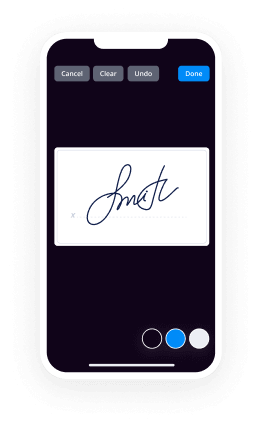
  • 3.Choose Signature at the bottom toolbar and simply draw your signature with a finger or stylus to eSign the form.
  • 4.Tap Done -> Save right after signing the sample.
  • 5.Tap Save or take advantage of the Make Template option to re-use this paperwork in the future.

This process is so straightforward your findings law form is completed and signed in just a couple of taps. The airSlate SignNow application works in the cloud so all the forms on your mobile device are kept in your account and are available whenever you need them. Use airSlate SignNow for iOS to enhance your document management and eSignature workflows!
How to Sign a PDF on Android How to Sign a PDF on Android

How to fill out and sign forms on Android

With airSlate SignNow, it’s simple to sign your findings law form on the go. Set up its mobile app for Android OS on your device and start boosting eSignature workflows right on your smartphone or tablet.

Follow the step-by-step guide to eSign your findings law form on Android:

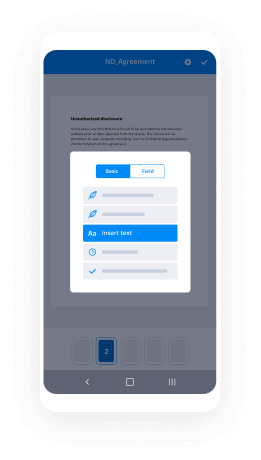
  • 1.Go to Google Play, search for the airSlate SignNow app from airSlate, and install it on your device.
  • 2.Log in to your account or create it with a free trial, then add a file with a ➕ key on the bottom of you screen.
  • 3.Tap on the imported document and choose Open in Editor from the dropdown menu.
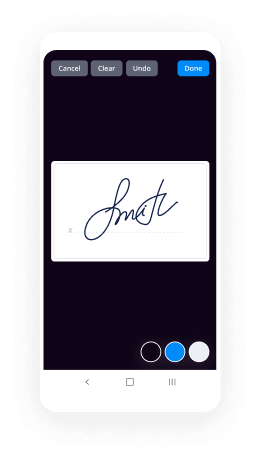
  • 4.Tap on Tools tab -> Signature, then draw or type your name to electronically sign the template. Fill out empty fields with other tools on the bottom if necessary.
  • 5.Use the ✔ key, then tap on the Save option to finish editing.

With a user-friendly interface and total compliance with main eSignature laws and regulations, the airSlate SignNow application is the perfect tool for signing your findings law form. It even works offline and updates all document modifications once your internet connection is restored and the tool is synced. Complete and eSign documents, send them for eSigning, and create re-usable templates whenever you need and from anyplace with airSlate SignNow.

Sign up and try Findings law form
  • Close deals faster
  • Improve productivity
  • Delight customers
  • Increase revenue
  • Save time & money
  • Reduce payment cycles