Establishing secure connection…Loading editor…Preparing document…

Foreclosure Sale

This template is fully customizable. Edit the text, fill out the fields, and send it for signature. Give it a try!
Foreclosure Sale

What a Foreclosure Sale Is and How It Works

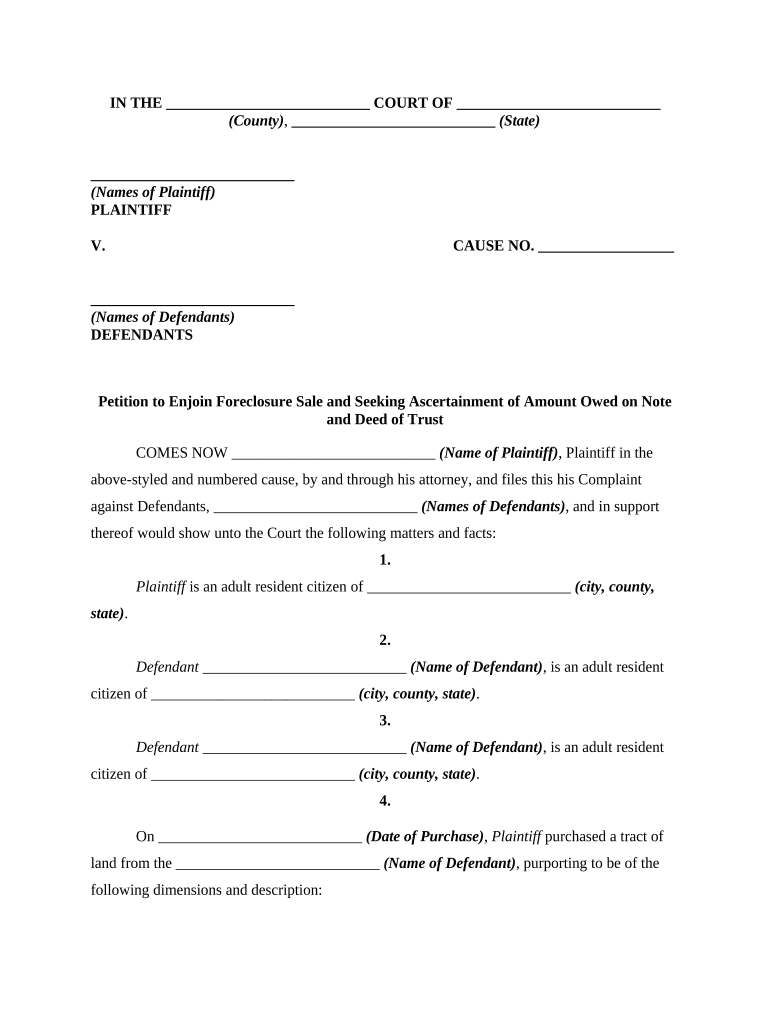
A Foreclosure Sale is a public auction or court-ordered sale of real property used to repay an outstanding mortgage or deed of trust when the borrower defaults. The process differs by jurisdiction: some states use judicial foreclosure through the court system, while others permit non-judicial trustee or power-of-sale sales handled outside court. The sale transfers title to the purchaser, typically via trustee's deed or sheriff's deed, and may trigger redemption periods, deficiency claims, or related recordings. Accurate notices and compliance with state statutes determine whether the sale is legally effective.

Why a Formal Foreclosure Sale Document Matters

A clear, professionally prepared Foreclosure Sale package documents legal notice, sale terms, and chain-of-title effects; it reduces legal challenges and supports recording requirements under state law while protecting lender and purchaser interests.

Why a Formal Foreclosure Sale Document Matters

Who Typically Prepares or Receives a Foreclosure Sale Notice

Lenders, servicers, trustees, county clerks, title companies, and prospective bidders interact with Foreclosure Sale documents at different stages of the process.

  • Loan servicers and lenders managing defaulted mortgage portfolios and legal compliance for sales.
  • Trustees, foreclosure attorneys, and county clerks responsible for publishing and recording sale notices.
  • Title companies, investors, and bidders verifying chain of title and sale terms before purchase.

Each participant has distinct responsibilities: preparers ensure statutory notices are correct; custodians file and record; buyers perform due diligence before bidding or purchasing the property at sale.

Primary Signatories and Their Roles

Lender / Servicer

The lender or loan servicer initiates foreclosure proceedings, authorizes notices, and sets sale terms. They must ensure statutory timelines are met and that notices include accurate loan identifiers, legal descriptions, and contact information for cure or redemption.

Trustee / Attorney

A trustee or foreclosure attorney typically prepares the Notice of Sale, conducts the sale or files court motions, and executes the trustee's or sheriff's deed after sale; they must follow state statutes and maintain records of publication and posting.

Essential Legal and Technical Data Elements

Property Description: Full legal description.
Loan Identifier: Loan or deed of trust number.
Notice Dates: Default, sale, and publication dates.
Trustee Info: Name and contact details.
Sale Terms: Minimum bid and payment terms.
Recording Data: Recorder book/page or instrument number.

Step-by-Step: Prepare and Complete a Foreclosure Sale Notice

Follow these sequential steps to prepare a compliant Foreclosure Sale notice and execute the sale in line with statutory requirements.

  • 01
    Verify Loan Documents: Confirm the recorded mortgage and instrument numbers.
  • 02
    Draft Notice: Include legal description, default date, and sale terms.
  • 03
    Publish and Post: Publish in required newspaper and post at courthouse.
  • 04
    Conduct Sale: Hold auction, accept bids, and record deed.

How to Configure an Online Foreclosure Sale Workflow

Set up an e-submission workflow that captures required fields, verifies identity, and records completion metadata for compliance.

Field Configuration
Notification Email Send at issuance and seven days before sale.
Signer Authentication Require email plus SMS code for trustees.
Notary / RON Settings Enable audio-video capture when notarization required.
Archive Format Store final as PDF/A with audit trail.

Where to File and Who Receives the Final Documents

After the sale, record and distribute documents to preserve title and inform interested parties.

  • County Recorder: Record trustee's or sheriff's deed for title transfer.
  • Lender / Servicer: Retain copies for loan file and deficiency accounting.
  • Title Company: Provide sale documents for issuing or clearing title.
  • Former Borrower: Send final accounting or redemption notice when required.

Digital Signing and eSubmission Considerations

Choose a platform that supports secure eSigning, identity authentication, and compliant record retention for Foreclosure Sale documents.

  • File Formats: PDF, DOCX accepted; final archive in PDF/A.
  • Authentication Methods: Email link, SMS code, or knowledge-based authentication.
  • Integrations: Connectors for document storage and case management.

Ensure the provider supports audit trails, long-term storage, and any required notary integrations (remote or in-person) so records reproduce exactly for title searches and court review.

Common Mistakes to Avoid When Preparing a Foreclosure Sale

  • Using an incorrect legal description that fails to match county records and delays recording.
  • Missing statutory notice windows or publication requirements that can invalidate a sale.
  • Failing to include accurate loan or instrument numbers, causing title chain ambiguity.
  • Skipping required notarization or RON procedures when state law mandates authentication.

Legal and Financial Risks of an Incorrect Foreclosure Sale

Sale Invalidation: Court removals or set-asides possible.
Deficiency Claims: Borrower may pursue deficiency remedies.
Title Challenges: Clouds on title and costly litigation.
Recording Delays: Loss of priority for purchaser's interest.
Regulatory Fines: State penalties for noncompliant notice.
Reputational Harm: Lender trust and investor impact.

Key Components of a Professional Foreclosure Sale Package

A complete package reduces legal exposure and supports smooth transfer of title; include these critical elements.

Notice of Default

A written notice to the borrower specifying default details, cure rights, and statutory timelines; it forms the factual basis for foreclosure and starts notice periods under state law.
Notice of Sale

A statutorily compliant public notice detailing legal description, sale date, time, and location; it must be published and posted per jurisdictional requirements to perfect the sale.

Affidavit of Publication

Proof that notice was published in the required newspaper for the mandated number of issues; attach publisher affidavits to support recording and court filings.

Trustee's or Sheriff's Deed

The conveyance instrument executed after sale transferring title to purchaser; it should reference the sale and be recorded promptly to establish title chain.

Sale Terms Exhibit

Detailed payment terms, deposit requirements, and minimum bid; clear terms reduce bid disputes and clarify purchaser obligations at closing.

Executor's Affidavits

Affidavits attesting to statutory compliance (posting, mailing, publication) and to the authority of signatories; preserve these for title insurance and litigation defense.

Typical Deadlines and Timeframes to Track

Deadlines and publication windows vary by state; confirm local statutes and court rules before proceeding.

Notice of Default Window:

Timing varies considerably; many servicers allow 30–120 days after default before sale steps begin.

Publication Period:

Many jurisdictions require notice published for a series of issues over 21–45 days prior to sale.

Posting Requirements:

Local rules often require physical posting at the courthouse or property for a set period before sale.

Redemption Period:

Some states provide a post-sale redemption window; length is state-specific and may be limited or absent.

Recording After Sale:

Record trustee's deed promptly; delays can affect priority and purchaser protections.

Key Milestones From Default to Title Transfer

Follow this sequential milestone list to maintain compliance and document chain of custody during foreclosure processing.

01

Default Identified

Borrower misses payment; servicer documents default and prepares notices.

02

Notice Issued

Notice of Default and Notice of Sale drafted and sent per statute.

03

Public Notice Period

Publication and posting occur; bidders are notified and due diligence follows.

04

Auction and Recording

Public sale is held, successful bid recorded via trustee's or sheriff's deed.

Comparing Judicial and Non-Judicial Foreclosure Sale Procedures

Understanding procedural differences helps determine notice, timing, and required filings for the Foreclosure Sale.

Criteria Judicial Foreclosure Non-Judicial Foreclosure
Court Involvement
Typical Timeline longer shorter
Primary Sale Document court order notice of sale
Common Remedy judicial sale trustee's sale

eSignature Vendor Pricing and Feature Comparison for Foreclosure Workflows

Compare signNow and common alternatives on starting price, trial availability, and core features relevant to foreclosure sale processing.

signNow DocuSign Adobe Sign PandaDoc HelloSign
Starting Price $8/user/mo $15/user/mo $14/user/mo $19/user/mo $15/user/mo
Free Trial Yes, 7-day free trial No No Yes, limited Yes, limited
Bulk Send Yes Yes Yes Yes No
Audit Trail Yes Yes Yes Yes Yes
HIPAA Compliant Yes Yes Yes No No

Practical Tips for Accurate and Efficient Foreclosure Sale Processing

Adopt these practices to reduce defects, accelerate recording, and make sale documentation defensible.

Standardize Templates
Use pre-approved templates with locked legal-description fields to prevent transcription errors and ensure consistent statutory language across filings.
Track Notice Windows
Maintain a calendar tied to the Notice of Default date and automate publication and posting reminders to avoid missed statutory deadlines.
Capture Audit Trail
Record signer identity, timestamps, IP addresses, and any notarization or RON session data to support the validity of electronic executions.
Confirm Recorder Requirements
Verify county recording formats and fee schedules before submission to prevent rejections and re-filing delays.

Real-World Examples from Organizations Using eSigning for Property Transactions

These examples illustrate how electronic workflows support property-related document handling in practice.

Martin Properties — Tim Martin

Martin Properties moved routine property paperwork online to maintain compliance and speed execution.

  • Founder Tim Martin notes ease of processing documents online.
  • The result was more efficient handling of property documentation across devices, enabling faster execution and consistent compliance with internal policies and third-party requirements.

Optica Ventures — Brian Fitzgibbons

Optica Ventures reduced friction in client document exchange through digital workflows.

  • COO Brian Fitzgibbons highlights simplicity for internal teams and customers.
  • Streamlined e-signing allowed the firm to close administrative tasks faster while ensuring documents were returned with complete metadata and consistent formatting for recordkeeping.

Frequently Asked Questions About Foreclosure Sale Documents

Answers to common operational and legal questions about preparing, executing, and recording Foreclosure Sale documents.


Need help? Contact support

be ready to get more
Join over 28 million airSlate SignNow users