Establishing secure connection…Loading editor…Preparing document…

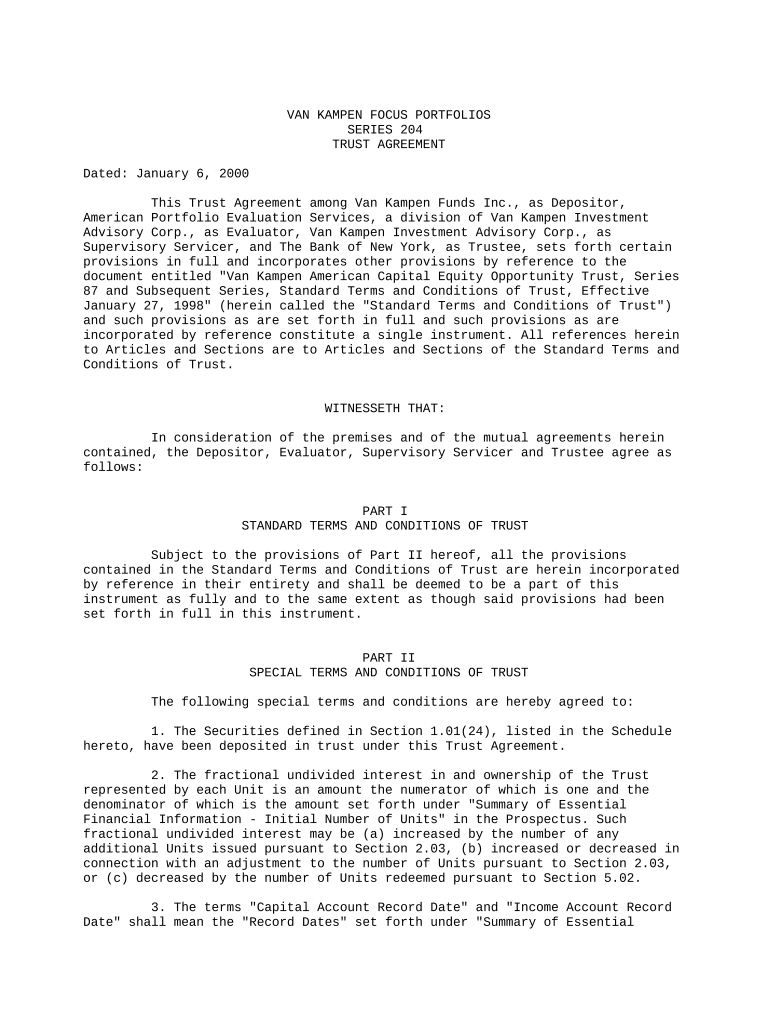
Trust Agreement

This template is fully customizable. Edit the text, fill out the fields, and send it for signature. Give it a try!
Trust Agreement

What a Trust Agreement Is and When It Applies

A Trust Agreement is a written legal instrument by which a settlor transfers property to a trustee to hold and manage for the benefit of named beneficiaries under specified terms. Trusts can be revocable or irrevocable, grant broad or limited trustee powers, and address distribution timing, tax treatment, investment authority, and successor trustees. In the United States most inter vivos and testamentary trust arrangements rely on state trust law; e-signatures are generally valid under ESIGN (15 U.S.C. ch. 96) and UETA where adopted, though certain funding steps and notarizations may require additional steps.

Why a Clear Trust Agreement Matters for Parties and Executors

A well-drafted Trust Agreement clarifies asset ownership, reduces probate exposure, establishes trustee duties and distribution rules, and creates an enforceable roadmap for fiduciary administration. Properly identifying parties and following execution requirements helps avoid costly disputes, unintended tax consequences, or delays in funding trust assets.

Why a Clear Trust Agreement Matters for Parties and Executors

Who Typically Prepares and Signs a Trust Agreement

Parties should confirm signer authority, applicable notarization, and whether state law or the trust instrument imposes additional formalities before execution.

  • Individual settlors and family members managing estate transfer plans and lifetime asset protection strategies.
  • Trustees — corporate or individual fiduciaries who accept appointment and manage assets per trust terms.
  • Estate attorneys, financial advisors, and banks responsible for drafting, reviewing, or funding trusts.

Common Signatories and Their Roles

Settlor / Grantor

The individual or entity creating the trust and transferring assets. The settlor defines terms, retained powers (if any), and initial trustee designation; accuracy of identity and signature is essential for enforceability.

Trustee

The person or institution accepting fiduciary duties to administer trust assets. Trustees must sign acceptance clauses, follow distribution provisions, and maintain records to satisfy beneficiaries and regulators.

Essential Data Elements to Include

Trust Name: Formal name of trust
Settlor Details: Full legal name
Trustee Details: Name and contact
Beneficiary List: Names and shares
Trust Assets: Asset descriptions
Governing Law: State specified

Core Sections to Draft Carefully in a Trust Agreement

A complete Trust Agreement clearly sets out roles, powers, and distribution mechanics so trustees and beneficiaries understand rights and obligations without ambiguity.

Declaration

Identifies settlor, trust name, effective date, and whether the trust is revocable or irrevocable; forms the agreement's foundational recital and controls interpretation.
Trustee Powers

Specifies investment authority, discretionary distribution powers, delegation rights, and limitations to guide asset management and liability exposure.

Beneficiary Provisions

Defines primary and contingent beneficiaries, distribution shares, support or discretionary language, and vesting conditions to reduce future disputes.

Distribution Schedule

Sets timing and triggering events for distributions, age or milestone-based releases, and trust termination mechanics for clarity and enforceability.

Revocation & Amendment

Explains whether the settlor may modify or revoke the trust and the formal steps required for valid amendments or revocation.

Tax & Accounting

Addresses tax allocations, fiduciary tax return responsibilities, accounting requirements, and whether trust is grantor or separate taxpayer.

Stepwise Process to Complete and Execute a Trust Agreement

Follow these sequential steps to draft, review, and execute a Trust Agreement with minimal risk of operational or legal defects.

  • 01
    Draft Terms: Define parties, powers, distributions, and governing law.
  • 02
    Verify Parties: Confirm legal names and identity documents for accuracy.
  • 03
    Review with Counsel: Have an attorney check tax and fiduciary language.
  • 04
    Execute and Fund: Sign, notarize if required, and transfer assets to the trust.

Where the Completed Trust Agreement Should Be Sent or Filed

After execution, distribute signed copies to key parties and take action to fund the trust and update institutional records.

  • Trustee File: Trustee retains original signed agreement for administration.
  • Beneficiaries: Provide copies to beneficiaries for transparency.
  • Financial Institutions: Send copies to banks, brokers, and title companies when retitling assets.
  • Attorney Records: Lawyer or firm retains a copy for legal and tax support.

Digital Signing and File Format Considerations

Store final PDFs with audit trails and, where needed, obtain notarization or RON to meet state or institutional requirements.

  • File Formats: PDF or PDF/A preferred
  • Authentication: Email + SMS code or stronger
  • Integrations: Connect with banks and storage

Configuring an Online Workflow to Complete a Trust Agreement

Set up a repeatable digital workflow to collect signatures, supporting IDs, and proof of funding consistently.

Field Configuration
Template Create reusable template with locked clauses
Conditional Fields Show fields based on revocable/irrevocable choice
Signer Authentication Require SMS or knowledge-based checks
Integration Connect to cloud storage and CRM

Key Timing Items to Track When Finalizing a Trust

Some tasks tied to a Trust Agreement carry specific timing expectations that affect funding, taxes, and administration.

Effective Date Entry:

Record MM/DD/YYYY when trust becomes operative

Funding Promptness:

Retitle accounts and deeds promptly to avoid probate

Fiduciary Tax Returns:

Trust returns generally due April 15 or fiscal year schedule

IRS Reporting:

File required informational returns when distributions trigger reporting

Trust Termination Steps:

Follow termination timing specified in trust document

Common Mistakes When Preparing a Trust Agreement

  • Using inconsistent names for the settlor or beneficiaries leads to acceptance delays by institutions.
  • Failing to retitle assets into the trust prevents the trust from controlling those assets.
  • Omitting successor trustee provisions creates administrative delays if the initial trustee cannot serve.
  • Skipping legal review risks adverse tax consequences or ambiguous fiduciary duties.

Practical Risks and Potential Penalties

Probate Exposure: Assets not funded
Tax Liability: Unintended taxable events
Breach Claims: Trustee liability exposure
Invalid Execution: Improper signatures or notarization
Reporting Failures: Late fiduciary returns
Bank Refusal: Institutions require corrected documents

Practice Scenarios Showing Typical Trust Agreement Uses

These brief examples illustrate common ways trusts are executed and administered in practice.

Family Revocable Trust

A settlor transfers bank accounts into a revocable trust to avoid probate and retain control during life.

  • Funding required promptly to transfer ownership.
  • Properly executed trust plus account change instructions allowed the family to avoid court probate and enable a smooth successor trustee handoff at incapacity.

Irrevocable Tax Trust

A grantor establishes an irrevocable trust for estate tax planning with limited retained powers.

  • Trustee is a corporate fiduciary.
  • With accurate beneficiary ID and trustee acceptance, the trust achieved intended estate tax objectives while preserving asset protection.

Comparing eSignature Providers for Trust Agreement Execution

Selecting an eSignature provider for Trust Agreement execution requires comparing pricing, compliance options, bulk capabilities, audit trails, and HIPAA support where relevant.

signNow DocuSign Adobe Sign PandaDoc HelloSign
Starting Price $8/user/mo $15/user/mo $14/user/mo $19/user/mo $15/user/mo
Free Trial 7-day free trial No No Yes, limited Yes, limited
Bulk Send Yes Yes Yes Yes No
Audit Trail Yes Yes Yes Yes Yes
HIPAA Compliant Yes Yes Yes No No
Envelope Cap No cap 100 envelopes/user/year Varies by plan Varies by plan Varies by plan

Frequently Asked Questions About Trust Agreement Execution

Answers to common concerns about signing, notarization, funding, and e-signature admissibility for trust instruments.


Need help? Contact support

be ready to get more
Join over 28 million airSlate SignNow users