Establishing secure connection…Loading editor…Preparing document…

GA Affidavit

This template is fully customizable. Edit the text, fill out the fields, and send it for signature. Give it a try!
GA Affidavit

What the GA Affidavit Is and when it applies

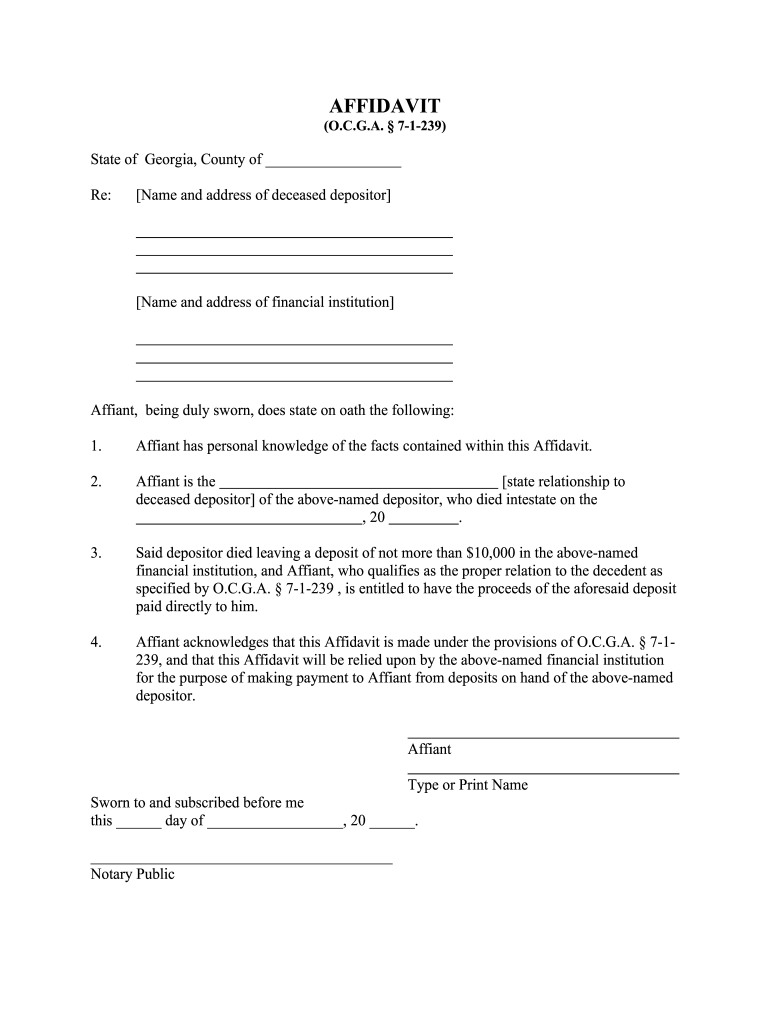
A GA Affidavit is a written, sworn statement of facts used to establish truth under oath for legal, administrative, or transactional purposes in Georgia. It typically includes the affiant's identity, a clear statement of facts, an effective date, and a notary acknowledgement. While electronic signatures are broadly enforceable under federal and state law (see 15 U.S.C. §7001 and state e-signature statutes), many affidavit uses still require a notarized acknowledgement or other authentication; state-specific witness, notarization, and remote-notarization rules can affect how the form is executed and accepted.

Why an affidavit matters for evidence and transactions

An affidavit creates a sworn record that can support court filings, title transfers, insurance claims, or administrative matters by providing a signed, dated statement under penalty of perjury.

Why an affidavit matters for evidence and transactions

Who typically prepares and signs a GA Affidavit

Affidavits are used across legal, real estate, insurance, and administrative workflows; different users prepare or request them depending on context.

  • Attorneys and paralegals preparing sworn factual statements for litigation or filings.
  • Title companies and closing agents obtaining sworn statements for property matters.
  • Individuals or corporate officers giving sworn facts for claims or administrative filings.

Essential parts of a professional GA Affidavit

A complete affidavit follows a standard structure so the statement can be verified and admitted: caption, declarant details, numbered facts, signature, notary block, and attachments when needed.

Caption

Court or transaction caption showing case or matter name, jurisdiction, and docket or reference number when applicable, to link the affidavit to the proceeding.
Affiant Identity

Full legal name, address, and role or title for corporate affiants so attribution is clear and identity can be confirmed by the notary or recipient.

Statement of Facts

Numbered paragraphs stating facts concisely and chronologically; avoid hearsay language unless the affidavit is based on personal knowledge.

Oath Language

A clear statement under penalty of perjury that the affiant swears or affirms the truth of the facts, with applicable statutory citation if required.

Signature Block

Signature line and printed name of the affiant followed by a date; initials are not sufficient unless explicitly allowed.

Notary Acknowledgement

Notary block with certificate language, notary signature, seal, commission expiration, and any audio/video session ID for RON transactions when used.

Step-by-step: preparing and executing a GA Affidavit

Follow these steps to create a clear, accepted affidavit and avoid rework or rejection when submitting.

  • 01
    Draft the facts: List only facts known personally; number paragraphs and date events as MM/DD/YYYY.
  • 02
    Add identity details: Include full legal name, address, and capacity (individual or officer of corporation).
  • 03
    Sign before notary: Do not sign until in the presence of the notary or connected in a compliant RON session.
  • 04
    File or deliver: Return the executed affidavit to the requesting party, court clerk, or filing office per instructions.

Typical execution and submission flow

A common workflow moves the affidavit from preparation to notarization to filing or distribution; below are the key stages in order.

  • Prepare document: Draft affidavit content and attach exhibits or supporting records where needed.
  • Authenticate signer: Confirm identity in person or via approved remote identity-proofing for RON.
  • Notarize or acknowledge: Have a notary complete the acknowledgement, including seal and commission details or RON session ID.
  • Submit to recipient: Deliver signed affidavit and attachments to the court, agency, or counterpart as required.

Digital workflow settings for online completion

Configure electronic workflows to capture identity, signature intent, and the notarization step when using e-signature and RON-enabled platforms.

Field Configuration
Signer Authentication Email link plus SMS or ID check where required
Signature Type Select handwritten image or cryptographic signature
Notary Step Reserve notary block for in-person or RON completion
Audit Capture Record IP, timestamp, and actions for admissibility

Digital filing and platform compatibility

Check that your chosen e-signature platform supports required authentication, audit trails, and RON features before starting the affidavit workflow.

  • File formats: PDF, PDF/A, and DOCX exports
  • Integrations: Common integrations include Salesforce, NetSuite, Google Workspace
  • RON support: Audio-video recording and session IDs retained

Practical tips to reduce errors and speed acceptance

Adopt consistent formatting, verify identity up front, and choose an execution method accepted by the recipient to avoid re-execution or rejection.

Verify identity early
Confirm the affiant's government photo ID and match the name exactly before scheduling notarization to prevent last-minute rework.
Use MM/DD/YYYY
Enter dates in MM/DD/YYYY format consistently to avoid ambiguity and align with filing office expectations.
Preserve originals
Keep the notarized original or a certified copy plus the electronic audit trail for future verification or court submission.
Attach exhibits correctly
Label and reference attached exhibits within numbered paragraphs and include a cover index for clarity.

Risks and legal consequences to be aware of

Perjury exposure: Criminal liability for knowingly false statements
Document rejection: Courts or agencies may refuse uncertified or unsigned affidavits
Civil invalidation: Affidavit may be given no weight if notarization or identity is defective
Delayed processing: Incorrect details can require re-execution and delay matters
Privacy risks: Sensitive data in public filings can trigger compliance obligations
Backup withhold: Incorrect taxpayer information may cause tax-related withholding

Common preparation and submission issues to avoid

  • Incomplete identity information that does not match photo ID, leading to notary refusal or re-execution requirements.
  • Using vague or hearsay language instead of first-hand factual statements undermines evidentiary value in court or administrative proceedings.
  • Signing before the notary or omitting the notary block results in an invalid acknowledgement and possible rejection by the recipient.
  • Failing to retain the audit trail and notarization evidence in RON sessions makes later authentication difficult.

Security and compliance elements to protect affidavit data

Encryption in transit: TLS 1.2/1.3
Encryption at rest: AES-256
Authentication standards: ESIGN and UETA compliant
Audit trail: Timestamped signatures and IP logs
HIPAA support: BAA available
Certifications: SOC 2 Type II, ISO 27001

Real-world examples of GA Affidavit use

Below are practical examples showing how organizations used affidavits to complete transactions or support filings.

Martin Properties

A regional real estate firm needed remote execution for closing affidavits to avoid delays

  • Used mobile signing and RON where permitted
  • Martin Properties reported being able to process and execute documents online with compliance and security, reducing in-person scheduling and accelerating closings.

Fertility Centers

A healthcare provider required signed sworn statements for administrative authorizations

  • Implemented HIPAA-aware workflows and identity proofing
  • The organization emphasized secure, auditable signing and the flexibility to capture signatures on mobile and desktop while maintaining compliance.

Timing and processing expectations for executed affidavits

Processing time depends on the recipient and whether additional verification or a court filing is required; allow lead time for notarization and delivery.

Notarization window:

Complete notarization on the day of signing to ensure validity

RON record retention:

Audio-video records typically retained 5–10 years under RON rules

Title processing:

Title companies commonly process affidavit-related items within 1–5 business days

Court filings:

Local clerk acceptance timelines vary; check local rules

Agency deadlines:

Agencies may set submission cutoffs; verify in advance

Key milestones from drafting to filing

A sequential timeline clarifies responsibilities and expected handoffs during the affidavit lifecycle.

01

Draft Completed

Affiant or counsel finalizes numbered facts and attachments for review.

02

Identity Verified

Photo ID checked in-person or via approved remote-proofing methods.

03

Notarization Executed

Notary completes acknowledgement; RON session ID recorded if applicable.

04

Delivery & Filing

Affidavit and exhibits submitted to recipient, court, or agency for processing.

eSignature vendor comparison for executing affidavits

Different eSignature providers vary in price, HIPAA support, bulk send, and envelope or session limits; signNow appears first below for comparison purposes without endorsement language.

signNow DocuSign Adobe Sign PandaDoc HelloSign
Starting Price $8/user/mo $15/user/mo $14/user/mo $19/user/mo $15/user/mo
Free Trial 7-day free trial, no card Varies by plan Varies by plan Varies by plan Varies by plan
Bulk Send Yes Yes Yes Yes No
Audit Trail Yes Yes Yes Yes Yes
HIPAA Compliant Yes Yes Yes No No
Envelope Cap No envelope cap 100 envelopes/user/year Varies by plan Varies by plan Varies by plan

Frequently asked questions about GA Affidavits

Answers to common execution, notarization, and enforcement questions to help avoid mistakes and ensure acceptance.


Need help? Contact support

be ready to get more
Join over 28 million airSlate SignNow users