Establishing secure connection… Loading editor… Preparing document…
Navigation

Fill and Sign the Helpful Checklist for a Small Business Scott Macmullan Law Form
Fill and Sign the Helpful Checklist for a Small Business Scott Macmullan Law Form

How it works

Open the document and fill out all its fields.
Apply your legally-binding eSignature.
Save and invite other recipients to sign it.

Rate template

4.6
62 votes
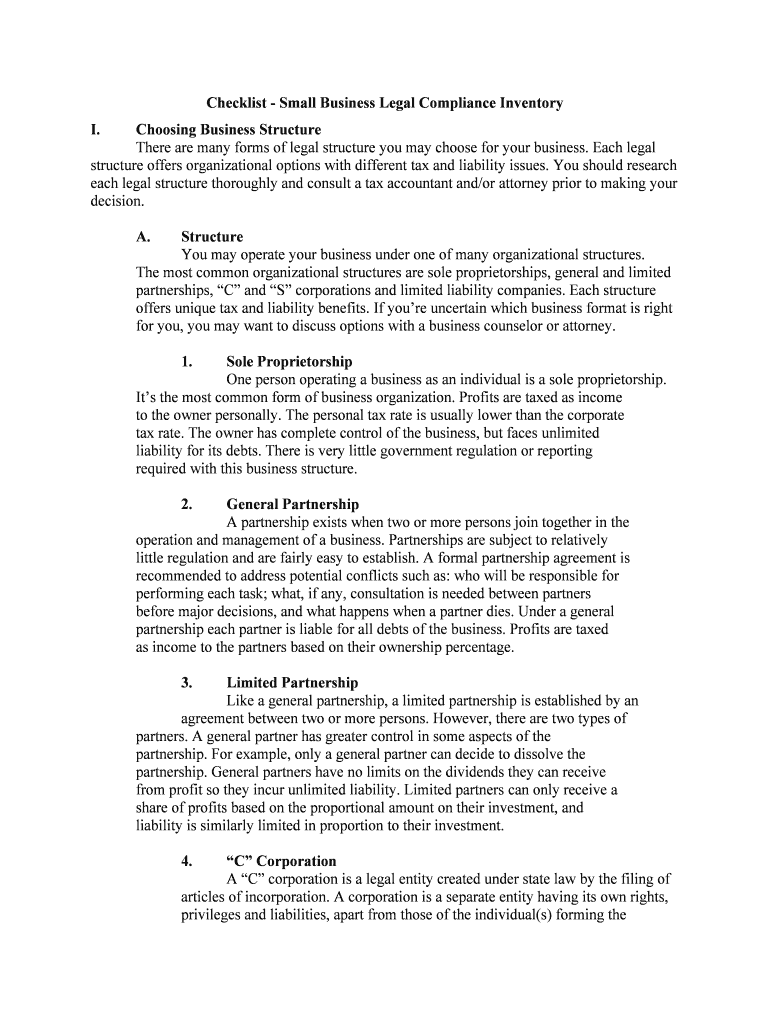
Checklist - Small Business Legal Compliance Inventory I. Choosing Business Structure There are many forms of legal structure you may choose for your business. Each legal structure offers organizational options with different tax and liability issues. You should research each legal structure thoroughly and consult a tax accountant and/or attorney prior to making your decision. A. StructureYou may operate your business under one of many organizational structures. The most common organizational structures are sole proprietorships, general and limited partnerships, “C” and “S” corporations and limited liability companies. Each structure offers unique tax and liability benefits. If you’re uncertain which business format is right for you, you may want to discuss options with a business counselor or attorney. 1. Sole ProprietorshipOne person operating a business as an individual is a sole proprietorship. It’s the most common form of business organization. Profits are taxed as income to the owner personally. The personal tax rate is usually lower than the corporate tax rate. The owner has complete control of the business, but faces unlimited liability for its debts. There is very little government regulation or reporting required with this business structure. 2. General PartnershipA partnership exists when two or more persons join together in the operation and management of a business. Partnerships are subject to relatively little regulation and are fairly easy to establish. A formal partnership agreement is recommended to address potential conflicts such as: who will be responsible for performing each task; what, if any, consultation is needed between partners before major decisions, and what happens when a partner dies. Under a general partnership each partner is liable for all debts of the business. Profits are taxed as income to the partners based on their ownership percentage. 3. Limited PartnershipLike a general partnership, a limited partnership is established by an agreement between two or more persons. However, there are two types of partners. A general partner has greater control in some aspects of the partnership. For example, only a general partner can decide to dissolve the partnership. General partners have no limits on the dividends they can receive from profit so they incur unlimited liability. Limited partners can only receive a share of profits based on the proportional amount on their investment, and liability is similarly limited in proportion to their investment. 4. “C” CorporationA “C” corporation is a legal entity created under state law by the filing of articles of incorporation. A corporation is a separate entity having its own rights, privileges and liabilities, apart from those of the individual(s) forming the corporation. It’s the most complex form of business organization and is comprised of shareholders, directors and officers. Since the corporation is a separate legal entity in its own right it can own assets, borrow money and perform business functions without directly involving the owners. Corporations are subject to more government regulation and offer the owners the advantage of limited liability, but not total protection from lawsuits. 5. Subchapter “S” CorporationSubchapter “S” references a special part of the Internal Revenue Code that permits a corporation to be taxed as a partnership or sole proprietorship, with profits taxed at the individual, rather than the corporate rate. A business must meet certain requirements for Subchapter “S” status. Contact the IRS for more information. 6. LLC’s and LLP’s The limited liability company is a relatively new business form. It combines selected corporate and partnership characteristics while still maintaining status as a legal entity distinct from its owners. As a separate entity it can acquire assets, incur liabilities and conduct business. It limits liability for the owners. The limited liability partnership is similar to the LLC, but it is for professional organizations. II. Business Licenses There are many types of licenses, both state and local as well as professional. Depending on what you do and where you plan to operate, your business may be required to have various state and/or municipal licenses, certificates or permits. Licenses are typically administered by a variety of state and local departments. Consult your state or local government for assistance. III. Fictitious Business Name Registering your business name, after doing a search to make sure that it is not already in use, protects you from others who might want to use the same name. For more information, contact the county clerk’s office in the county where your business is based. If you are a corporation, you’ll need to check with the state. IV. Business Insurance Like home insurance, business insurance protects the contents of your business against fire, theft and other losses. Contact your insurance agent or broker. It is prudent for any business to purchase a number of basic types of insurance. Some types of coverage are required by law, other simply make good business sense. The types of insurance listed below are among the most commonly used and are merely a starting point for evaluating the needs of your business. A. Liability Insurance – Businesses may incur various forms of liability in conducting their normal activities. One of the most common types is product liability, which may be incurred when a customer suffers harm from using the business product. There are many other types of liability, which are frequently related to specific industries. Liability law is constantly changing. An analysis of your liability insurance needs by a competent professional is vital in determining an adequate and appropriate level of protection for your business. B. Property – There are many different types of property insurance and levels of coverage available. It is important to determine the property you need to insure for the continuation of your business and the level of insurance you need to replace or rebuild. You must also understand the terms of the insurance, including any limitations or waivers of coverage. C. Business Interruption – While property insurance may pay enough to replace damaged or destroyed equipment or buildings, how will you pay costs such as taxes, utilities and other continuing expenses during the period between when the damage occurs and when the property is replaced? Business Interruption (or "business income") insurance can provide sufficient funds to pay your fixed expenses during a period of time when your business is not operational. D. "Key Man" – If you (and/or any other individual) are so critical to the operation of your business that it cannot continue in the event of your illness or death, you should consider "key man" insurance. This type of policy is frequently required by banks or government loan programs. It also can be used to provide continuity in operations during a period of ownership transition caused by the death, incapacitation or absence due to a Title 10 military activation of an owner or other "key" employee. E. Automobile – It is obvious that a vehicle owned by your business should be insured for both liability and replacement purposes. What is less obvious is that you may need special insurance (called "non-owned automobile coverage") if you use your personal vehicle on company business. This policy covers the business' liability for any damage which may result for such usage. F. Officer and Director – Under most state laws, officers and directors of a corporation may become personally liable for their actions on behalf of the company. This type of policy covers this liability. G. Home Office – If you are establishing an office in your home, it is a good idea to contact your homeowners' insurance company to update your policy to include coverage for office equipment. This coverage is not automatically included in a standard homeowner's policy. V. Employee Identification Number An EIN, also known as a federal tax identification number, is used to identify a business entity. Generally all businesses need an EIN. You may apply for an EIN in a variety of ways, e.g., including online, phone, and fax. VI. Federal Self-Employment Tax Every employee must pay Social Security and Medicare coverage. If you are self employed, your contributions are made through the self-employment tax. VII. Sales Tax Exemption Certificate If you plan to sell products, you will need a Sales Tax Exemption Certificate. It allows you to purchase inventory, or materials, which will become part of the product you sell, from suppliers without paying taxes. It requires you to charge sales tax to your customers, which you are responsible for remitting to the state. You will have to pay penalties if it is found that you should have been taxing your products and now owe back taxes to the state. For information on sales tax issues, contact your state’s government. VIII. Federal Income Tax Like the state income tax, the method of paying federal income taxes depends upon your legal form of business. The following procedures must be considered: A. Sole Proprietorship: You must file IRS Federal Form Schedule C along with your personal Federal Income Tax return (Form 1040) and any other applicable forms pertaining to gains or losses in your business activity. B. Partnership: You must file a Federal Partnership return (Form 1065). This is merely informational to show gross and net earnings of profit and loss. Also, each partner must report his share of partnership earnings on his individual Form 1040 based on the information from the K-1 filed with the Form 1065. C. Corporation: You must file a Federal Corporation Income Tax return (Form 1120). You will also be required to report your earnings from the corporation including salary and other income such as dividends on your personal federal income tax return (Form 1040). D. Federal Payroll Tax 1. Federal Withholding Tax: Any business employing a person must register with the IRS and acquire an EIN and pay federal withholding tax at least quarterly. File Form SS-4 with IRS to obtain number and required tax forms. 2. State Taxes: You will need to obtain a form from the state tax office. 3. Sales Tax: Anyone who engages in retail sales of tangible personal property from a state location generally needs a sales tax permit. 4. Social Security Cards: All employees must have a social security card. It must be signed by its owner, and you should always ask to see and personally record the social security number. Failure to do so may cause your employee to lose benefits and considerable trouble for yourself in back tracking to uncover the error. Each payday, your employees must receive a statement from you telling them what deductions were made and how many dollars were taken out for each legal purpose. This can be presented in a variety of ways, including on the check as a detachable portion or in the form of an envelope with the items printed and spaces for dollar deductions to be filled in. IX. Employee Considerations A. Taxes -- If you have any employees, including officers of a corporation but not the sole proprietor or partners, you must make periodic payments of, and/or file quarterly reports about payroll taxes and other mandatory deductions. B. Employee Insurance -- If you hire employees you may be required to provide unemployment or workers’ compensation insurance. Every employer with one or more employees is generally presumed to have elected coverage under the Workmen’s Compensation Act, unless he files a notice rejecting coverage. Coverage may be obtained from a private carrier. For more information, contact an insurance agent. C. Federal Immigration Reform and Control Act of 1986 (IRCA) IRCA requires employers to verify employment eligibility of new employees. The law obligates an employer to process Employment Eligibility Verification Form I-9. The U.S. Citizenship and Immigration Services Office of Business Liaison offers a selection of information bulletins and live assistance through an Employer Hotline, E-Verify, operated by the Department of Homeland Security in partnership with the Social Security Administration. E-Verify is the best-and quickest--way for employers to determine the employment eligibility of new hires. It is a safe, simple, and secure Internet-based system that electronically verifies Social Security number and employment eligibility information reported on Form I-9. X. Safety and Health Regulations All businesses with employees are required to comply with state and federal regulations regarding the protection of employees. The Occupational Safety and Health Administration outlines specific health and safety standards adopted by the U.S. Department of Labor. Use of hazardous substances in businesses is highly regulated and there are heavy fines for non- compliance. XI. Building Codes, Permits and Zoning It is important to consider zoning regulations when choosing a site for your business. You may not be permitted to conduct business out of your home or engage in industrial activity in a retail district. XII. Bar Coding Many stores require bar coding on packaged products. Many industrial and manufacturing companies use bar coding to identify items they receive and ship. There are several companies that can assist businesses with bar-coding needs. The following checklist will help you determine if your company is legally protected in certain areas. Contracts Are all of the company’s important agreements in writing? [ ] Yes [ ] No  Are there good form contracts in place? [ ] Yes [ ] No  Do the contracts provide for disputes to be resolved in courts in the state where the company’s principal office is located? [ ] Yes [ ] No  Is there an attorneys fees clause in each contract? [ ] Yes [ ] No  Does the contract say that amendments to the contract may only be made in writing? [ ] Yes [ ] No  Are there provisions in the company’s standard form contracts regarding limiting the company’s liability? [ ] Yes [ ] No  Is the company complying with the terms of its contracts and leases? [ ] Yes [ ] No Corporate Minute Book  Do the Articles of Incorporation provide for sufficient authorized number of shares? [ ] Yes [ ] No  Is a copy of the Articles in the Minute Book? [ ] Yes [ ] No  Is a copy of the Bylaws in the Minute Book? [ ] Yes [ ] No  Are there minutes for all meetings of shareholders? [ ] Yes [ ] No  Are there minutes for all meetings of directors? [ ] Yes [ ] No  Are there minutes of annual shareholder meetings? [ ] Yes [ ] No  Are all written consents of shareholders and directors included? [ ] Yes [ ] No Stock Matters  Has the company received the consideration for each sale of stock? [ ] Yes [ ] No  Is the Stock Ledger current? [ ] Yes [ ] No  Were all sales of stock made in compliance with applicable securities laws? [ ] Yes [ ] No  Did the Board of Directors properly authorize the sale of all stock? [ ] Yes [ ] No  If necessary, did the shareholders properly authorize the sale of stock? [ ] Yes [ ] No  Did the company receive the consideration for the issued stock? [ ] Yes [ ] No  Were stock certificates issued? [ ] Yes [ ] No  Did the stock certificates have appropriate legends? [ ] Yes [ ] No Government Filings  Has the company obtained its Federal Employer ID number? [ ] Yes [ ] No  Has the company obtained its State Employer ID number? [ ] Yes [ ] No Have any required local and state licenses and permits been obtained? [ ] Yes [ ] No  Has the company qualified to do business in all states it is required to? [ ] Yes [ ] No  Have all annual information statements been filed with the Secretary of State? [ ] Yes [ ] No Intellectual Property  Have trademark registrations been obtained for company products and services? [ ] Yes [ ] No  Is the “TM” or “SM” or “®” notice displayed property on all company literature? [ ] Yes [ ] No  Have patents been applied for company-owned inventions and discoveries? [ ] Yes [ ] No  Is a trade secret protection program appropriate? [ ] Yes [ ] No  Have employees signed appropriate Confidentiality and Invention Assignment Agreement? [ ] Yes [ ] No  Have consultants and independent contractors signed appropriate Confidentiality and Invention Assignment Agreements? [ ] Yes [ ] No  Is the company infringing the intellectual property rights of others? [ ] Yes [ ] No  Is there a program in place to determine if others are violating the company’s intellectual property rights? [ ] Yes [ ] No  Are all needed licenses obtained? [ ] Yes [ ] No  Is the company complying with all license agreements to which is a licensee? [ ] Yes [ ] No Employment  Does the Company have an “at will” employment policy in place? [ ] Yes [ ] No  Do interviewers of prospective employees know what they can and cant ask? [ ] Yes [ ] No  Is there a Non-Discrimination Policy in place? [ ] Yes [ ] No  Is each prospective employee required to fill out a good form of Employment Is each prospective employee required to fill out a good form of Employment Application? [ ] Yes [ ] No  Are employees treated fairly and evenly? [ ] Yes [ ] No  Is there a Sexual Harassment Policy in place? [ ] Yes [ ] No  Are job offer letters to new employees carefully drafted? [ ] Yes [ ] No  Does the company have all needed forms from employees? [ ] Yes [ ] No Record Keeping  Is the company keeping good records of its income and expenses? [ ] Yes [ ] No Is the company keeping track of all of its contracts? [ ] Yes [ ] No  Is the company keeping track of all employee records? [ ] Yes [ ] No  Is the company keeping track of all tax filings required? [ ] Yes [ ] No Laws  Has the company determined the applicability of the following Laws to its business? [ ] Yes [ ] No  Environmental Laws Worker Safety Laws [ ] Yes [ ] No  Securities Laws [ ] Yes [ ] No  Consumer protection Laws [ ] Yes [ ] No  Advertising Laws [ ] Yes [ ] No  Employment Laws [ ] Yes [ ] No  Product liability Laws [ ] Yes [ ] No  Corporate Laws [ ] Yes [ ] No  Tax Laws [ ] Yes [ ] No  Commercial and Real Property Laws [ ] Yes [ ] No

Useful tips for preparing your ‘Helpful Checklist For A Small Business Scott Macmullan Law ’ online

Are you fed up with the inconvenience of managing paperwork? Look no further than airSlate SignNow, the leading eSignature platform for individuals and organizations. Bid farewell to the monotonous task of printing and scanning documents. With airSlate SignNow, you can effortlessly complete and sign documents online. Utilize the comprehensive features integrated into this user-friendly and budget-friendly platform and transform your approach to document management. Whether you need to authorize forms or collect electronic signatures, airSlate SignNow takes care of it with ease, requiring just a few clicks.

Follow this detailed guide:

  1. Log into your account or sign up for a complimentary trial of our service.
  2. Click +Create to upload a file from your device, cloud storage, or our form library.
  3. Access your ‘Helpful Checklist For A Small Business Scott Macmullan Law ’ in the editor.
  4. Click Me (Fill Out Now) to edit the document on your side.
  5. Add and assign fillable fields for others (if necessary).
  6. Proceed with the Send Invite options to solicit eSignatures from others.
  7. Download, print your version, or convert it into a reusable template.

No need to worry if you want to collaborate with your colleagues on your Helpful Checklist For A Small Business Scott Macmullan Law or send it for notarization—our platform has everything you need to accomplish such tasks. Register with airSlate SignNow today and elevate your document management to a higher level!

Here is a list of the most common customer questions. If you can’t find an answer to your question, please don’t hesitate to reach out to us.

Need help? Contact Support

The best way to complete and sign your helpful checklist for a small business scott macmullan law form
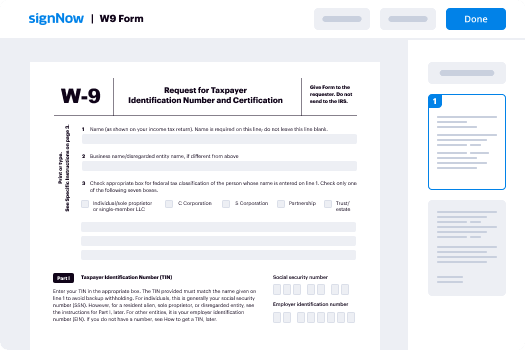
Save time on document management with airSlate SignNow and get your helpful checklist for a small business scott macmullan law form eSigned quickly from anywhere with our fully compliant eSignature tool.

How to Sign a PDF Online How to Sign a PDF Online

How to complete and sign paperwork online

Previously, working with paperwork required lots of time and effort. But with airSlate SignNow, document management is easy and fast. Our powerful and easy-to-use eSignature solution enables you to easily complete and eSign your helpful checklist for a small business scott macmullan law form online from any internet-connected device.

Follow the step-by-step guide to eSign your helpful checklist for a small business scott macmullan law form template online:

  • 1.Sign up for a free trial with airSlate SignNow or log in to your account with password credentials or SSO authorization option.
  • 2.Click Upload or Create and add a form for eSigning from your device, the cloud, or our form catalogue.
  • 3.Click on the document name to open it in the editor and utilize the left-side toolbar to complete all the blank fields appropriately.
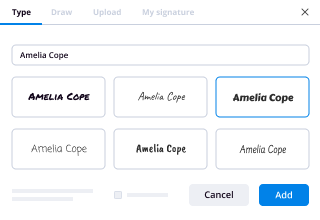
  • 4.Drop the My Signature field where you need to approve your sample. Provide your name, draw, or upload an image of your handwritten signature.
  • 5.Click Save and Close to finish modifying your completed form.

As soon as your helpful checklist for a small business scott macmullan law form template is ready, download it to your device, export it to the cloud, or invite other parties to electronically sign it. With airSlate SignNow, the eSigning process only requires a couple of clicks. Use our robust eSignature tool wherever you are to manage your paperwork successfully!
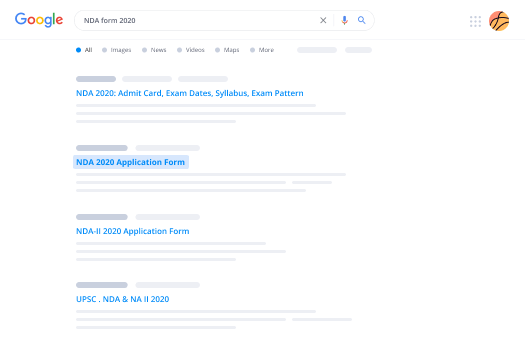

How to Sign a PDF Using Google Chrome How to Sign a PDF Using Google Chrome

How to fill out and sign forms in Google Chrome

Completing and signing paperwork is simple with the airSlate SignNow extension for Google Chrome. Installing it to your browser is a quick and productive way to manage your paperwork online. Sign your helpful checklist for a small business scott macmullan law form sample with a legally-binding eSignature in a couple of clicks without switching between tools and tabs.

Follow the step-by-step guidelines to eSign your helpful checklist for a small business scott macmullan law form template in Google Chrome:

  • 1.Go to the Chrome Web Store, search for the airSlate SignNow extension for Chrome, and add it to your browser.
  • 2.Right-click on the link to a form you need to sign and select Open in airSlate SignNow.
  • 3.Log in to your account using your password or Google/Facebook sign-in option. If you don’t have one, you can start a free trial.
  • 4.Use the Edit & Sign toolbar on the left to complete your sample, then drag and drop the My Signature field.
  • 5.Add a picture of your handwritten signature, draw it, or simply type in your full name to eSign.
  • 6.Verify all data is correct and click Save and Close to finish modifying your form.

Now, you can save your helpful checklist for a small business scott macmullan law form template to your device or cloud storage, send the copy to other individuals, or invite them to electronically sign your form with an email request or a protected Signing Link. The airSlate SignNow extension for Google Chrome enhances your document processes with minimum time and effort. Try airSlate SignNow today!
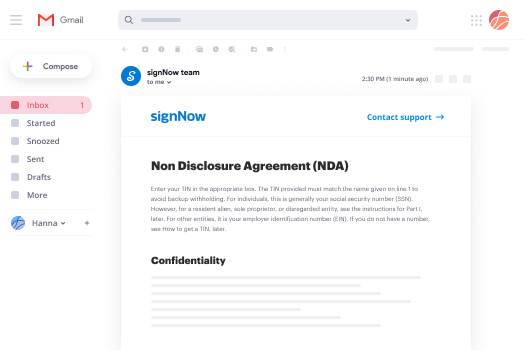

How to Sign a PDF in Gmail How to Sign a PDF in Gmail How to Sign a PDF in Gmail

How to fill out and sign forms in Gmail

When you get an email containing the helpful checklist for a small business scott macmullan law form for approval, there’s no need to print and scan a document or download and re-upload it to a different tool. There’s a much better solution if you use Gmail. Try the airSlate SignNow add-on to promptly eSign any documents right from your inbox.

Follow the step-by-step guide to eSign your helpful checklist for a small business scott macmullan law form in Gmail:

  • 1.Visit the Google Workplace Marketplace and locate a airSlate SignNow add-on for Gmail.
  • 2.Install the program with a corresponding button and grant the tool access to your Google account.
  • 3.Open an email with an attached file that needs approval and use the S sign on the right sidebar to launch the add-on.
  • 4.Log in to your airSlate SignNow account. Opt for Send to Sign to forward the file to other parties for approval or click Upload to open it in the editor.
  • 5.Place the My Signature field where you need to eSign: type, draw, or upload your signature.

This eSigning process saves time and only requires a couple of clicks. Utilize the airSlate SignNow add-on for Gmail to update your helpful checklist for a small business scott macmullan law form with fillable fields, sign paperwork legally, and invite other parties to eSign them al without leaving your mailbox. Enhance your signature workflows now!
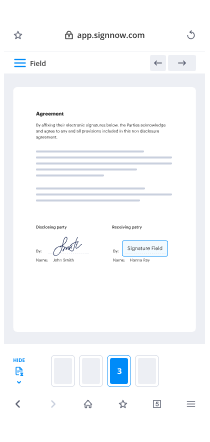
How to Sign a PDF on a Mobile Device How to Sign a PDF on a Mobile Device How to Sign a PDF on a Mobile Device

How to fill out and sign forms in a mobile browser

Need to rapidly submit and sign your helpful checklist for a small business scott macmullan law form on a mobile phone while working on the go? airSlate SignNow can help without needing to set up extra software programs. Open our airSlate SignNow solution from any browser on your mobile device and create legally-binding eSignatures on the go, 24/7.

Follow the step-by-step guidelines to eSign your helpful checklist for a small business scott macmullan law form in a browser:

  • 1.Open any browser on your device and follow the link www.signnow.com
  • 2.Register for an account with a free trial or log in with your password credentials or SSO option.
  • 3.Click Upload or Create and add a file that needs to be completed from a cloud, your device, or our form catalogue with ready-made templates.
  • 4.Open the form and complete the empty fields with tools from Edit & Sign menu on the left.
  • 5.Add the My Signature area to the sample, then enter your name, draw, or upload your signature.

In a few simple clicks, your helpful checklist for a small business scott macmullan law form is completed from wherever you are. Once you're done with editing, you can save the file on your device, generate a reusable template for it, email it to other individuals, or invite them eSign it. Make your paperwork on the go fast and efficient with airSlate SignNow!
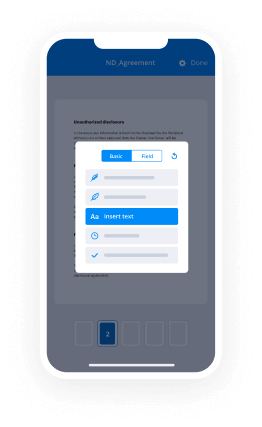
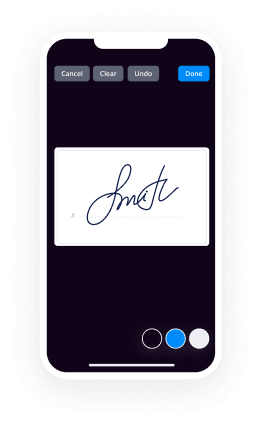
How to Sign a PDF on iPhone How to Sign a PDF on iPhone

How to fill out and sign forms on iOS

In today’s corporate environment, tasks must be completed rapidly even when you’re away from your computer. With the airSlate SignNow mobile app, you can organize your paperwork and approve your helpful checklist for a small business scott macmullan law form with a legally-binding eSignature right on your iPhone or iPad. Set it up on your device to conclude agreements and manage forms from anywhere 24/7.

Follow the step-by-step guidelines to eSign your helpful checklist for a small business scott macmullan law form on iOS devices:

  • 1.Go to the App Store, search for the airSlate SignNow app by airSlate, and set it up on your device.
  • 2.Launch the application, tap Create to add a form, and select Myself.
  • 3.Choose Signature at the bottom toolbar and simply draw your signature with a finger or stylus to eSign the form.
  • 4.Tap Done -> Save right after signing the sample.
  • 5.Tap Save or utilize the Make Template option to re-use this document in the future.

This method is so straightforward your helpful checklist for a small business scott macmullan law form is completed and signed within a few taps. The airSlate SignNow app works in the cloud so all the forms on your mobile device are kept in your account and are available any time you need them. Use airSlate SignNow for iOS to enhance your document management and eSignature workflows!
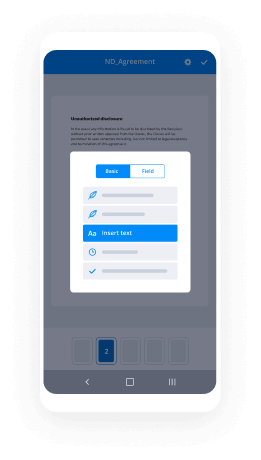
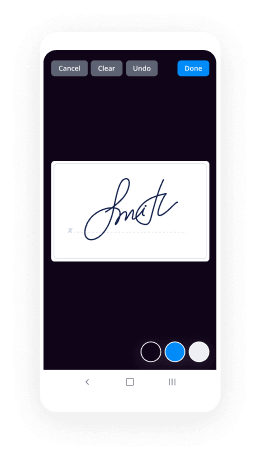
How to Sign a PDF on Android How to Sign a PDF on Android

How to fill out and sign documents on Android

With airSlate SignNow, it’s simple to sign your helpful checklist for a small business scott macmullan law form on the go. Install its mobile app for Android OS on your device and start improving eSignature workflows right on your smartphone or tablet.

Follow the step-by-step guide to eSign your helpful checklist for a small business scott macmullan law form on Android:

  • 1.Navigate to Google Play, search for the airSlate SignNow application from airSlate, and install it on your device.
  • 2.Log in to your account or create it with a free trial, then add a file with a ➕ option on the bottom of you screen.
  • 3.Tap on the uploaded file and select Open in Editor from the dropdown menu.
  • 4.Tap on Tools tab -> Signature, then draw or type your name to eSign the template. Complete empty fields with other tools on the bottom if required.
  • 5.Utilize the ✔ key, then tap on the Save option to finish editing.

With a user-friendly interface and full compliance with major eSignature standards, the airSlate SignNow application is the best tool for signing your helpful checklist for a small business scott macmullan law form. It even operates offline and updates all form changes once your internet connection is restored and the tool is synced. Complete and eSign documents, send them for approval, and make re-usable templates whenever you need and from anyplace with airSlate SignNow.

Sign up and try Helpful checklist for a small business scott macmullan law form
  • Close deals faster
  • Improve productivity
  • Delight customers
  • Increase revenue
  • Save time & money
  • Reduce payment cycles