Establishing secure connection…Loading editor…Preparing document…

Letter of Acknowledgement of Donation

This template is fully customizable. Edit the text, fill out the fields, and send it for signature. Give it a try!
Letter of Acknowledgement of Donation

What a Letter of Acknowledgement of Donation Is

A Letter of Acknowledgement of Donation is a written statement issued by a charitable organization confirming receipt of a gift from a donor. It documents the donor name, contribution amount or description, date received, and whether any goods or services were provided in return. For tax substantiation, the IRS requires written acknowledgement for donations of $250 or more; donors rely on the letter when claiming charitable deductions and organizations retain it for audit and recordkeeping purposes.

Why a Formal Acknowledgement Matters

A well-crafted acknowledgement supports donor tax deductions, strengthens donor relations, and creates an auditable record for compliance. It reduces questions during IRS reviews, clarifies the value or nondeductible portion of benefits, and demonstrates transparent stewardship of donated assets.

Why a Formal Acknowledgement Matters

Who Prepares and Receives These Letters

Organizations and individuals involved in fundraising routinely prepare and use donation acknowledgement letters.

  • Nonprofit development staff who issue receipts and track donor records.
  • Corporate giving officers or matching gift administrators coordinating employer matches.
  • Individual donors and their tax advisors who need substantiation for deductions.

Typical Signatories and Recipients

Nonprofit Finance Director

The finance director usually signs or approves acknowledgement templates, ensures the organization EIN is included, and maintains the official copy for audits and annual reporting.

Individual Donor

Individual donors receive the letter for tax substantiation; they may present it with Form 8283 for noncash gifts or to substantiate deductions on an individual return.

Essential Data Elements to Record

Donor Name: Full legal name
Donation Date: MM/DD/YYYY format
Amount or Description: Dollar amount or clear noncash description
Organization EIN: Tax ID for IRS substantiation
Benefit Disclosure: Value of any goods/services
Signature Method: Wet or e-signature noted

How to Create and Issue the Acknowledgement

Follow these sequential steps to prepare an accurate, compliant acknowledgement letter.

  • 01
    Prepare Template: Use a standardized template that includes EIN and benefit disclosure.
  • 02
    Record Gift Details: Enter donor name, date, amount/description, and any benefits.
  • 03
    Obtain Signature: Authorized officer signs or applies an accepted e-signature.
  • 04
    Deliver and Archive: Send to donor and store a copy in donor records.

Sending the Letter Electronically

Electronic delivery speeds receipt and supports reproducible audit trails when done under ESIGN/UETA-compliant platforms.

  • Upload Document: Add the acknowledgement to your e-sign platform in PDF or DOCX format.
  • Add Fields: Place signature, date, and editable donor fields for completion.
  • Choose Authentication: Select email, SMS, or stronger signer authentication as required.
  • Send and Store: Distribute to donor and retain the completed copy with audit trail.

Components of a Professional Acknowledgement Letter

A complete acknowledgement letter follows a consistent structure so donors and auditors can quickly verify the gift and any benefits provided.

Letter Header

Organization name, address, and EIN at the top to identify the issuing charity for tax purposes and donor records.
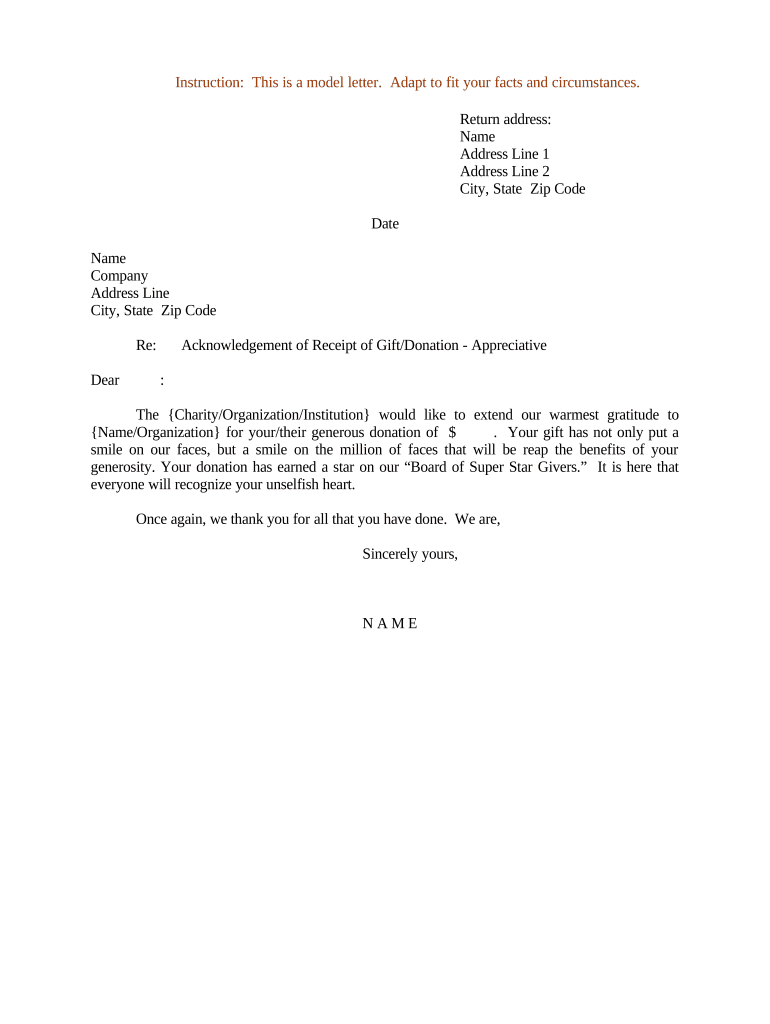
Donation Details

Exact date and amount for cash gifts or a specific description and estimated fair market value for noncash gifts.

Benefit Disclosure

A clear statement of any goods or services provided, including a good-faith estimate of their value.

Tax Language

Plain wording confirming deductible status and that no goods/services (if applicable) were provided, aligned with IRS substantiation requirements.

Signature Block

Authorized signer name, title, signature, and signature date; note electronic signing method when used.

Recordnote

Internal reference such as donation ID, program designation, and file location for audit retrieval.

Saving, Exporting, and Supporting Documents

Store complete records and attach supporting documentation to strengthen substantiation and satisfy donor or regulatory requests.

PDF/A Export

Save the final signed acknowledgement as PDF/A for long-term archival and consistent reproduction across systems.

DOCX Editable Copy

Keep an editable DOCX for internal updates and batch acknowledgements while retaining the signed PDF as the authoritative record.

Attach Appraisals

For noncash gifts over specified IRS thresholds, include qualified appraisal or Form 8283 as applicable.

Donation Ledger Entry

Record the gift in the donation management system with receipt number and file reference for audits.

Practical Tips to Reduce Errors and Audits

Applying consistent procedures and clear language reduces donor confusion and improves compliance during tax season or reviews.

Use Standardized Language
Adopt a template that includes EIN, benefit disclosure, and explicit statements about tax deductibility to ensure uniformity and reduce auditor queries.
Verify Donor Details
Confirm spelling of donor names and addresses, and match donor names to employer details for matching gift eligibility before sending.
Document Noncash Gifts
Provide clear condition descriptions, quantity, and valuation method; attach appraisals or Form 8283 when required.
Keep an Audit Trail
Retain signed copies, communications, and any authentication evidence (IP, timestamps) to demonstrate consent and transaction history.

Key Timing Considerations and Tax Thresholds

Certain thresholds and timelines affect donor substantiation and additional filing obligations; plan acknowledgements accordingly.

IRS Acknowledgement Threshold:

Donors need written acknowledgement for any single gift of $250 or more for a deduction.

Noncash Reporting:

Attach Form 8283 for noncash gifts greater than $500; appraisal rules apply for larger gifts.

Appraisal Requirement:

Noncash gifts over $5,000 typically require a qualified appraisal for donor deduction substantiation.

Issue Promptly:

Provide the acknowledgement promptly after receipt so donors can meet tax filing deadlines.

Retain for Audits:

Keep acknowledgements available at least for the IRS retention period relevant to the donor's return.

Common Preparation Mistakes to Avoid

  • Omitting the organization EIN or donor employer details, which complicates donor tax claims and employer matching.
  • Vague noncash descriptions that lack quantity, condition, or fair market value estimates required for substantiation.
  • Failing to state whether goods or services were provided, leaving donors unclear about nondeductible portions.
  • Not retaining a signed copy with authentication evidence, increasing audit vulnerability and donor disputes.

Risks When Acknowledgements Are Incorrect

Deduction Disallowed: Donor may lose tax deduction
Audit Exposure: Organization and donor face additional scrutiny
Employer Match Denied: Missing data can void matching gifts
Reputational Harm: Donor trust may be damaged
Recordkeeping Penalty: Failure to retain records hinders compliance
Appraisal Missteps: Improper appraisals can trigger donor penalties

eSignature Pricing Comparison for Sending Acknowledgement Letters

Cost and feature considerations vary by vendor; the table below compares starting price and core capabilities relevant to sending and archiving donation acknowledgements.

signNow DocuSign Adobe Sign PandaDoc HelloSign
Starting Price $8/user/mo $15/user/mo $14/user/mo $19/user/mo $15/user/mo
Free Trial 7-day free trial Varies Varies Varies Varies
Bulk Send Yes Yes Yes Yes No
Audit Trail Yes Yes Yes Yes Yes
HIPAA Compliant Yes Yes Yes No No

Frequently Asked Questions About Donation Acknowledgements

Answers to common questions about tax substantiation, electronic signatures, noncash gifts, retention, and signatory authority.


Need help? Contact support

be ready to get more
Join over 28 million airSlate SignNow users