Establishing secure connection…Loading editor…Preparing document…

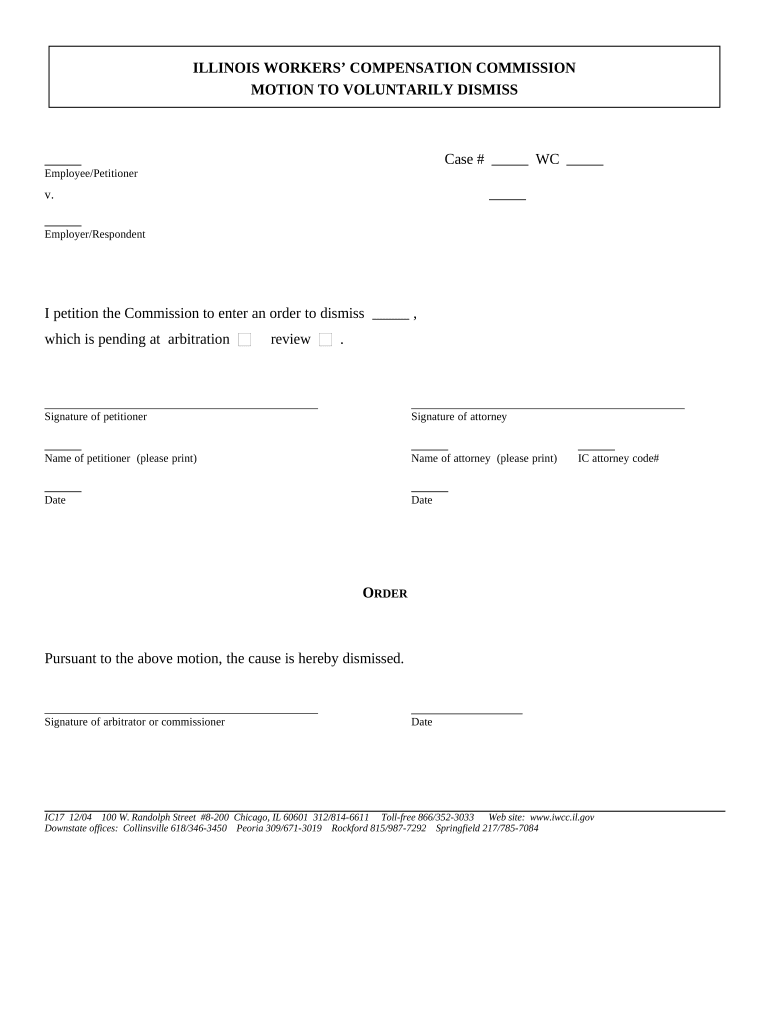
Illinois Motion to Voluntarily Dismiss

This template is fully customizable. Edit the text, fill out the fields, and send it for signature. Give it a try!
Illinois Motion to Voluntarily Dismiss

What the Illinois Motion to Voluntarily Dismiss Is

An Illinois Motion to Voluntarily Dismiss is a written court filing by a plaintiff or petitioner asking the court to terminate a pending civil action without further trial or adjudication. The motion typically explains the grounds for dismissal, whether dismissal is sought with or without prejudice, and any conditions such as payment of costs. Courts govern procedural form, service, and timing under local rules; a voluntary dismissal can affect statute of limitations, refiling rights, and case closure. Use clear factual grounds and proof of service when submitting the motion.

Why a Voluntary Dismissal Matters

A voluntary dismissal lets a plaintiff end litigation when settlement is reached, claims are moot, or pursuing the case is no longer practical. It preserves resources, avoids trial costs, and clarifies whether claims may be refiled depending on whether dismissal is with or without prejudice.

Why a Voluntary Dismissal Matters

Who Typically Prepares and Files This Motion

Plaintiffs, plaintiff attorneys, or their authorized representatives usually prepare and file this motion to end a civil action or specific claims.

  • Plaintiff counsel: Prepares legal basis and supporting affidavit and serves opposing parties.
  • Self-represented plaintiffs: Drafts a concise motion and follows local court filing and service rules.
  • Clerical/legal assistants: Completes forms, files with the clerk, and records proof of service.

Who Has Authority to Sign

Plaintiff or Counsel

The plaintiff or the plaintiff's licensed attorney signs the motion. Counsel signs to certify the truth of facts, compliance with rules, and proper service; a signature block must include name, firm, address, phone, and Illinois ARDC number if counsel.

Authorized Agent

An authorized representative (corporate officer or registered agent) may sign on behalf of an institutional plaintiff if empowered in writing; identify the representative's title and attach proof of authority to avoid challenges.

Primary Elements to Include in a Professional Motion

A complete Illinois Motion to Voluntarily Dismiss includes factual background, a clear request, legal basis, signature, certificate of service, and any proposed order for the judge’s signature.

Caption

State the court name, case number, party names, and caption exactly as on the original complaint to ensure correct docketing and identification.
Notice of Motion

Specify the hearing date or state that the motion is submitted on call of the calendar if local practice permits; give opposing parties adequate notice per local rule.

Statement of Facts

Concise factual summary describing why dismissal is requested, including settlement terms or mootness, and any steps taken to notify opposing counsel.

Request for Relief

Clearly state whether dismissal is sought with or without prejudice, and whether costs, fees, or terms are requested or waived.

Certificate of Service

Include a signed certificate stating date, method of service, and names/addresses of recipients to prove compliance with court rules.

Proposed Order

Attach a proposed order the judge can sign to effect dismissal, including case caption and precise language about with/without prejudice and costs allocation.

Required Information and Common Filing Details

Case Caption: Full party names and court caption
Case Number: Complete docket or file number
Relief Sought: Dismissal with/without prejudice
Service Statement: How and when parties were served
Signature Block: Name, bar number, contact details
Proposed Order: Draft order for judge's signature

Step-by-Step: Filing an Illinois Motion to Voluntarily Dismiss

Follow these steps to prepare, sign, serve, and file a voluntary dismissal so it complies with court procedure and preserves or waives refiling rights.

  • 01
    Draft Motion: Compose motion text, identify with/without prejudice, and attach proposed order.
  • 02
    Sign and Date: Authorized party signs; include contact and bar information if counsel.
  • 03
    Serve Parties: Serve all parties per local rules and prepare certificate of service.
  • 04
    File with Clerk: Submit via e‑file or clerk's office and obtain stamped copy for records.

How to Set Up an Electronic Filing Workflow

Configure e-filing and e-signature steps to mirror the paper workflow and capture required evidence of service and signatures.

Field Configuration
Document Upload PDF with embedded metadata
Signature Field Signer name, date, and role
Certificate Field Service method and date
Routing E-file then distribute stamped copy

Typical eSubmission Flow for the Motion

An eSubmission sequence ensures proper signing, service, and filing while maintaining an audit trail for the court record.

  • Upload: Add motion, proposed order, and attachments
  • Sign: Authorized signer applies an e-signature
  • Serve: Send copies to opposing counsel as required
  • File: E-file with court or deliver to clerk

Platform and Integration Considerations for eFiling

Choose a platform that supports PDF, Word DOCX, and audit trails, and integrates with case management or cloud storage systems.

  • File Types: PDF, DOCX supported
  • Integrations: Salesforce, NetSuite, Google Workspace
  • Authentication: Email, SMS, or advanced MFA

Comparing eSignature Pricing for Motion Preparation and Execution

Basic pricing and capabilities affect document preparation, bulk distribution, audit trails, and HIPAA or enterprise compliance needs when e-signing legal filings.

signNow DocuSign Adobe Sign PandaDoc HelloSign
Starting Price $8/user/mo $15/user/mo $14/user/mo $19/user/mo $15/user/mo
Free Trial Yes, 7-day trial Yes, trial available Yes, trial available Yes, trial available Yes, trial available
Bulk Send Yes Yes Yes Yes No
Audit Trail Yes Yes Yes Yes Yes
HIPAA Compliant Yes Yes Yes No No

Timing Considerations When Filing a Voluntary Dismissal

Timing affects whether dismissal is allowed without court leave and whether dismissal is with or without prejudice; local rules control notice and hearing timing.

Before Answer:

Some courts allow dismissal without prejudice if filed before defendant's answer or certain responsive pleadings.

After Answer:

Court leave is often required to dismiss after an answer; terms may include costs or conditions.

With Prejudice:

Dismissal with prejudice bars refiling of the same claim; consider statute of limitations impact.

Without Prejudice:

Allows refiling subject to limitations; use when postponing or resolving claims short-term.

Hearing Notice:

Provide notice per local rules; emergency or summary treatment varies by court.

Key Milestones After Filing the Motion

A typical milestone sequence shows filing, service, possible hearing, judge's order, and case closure steps for docket updates.

01

File Motion

Clerk accepts and dockets the motion with a filing timestamp.

02

Serve Parties

Opposing counsel receives motion and certificate of service is prepared.

03

Hearing or Submission

Court either schedules a hearing or decides the motion on the papers.

04

Order and Docket

Judge signs order and clerk updates the case status to closed or resolved.

Common Mistakes to Avoid

  • Failing to specify 'with' or 'without prejudice' creates confusion about refiling rights and may lead to unintended waiver.
  • Neglecting to include a signed certificate of service can result in rejection or delay and harm proof of notice.
  • Using inconsistent party names or wrong case numbers can misroute the filing and cause administrative dismissal.
  • Omitting a proposed order slows the judge’s processing and may require additional clerical steps.

Penalties and Risks of an Incorrect or Incomplete Motion

Case Delay: Hearing continuances or administrative rejection
Refiling Bar: Risk of permanent waiver if dismissed with prejudice
Sanctions: Possible monetary sanctions for improper filings
Costs Award: Court may award fees to opposing party
Lost Rights: Statute of limitations may expire before refiling
Record Gaps: Insufficient service proof undermines enforceability

Use-Case Examples

Two practical scenarios show how a voluntary dismissal is commonly used and documented in practice.

Settlement Closure

Plaintiff and defendant settle pretrial and file a joint motion to dismiss

  • Parties attach the settlement and proposed order
  • The court signs the order dismissing with agreed terms, closing the docket and releasing liens as specified in the settlement.

Strategic Refiling

A plaintiff dismisses without prejudice to preserve a stronger claim later

  • Dismissal pauses the litigation while preserving rights
  • Plaintiff monitors statute of limitations and refiles within the allowable period after strengthening evidence.

Frequently Asked Questions About the Motion

Answers to frequent procedural questions about preparing, serving, and filing a Motion to Voluntarily Dismiss in Illinois.


Need help? Contact support

be ready to get more
Join over 28 million airSlate SignNow users