Establishing secure connection…Loading editor…Preparing document…

Independent Administrator Form

This template is fully customizable. Edit the text, fill out the fields, and send it for signature. Give it a try!
Independent Administrator Form

What the Independent Administrator Form Is and when it’s used

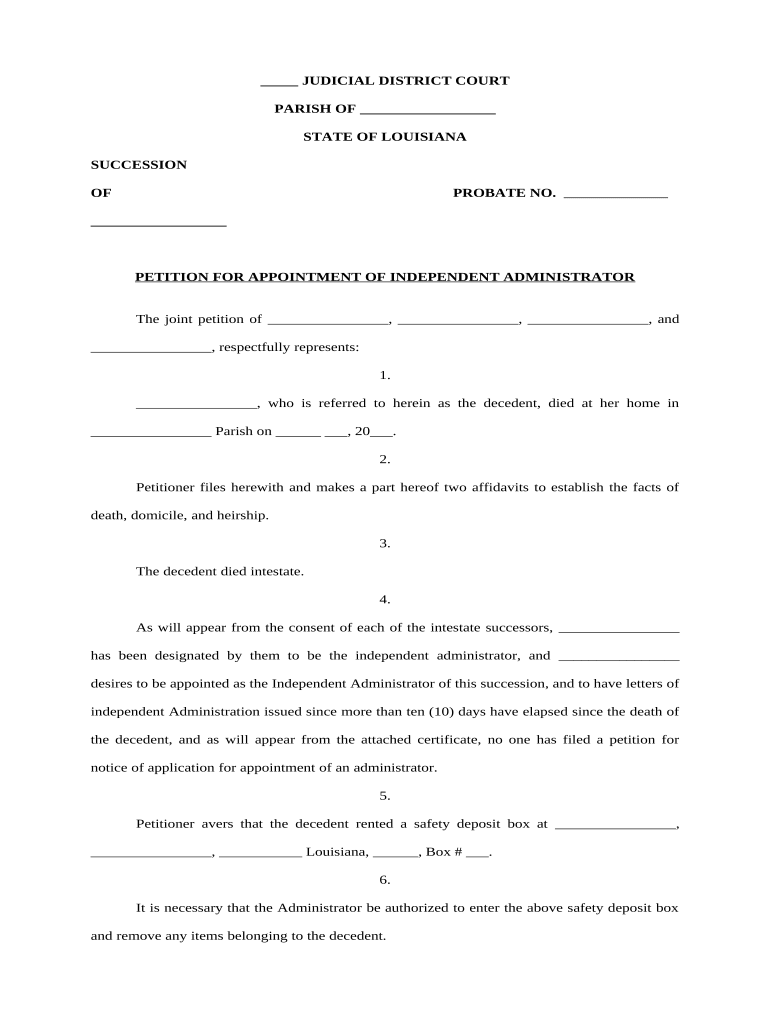
The Independent Administrator Form is a probate filing used to request that a court appoint an independent administrator to manage a decedent’s estate without ongoing judicial supervision. It names the proposed administrator, describes authority limits and bond requirements, and identifies heirs and creditors. Courts review the petition to decide whether to issue Letters of Administration. Because requirements vary by state, the form may need notarization, witness signatures, or specific bond language to be accepted by the local probate clerk.

Why an Independent Administrator Form matters for estate administration

Filing this form can reduce routine court approvals, clarify the administrator’s authority to settle debts, sell assets, and distribute property, and establish notice and accounting expectations under state probate law while preserving judicial review for contested matters.

Why an Independent Administrator Form matters for estate administration

Who prepares and relies on the form

Typical users who prepare, file, or rely on an Independent Administrator Form include the following professionals and parties.

  • Probate attorneys advising estate administration and preparing petitions and supporting affidavits.
  • Family members or beneficiaries seeking appointment of a nominated independent administrator.
  • Court clerks and probate judges reviewing filings and confirming jurisdictional requirements.

Step-by-step: Completing and filing an Independent Administrator Form

Follow these core steps to prepare, verify, and file the petition so the court can consider appointment of an independent administrator.

  • 01
    Prepare form: Complete all required fields and attach the death certificate and any will or inventory.
  • 02
    Verify identity: Confirm names and addresses using government IDs and death records before submission.
  • 03
    Notarize if required: Obtain notarization or witnesses per state rules or court clerk instructions.
  • 04
    File with court: Submit originals to the probate clerk and serve interested parties per local rules.

Setting up an online form workflow

Configure the digital template to enforce formats, collect required evidence, and present conditional fields for bond, waivers, or exhibits.

Field Configuration
Date fields Force MM/DD/YYYY format and auto-validate to reduce errors.
Signature authentication Default email link with optional SMS code or ID check where permitted.
Conditional bond field Show bond amount only when 'Bond required' checkbox is selected.
Attach exhibits Allow PDF and DOCX uploads for wills, inventories, and death certificates.

How the filing and appointment process normally flows

The typical administrative sequence moves from document preparation through court review to issuance of official administrator credentials.

  • Prepare documents: Complete the form, attach the death certificate and will if available.
  • Authenticate signers: Notarize signatures or use approved e-authentication where allowed by local rules.
  • File petition: Submit to the probate clerk and pay required filing fees.
  • Receive Letters: Upon approval, the court issues Letters of Administration authorizing estate actions.

Typical timelines and expected processing windows

Timing varies by jurisdiction; below are common deadlines and scheduling expectations to plan around when filing a petition.

Initial petition filing:

Varies by state; often filed within weeks of the decedent’s death.

Hearing scheduling:

Commonly scheduled 4–12 weeks after filing, subject to court calendar.

Bond posting deadline:

Usually required before Letters of Administration are issued by the court.

Notice to heirs:

Serve or publish notice per state timelines, often within 4–8 weeks.

Accounting filing:

Interim or final accounting is due per court order; timing varies.

Key milestones from petition to administration

A sequential view highlights decision points: preparation, filing, court review, and issuance of authority to act on behalf of the estate.

01

Document Preparation

Assemble the petition, death certificate, will, and service list before filing.

02

Filing and Service

File the petition and serve interested parties according to state rules.

03

Court Hearing

Judge reviews qualifications, may require bond or additional proof.

04

Issuance of Letters

Court issues Letters of Administration, enabling the administrator to act.

Comparing e-signature vendors for filing and signing

Compare starting price, trial availability, bulk send, audit trail, HIPAA compliance, and envelope caps across major e-signature vendors to choose a suitable provider for probate workflows.

signNow DocuSign Adobe Sign PandaDoc HelloSign
Starting Price $8/user/mo $15/user/mo $14/user/mo $19/user/mo $15/user/mo
Free Trial Yes, 7-day trial Varies by plan Varies by plan Varies by plan Varies by plan
Bulk Send Yes Yes Yes Yes No
Audit Trail Yes Yes Yes Yes Yes
HIPAA Compliant Yes Yes Yes No No
Envelope Cap No envelope cap 100 envelopes/user/year Varies by plan Varies by plan Varies by plan

Essential components to include on a professional form

Ensure the form clearly defines appointment scope, reporting duties, bond details, and compliance steps to satisfy the court’s review criteria.

Authority scope

Clearly state powers granted (sell assets, collect rents, hire professionals) and whether court approval is needed for major transactions.
Bond requirement

Show required bond amount or statutory waiver language and attach proof of surety when required by the court or state law.

Effective date

Specify when authority begins (upon appointment, upon issuance of Letters, or on a specified date) to avoid ambiguity.

Duties and powers

List fiduciary duties, notice obligations, and limitations on settlement or distribution authority under state probate rules.

Accounting rules

Include anticipated accounting intervals, reporting formats, and who receives interim or final account statements.

Waiver of supervision

If seeking independent administration, include statutory language requesting limited court oversight where the jurisdiction permits it.

Required identifiers and basic inputs

Decedent full name: Enter full legal name as on death records.
Case number: Provide the court-assigned case number if available.
Applicant name: List proposed administrator’s full legal name.
Jurisdiction: Include court name and county.
Effective date: Use MM/DD/YYYY format for clarity.
Signature block: Include signature, printed name, and date.

Common penalties and legal risks from incorrect filings

Invalid appointment: Court may deny appointment
Bond deficiencies: Estate exposed to loss
Missed notices: Creditor claims revived
Accounting failures: Sanctions or surcharge
Fraud allegations: Civil and criminal exposure
Probate delays: Extended administration timeline

Common preparation mistakes to avoid

  • Using inconsistent party names, such as initials or nicknames, causes processing delays and may require amended filings and additional verification from the court.
  • Failing to notarize or obtain required witness signatures risks rejection by the clerk or the need for in-court testimony to validate signatures.
  • Omitting bond information or miscalculating required bond amounts can delay issuance of Letters of Administration and increase creditor challenge risk.
  • Submitting incomplete service lists or failing to notify heirs and creditors within statutory timeframes can lead to contested proceedings and higher legal costs.

Practical tips for accurate and efficient completion

Follow these best practices to minimize rejection risk and streamline court processing.

Verify legal names and identities
Confirm names exactly against government records and the death certificate; mismatches often cause clerk rejection or require sworn affidavits and corrected filings.
Confirm jurisdictional requirements
Check local probate rules for notarization, witness counts, bond amounts, and service methods to avoid procedural deficiencies and re-filing.
Prepare complete exhibits
Attach the death certificate, original will if available, creditor lists, and proposed orders to reduce follow-up requests from the court clerk.
Maintain an audit trail
If using e-signatures or remote notarization, retain evidence of signer authentication, timestamps, and tamper-evident copies that satisfy ESIGN and UETA tests.

Illustrative scenarios showing how the form is used

Two concise examples demonstrate common outcomes when the petition is prepared correctly and authorities are properly documented.

Probate Estate

A decedent with multiple rental properties needed an administrator authorized to collect rents and manage sales through probate.

  • Independent administration limited routine court approvals and simplified monthly operations.
  • With a completed petition, proper service, and a posted bond, the court issued Letters of Administration allowing the administrator to manage assets and settle claims without repeated petitions for ordinary estate transactions.

Small Business

A sole-owner small business required an administrator to preserve contracts and continue operations during probate.

  • The petition requested power to hire counsel and operate the business.
  • After notice to creditors and heirs and a short hearing, the court granted limited authority, enabling continuity of operations while protecting creditor and heir rights through required reporting and final accounting.

Technical compatibility and integration considerations

Confirm what the probate court accepts for electronic submissions and which authentication methods are permitted before using an online process.

  • File formats: PDF and DOCX commonly accepted
  • Authentication: Notary or multi-factor where required
  • Integrations: Supports Salesforce, NetSuite, Google Workspace

Frequently asked questions about the Independent Administrator Form

Answers to common questions about completing, authenticating, and filing the form, plus steps to correct common errors.


Need help? Contact support

be ready to get more
Join over 28 million airSlate SignNow users