Instructions for Preliminary Inventory
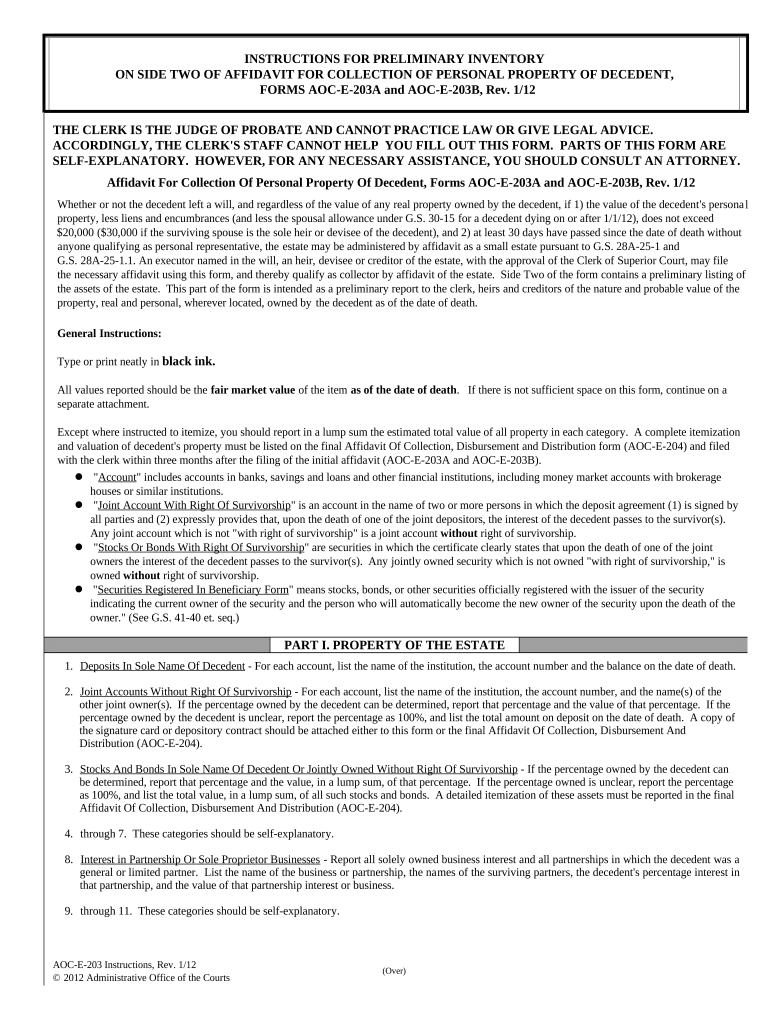
What the Instructions for Preliminary Inventory Are
Why Accurate Preliminary Inventory Instructions Matter
Clear instructions reduce probate delays, help protect estate assets from creditor claims, and make subsequent accounting and tax reporting faster and more accurate. They guide nonprofessional executors through common procedural steps while preserving legal compliance.

Who Typically Prepares and Uses These Instructions
These instructions are designed for people responsible for opening an estate or administering a decedent's assets and for professionals who assist them.
- Personal representatives and executors managing probate duties and initial asset collection.
- Probate or estate attorneys preparing formal inventories and advising clients on disclosures.
- Trust officers, fiduciaries, or court clerks who review and accept inventory filings.
Step-by-Step: Completing the Preliminary Inventory
-
01Gather Records: Collect bank, brokerage, title, and insurance documents matching the inventory date.
-
02List Assets: Record each asset with clear description and estimated value.
-
03Attach Proof: Include supporting PDF evidence for balances and ownership.
-
04Sign & File: Sign, notarize if required, and submit to the court or trustee.
How Electronic Submission and Routing Typically Work
-
Prepare Document: Create fillable PDF or DOCX and attach exhibits.
-
Configure Signers: Add executor and attorney emails and set signing order.
-
Set Authentication: Choose email, SMS code, or stronger verification as required.
-
Send and Track: Distribute signing link and monitor completion with audit trail.
Recommended Electronic Workflow Settings for Online Completion
| Field | Recommended configuration |
|---|---|
| Signer Order | Executor first | Attorney second |
| Authentication | Email + SMS code for moderate assurance |
| Reminders | Auto-remind every 3 days up to three times |
| Retention | Store completed package as PDF/A with audit trail |
Technical Considerations for eSubmission and Electronic Signatures
Ensure your chosen platform supports the file types, authentication levels, and retention controls required for probate filings.
- File Types: PDF, DOCX, and scanned TIFF accepted
- Integrations: Link to cloud storage and case management
- Authentication: Email, SMS, KBA, or higher
Typical Timing Expectations and Filing Windows
Initial Inventory Window:
Often 30–90 days from appointment of personal representative
Creditor Notice Period:
Local rules often require notices within 30–120 days
Tax Reporting:
Estate tax and income returns follow federal deadlines (IRS rules apply)
Court Requests:
Be prepared to supplement inventory within 14–30 days of court order
Record Retention:
Retain originals and electronic copies per retention rules
Key Milestones from Appointment to Filing
Appointment
Court issues letters of administration to the representative.
Document Collection
Gather bank statements, deeds, and titles for inventory.
Valuation
Obtain appraisals or account balances as of inventory date.
Submission
File inventory with court or provide to trustee with exhibits.
Common Errors to Avoid When Preparing the Preliminary Inventory
- Listing ambiguous descriptions that prevent verification by court or creditors and cause follow-up requests and delays.
- Using inconsistent valuation dates across assets, which can lead to disputes about market value and liability allocation.
- Omitting attachments such as deeds or account statements, forcing late filings or additional notarized declarations.
- Failing to verify beneficiary designations on financial accounts, which may override estate distribution plans.
Risks and Consequences of an Incorrect or Missing Inventory
Practical Examples of Using Instructions for Preliminary Inventory
Estate Law Firm
A small firm standardized instructions for client executors to collect bank statements and deeds quickly
- Reduced follow-up requests
- The firm reported fewer court amendments and a smoother accounting process that cut resolution time and legal hours.
Title and Trust Company
A trust company used a fillable template to capture asset details and beneficiary designations
- Improved completeness
- The company avoided duplicate asset listings, reduced reconciliation time, and improved transparency for beneficiaries.
eSignature Vendor Comparison for Completing and Signing Inventories
| signNow | DocuSign | Adobe Sign | PandaDoc | HelloSign | |
|---|---|---|---|---|---|
| Starting Price | $8/user/mo | $15/user/mo | $14/user/mo | $19/user/mo | $15/user/mo |
| Free Trial | 7-day free trial | Varies | Varies | Varies | Varies |
| Bulk Send | Yes | Yes | Yes | Yes | No |
| Audit Trail | Yes | Yes | Yes | Yes | Yes |
| HIPAA Compliant | Yes | Yes | Yes | No | No |
Frequently Asked Questions About the Instructions for Preliminary Inventory
-
Can I e-sign the inventory?
Yes. Electronic signatures are generally valid under the ESIGN Act (15 U.S.C. ch. 96) and UETA where adopted, provided the signer intends to sign, consents to electronic records, and the record can be retained and reproduced.
-
Do inventories need notarization?
Not always. Notarization requirements depend on state rules and the document type; deeds and some affidavits typically require notarization, while basic inventories may not.
-
What happens if I find an omitted asset?
Supplement the inventory promptly and notify the court and interested parties. Late disclosure can expose the estate to creditor claims or court sanctions if disclosure appears intentionally misleading.
-
Is witness testimony required?
Witness requirements vary by document and state. Wills commonly require witnesses; inventories usually do not, but associated affidavits might—check state practice or counsel guidance.
-
How do I correct a submitted inventory?
File an amended inventory or supplemental schedule as permitted by local probate rules. Attach a clear explanation and supporting documents for changes to minimize court inquiries.
-
Are electronic copies acceptable to the court?
Many courts accept electronic filings, but practices differ. Verify local court rules before relying solely on digital submission; some jurisdictions still require certified paper copies or original signatures.