Establishing secure connection…Loading editor…Preparing document…

Letter Concluding Representation

This template is fully customizable. Edit the text, fill out the fields, and send it for signature. Give it a try!
Letter Concluding Representation

What a Letter Concluding Representation Is and When it’s Used

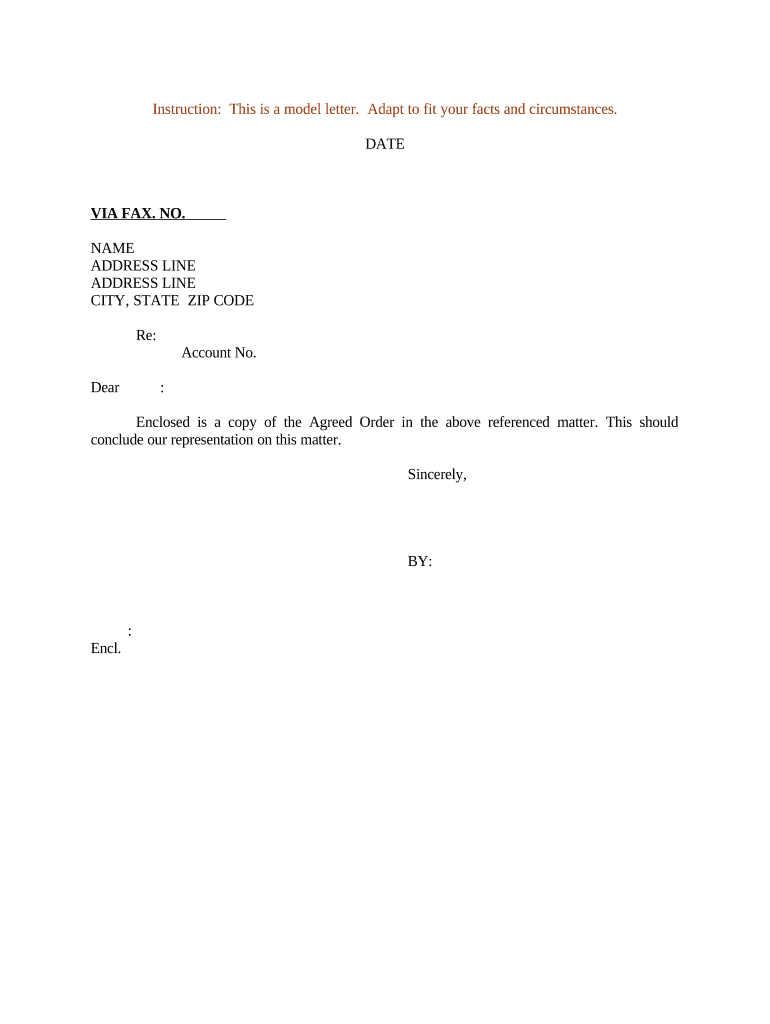
A Letter Concluding Representation is a formal written notice from an attorney or law firm to a client confirming the end of the attorney-client relationship and summarizing outstanding matters, file retention, and any post-termination obligations. It documents the termination date, scope of work completed, any pending tasks or deadlines, instructions about client property and records, and whether the lawyer will continue limited responsibilities such as closing documents or transitional assistance. The letter protects both parties by creating a clear record of the end of representation and specifying next steps, access to files, and any continuing obligations.

Why the Letter Matters for Risk Management and Client Care

A clear concluding letter reduces misunderstandings, limits malpractice exposure, and provides a written timeline for file retention and outstanding obligations. It helps establish the end date of duties, preserves the firm’s records of communication, and protects client interests by listing next steps and contact points for future questions.

Why the Letter Matters for Risk Management and Client Care

Who Typically Issues or Receives This Letter

The letter should be addressed to the authorized client contact and copied to relevant parties (opposing counsel, co-counsel, or a client’s authorized representative) where appropriate.

  • Solo and small-firm attorneys concluding discrete matters or engagements.
  • In-house legal teams closing internal projects or offboarding outside counsel.
  • Corporate legal departments notifying business units or external counterparties.

Roles Who Sign or Approve the Letter

Managing Attorney

A senior partner or managing attorney usually signs to confirm the firm’s action and responsibility. The signatory should be authorized to close the matter and confirm retention instructions in the firm’s records.

Client Representative

An individual client or an authorized company officer should acknowledge receipt or provide a forwarding contact. Identifying the authorized recipient reduces ambiguity about who can request files or give further instructions.

Essential Elements to Include in a Professional Letter Concluding Representation

A complete letter is concise but comprehensive: it should state the termination, summarize completed work, note any pending items, set file retention and retrieval instructions, and provide contact and billing closure details.

Termination Statement

A clear sentence stating that the firm’s representation has ended and specifying the effective termination date.
Scope Summary

Brief summary of work performed and services completed under the engagement agreement.

Pending Matters

List of open tasks, deadlines, or steps the client must take and any recommended counsel or successor counsel.

Client Property & Files

Instructions for retrieval, file delivery options, and any fees for copying or transfer.

Billing and Liens

Statement of outstanding invoices, retainers applied, and any lien or charging language under the engagement.

Contact and Recordkeeping

Designated contact person, timeframe for client questions, and statement of retention period and destruction policy.

Required Information and Quick Reference Items

Client Name: Exact legal name
Matter ID: Firm matter or file number
Termination Date: MM/DD/YYYY
Outstanding Items: Short list of pending tasks
Billing Status: Retainer balance or invoice summary
Delivery Options: Pickup, mail, electronic transfer

Step-by-Step: Preparing and Sending the Letter

Follow this ordered checklist to prepare a defensible concluding letter and record the transfer or closure of the file.

  • 01
    Draft: Compose clear termination and summary language.
  • 02
    Review: Have supervising attorney check for accuracy.
  • 03
    Authorize: Obtain signature from authorized firm representative.
  • 04
    Send: Deliver by agreed method and log receipt.

Configuring an Online Workflow for the Letter

When automating the letter, map fields to firm systems and set routing so signatures, file transfers, and billing updates occur automatically.

Field Configuration
Matter ID Mapping Sync to practice-management system field
Signature Requirement Require licensed attorney signature field
File Transfer Enable secure client file upload/download
Notification Auto-email internal team and client on send

Delivery Channels and Technical Considerations

Ensure the chosen channel supports audit logs and secure storage; integrate with your document management system to capture retention metadata and to comply with client consent requirements under ESIGN when sending electronic records.

  • Email (PDF): Signed PDF with read receipt
  • Secure Portal: Client portal download
  • Registered Mail: Return receipt requested

Where to Send or File the Concluding Letter

Decide routing based on client preference and legal recordkeeping obligations: deliver to the client, copy successor counsel, and retain a firm copy in the matter file.

  • Primary Delivery: Send to client’s authorized contact
  • Copy to Counsel: Send to opposing or successor counsel as needed
  • Firm File: Archive signed copy in matter management system
  • Third Parties: Provide copies to lenders or fiduciaries if authorized

Timelines and Typical Deadlines to Note

Certain follow-up periods and delivery windows are customary; track dates to avoid missed obligations and to preserve evidence of timely notice.

Send Promptly:

Deliver the letter as soon as representation ends, typically within 7–14 days.

Client Response Window:

Allow 14–30 days for client to request file transfer or return of property.

Billing Finalization:

Issue final invoice within 30 days of termination.

Retainer Accounting:

Provide retainer accounting and refund within customary billing cycle.

Record Retention:

Preserve firm copy per retention policy and regulatory requirements.

Key Milestones and Processing Stages

Track these milestones to create an internal audit trail and to demonstrate timely compliance with client and regulatory requirements.

01

Matter Closure

Firm documents the effective termination date and updates matter status.

02

Final Letter Sent

Signed letter is delivered to the client by selected method.

03

Client Acknowledgement

Client confirms receipt or requests file transfer.

04

Archive and Retain

Signed copy archived and retention metadata recorded.

Common Mistakes to Avoid When Preparing the Letter

  • Using vague termination language that fails to fix the end date and scope of duties, which can create future malpractice disputes.
  • Neglecting to list pending deadlines or tasks for the client or successor counsel, causing missed filings or obligations.
  • Failing to include billing and retainer status, which can lead to later fee disputes or collection challenges.
  • Not retaining proof of delivery or client acknowledgement, weakening the firm’s defense if issues arise.

Risks and Consequences of an Inadequate Letter

Malpractice Exposure: Increased liability risk
Missed Deadlines: Court or statutory deadlines
Billing Disputes: Unresolved fee claims
Client Confusion: Ambiguous responsibilities
Regulatory Sanctions: Ethics or disciplinary complaints
Record Loss: Failure to preserve evidence

Representative eSignature Pricing Options for Sending a Letter Concluding Representation

When choosing an eSignature provider for closing letters, compare starting price, trial options, bulk send capability, audit trail support, and HIPAA/enterprise compliance features.

signNow DocuSign Adobe Sign PandaDoc HelloSign
Starting Price $8/user/mo $15/user/mo $14/user/mo $19/user/mo $15/user/mo
Free Trial 7-day free trial No No Yes, limited Yes, limited
Bulk Send Yes Yes Yes Yes No
Audit Trail Yes Yes Yes Yes Yes
HIPAA Compliant Yes Yes Yes No No

Real-World Examples of How Firms Use a Concluding Letter

These two examples illustrate typical language and practical follow-up steps used when wrapping up matters and transferring files or responsibilities.

Small Firm Matter

After completing a landlord-tenant dispute, the firm sends a concluding letter noting settled claims and final invoices

  • identifies a 30-day window for client file pickup
  • the firm archives the digital file and applies the retention schedule while offering a secure download link for client retrieval.

In-House Counsel

When outside counsel finishes regulatory work, the corporate legal team receives a concluding letter summarizing deliverables

  • confirms transfer of corporate minutes and filings
  • the company logs the letter in its matter-tracking system and notifies the business unit that the matter is closed.

Frequently Asked Questions About Letters Concluding Representation

Answers to common questions about form, timing, legal effects, and electronic delivery to help you avoid pitfalls and preserve evidentiary proof.


Need help? Contact support

be ready to get more
Join over 28 million airSlate SignNow users