Establishing secure connection…Loading editor…Preparing document…

Letter Encouraging Employee After Setback

This template is fully customizable. Edit the text, fill out the fields, and send it for signature. Give it a try!
Letter Encouraging Employee After Setback

What the Letter Encouraging Employee After Setback Is

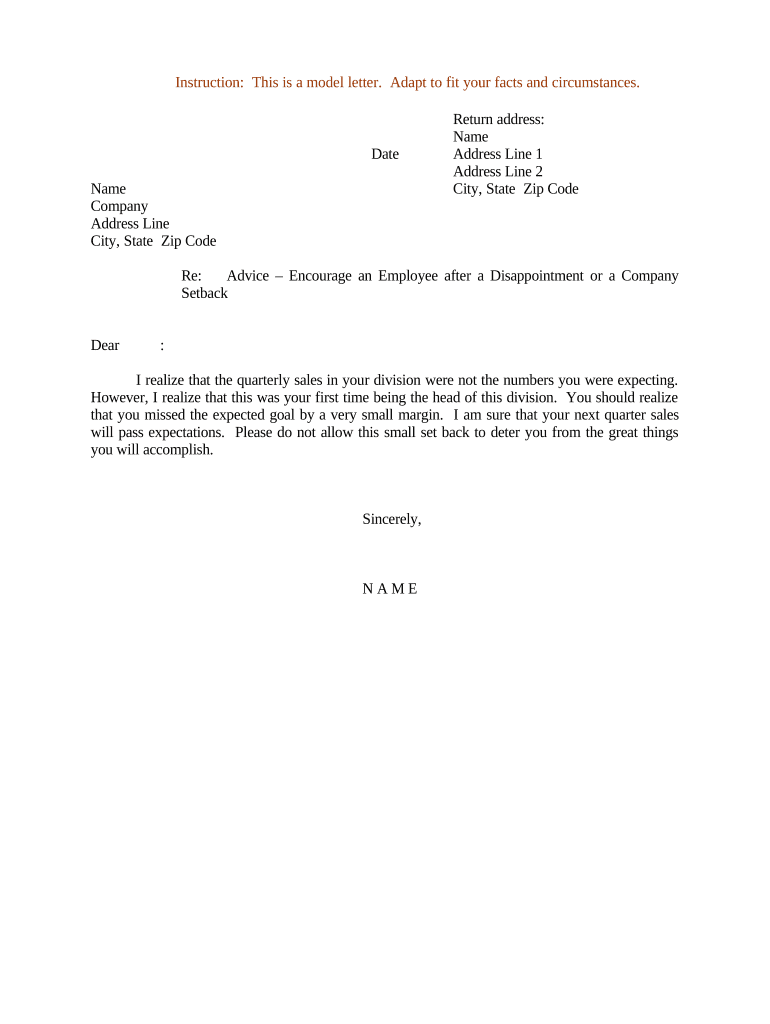
A Letter Encouraging Employee After Setback is a brief, documented communication from a manager or HR representative intended to acknowledge an employee's recent challenge, express support, and outline next steps or available resources. It balances empathy with clarity about expectations, timelines for follow-up, and any temporary accommodations or development actions. The letter is typically placed in the employee file as a non-disciplinary record of support and can be used to track progress, schedule check-ins, and document available resources such as training, mentoring, or employee assistance programs.

Why Use a Supportive Letter After a Setback

Issuing a concise supportive letter documents that management recognized the setback, provided direction, and offered assistance while preserving a constructive tone. It helps align expectations, reduces ambiguity, supports retention, and creates an auditable record of managerial outreach without implying formal discipline.

Why Use a Supportive Letter After a Setback

Who Typically Prepares and Receives This Letter

Supervisors and HR professionals usually prepare the letter when an employee has missed targets, made an error, or experienced a workplace setback.

  • Direct supervisors who oversee day-to-day performance and coach employees through corrective steps.
  • Human resources partners who document the interaction and coordinate accommodations or training.
  • Employee recipients who need written confirmation of support, expectations, and follow-up plans.

Use the letter as a supportive record — not as a replacement for performance evaluations or formal disciplinary documents.

Primary Signers and Stakeholders

HR Manager

An HR Manager reviews policy implications, ensures the letter aligns with company procedures, and retains a copy in the personnel file. They coordinate reasonable accommodations and follow-up timelines if needed, and advise on privacy or HIPAA considerations when the setback involves protected health information.

Direct Supervisor

The Direct Supervisor drafts or delivers the letter, documents the supportive actions discussed, schedules follow-up meetings, and monitors progress. They ensure the tone is constructive and that any commitments made are recorded and fulfilled.

Required Information to Include

Employee Name: Full legal name
Job Title: Current role
Date of Setback: MM/DD/YYYY
Manager Name: Direct supervisor
Support Actions: Resources offered
Signature & Date: Manager sign/date

Step-by-Step: Drafting the Letter

Follow a short, consistent process to create a supportive, factual letter that documents the event, the support offered, and next steps.

  • 01
    Gather Facts: Confirm what happened and relevant dates before drafting.
  • 02
    Use Empathetic Tone: Acknowledge impact and avoid accusatory language.
  • 03
    List Support: Specify resources, training, or schedule changes offered.
  • 04
    Set Follow-Up: Agree a check-in date and document it clearly.

Customizing the Letter Template for Online Use

Configure a reusable template with conditional fields and a clear signing workflow to streamline creation and tracking.

Field Configuration
Template Name Encouragement Letter template with editable sections
Conditional Text Show incident description only when relevant
Signature Field Manager signature required; date field auto-fill
Authentication Email link or SMS code for signer verification

Digital Delivery and File Formats

Choose a platform that supports common document formats and basic signer authentication while preserving audit trails.

  • File Types: PDF, DOCX supported
  • Integrations: HRIS and cloud storage integrations
  • Authentication: Email link or SMS code

Ensure the selected platform captures an audit trail (timestamp, IP) and stores signed copies in the employee record with appropriate access controls.

Typical Routing and Storage Process

A clear routing path ensures the letter reaches the employee, is logged, and is retained according to recordkeeping requirements.

  • Draft and Approve: Supervisor drafts; HR reviews the content.
  • Deliver to Employee: Send via secure email or signed eSignature link.
  • File Record: Store signed copy in personnel file.
  • Schedule Follow-Up: Calendar the agreed check-in date.

Essential Sections to Include in the Letter

A professional encouraging letter is short, factual, supportive, and actionable; include consistent sections to standardize documentation.

Opening Statement

Begin with a supportive acknowledgement of the setback, avoiding blame, and stating the purpose of the letter to provide clarity and reassurance.
Factual Summary

Provide a one- or two-sentence factual description of the incident or performance gap to ensure the employee and HR have a shared record.

Support Offered

List concrete support items such as coaching, training, schedule adjustments, or EAP referrals, with dates or timelines where applicable.

Expectations

State short-term expectations and measurable goals so the employee understands what improvement will be reviewed at follow-up.

Follow-Up Plan

Specify the date and format of the follow-up (one-on-one meeting, progress review) and any metrics that will be used to assess progress.

Closing and Signature

End with an encouraging closing, manager name and title, and a dated signature line to confirm delivery and acknowledgment of the offer of support.

Practical Tips for Clear, Constructive Letters

Follow these best practices to keep the letter constructive, legally safe, and useful for tracking progress.

Be concise and factual
Limit the letter to one page when possible. Record only verifiable facts about the event and the agreed support steps to avoid subjective commentary that could later be contested.
Maintain confidentiality
Avoid medical detail in the letter unless the employee provides written authorization. Route copies only to HR and relevant management to protect privacy.
Document follow-up explicitly
Use specific dates and measurable goals in the follow-up plan. Concrete milestones reduce ambiguity and make subsequent reviews more objective.
Use consistent templates
Maintain a standardized template for supportive letters to ensure uniform tone, required fields, and easier auditing by HR or legal teams.

Common Mistakes to Avoid

  • Using accusatory or inflammatory language that transforms a supportive note into a disciplinary document and damages trust.
  • Including unnecessary medical or personal details that violate privacy laws or internal confidentiality policies.
  • Failing to record follow-up dates or actions, which creates uncertainty about next steps and undermines accountability.
  • Delivering the letter without prior conversation; employees respond better when a face-to-face or synchronous discussion precedes written confirmation.

Risk Areas and Potential Consequences

Privacy Exposure: HIPAA risk
Misinterpretation: Viewed as discipline
Record Inconsistency: Conflicting files
Legal Challenge: Employment dispute
Morale Impact: Reduced engagement
Noncompliance: Policy breach

eSignature Pricing Comparison Relevant to This Letter

Typical per-user pricing and key plan capabilities for common eSignature vendors. signNow is listed first per comparison conventions.

signNow DocuSign Adobe Sign PandaDoc HelloSign
Starting Price $8/user/mo $15/user/mo $14/user/mo $19/user/mo $15/user/mo
Free Trial 7-day free trial, no credit card required Free trial available Free trial available Free trial available Free trial available
Bulk Send Yes Yes Yes Yes No
Audit Trail Yes Yes Yes Yes Yes
HIPAA Compliant Yes Yes Yes No No

Example Scenarios Where the Letter Helps

Short, anonymized examples show how the letter is used in practice to support employees and document follow-up.

Scenario: Missed Deadline

A project contributor missed a major deadline due to personal disruption; manager documented support plan and training referral.

  • Manager scheduled a two-week check-in to monitor progress and provided a mentor.
  • The employee regained full productivity within one month and the letter documented the supportive steps taken for HR records.

Scenario: Skill Gap

An employee struggled with a new software tool and produced inconsistent work; supervisor offered targeted training and adjusted short-term goals.

  • Training was scheduled within seven days and a 30-day performance milestone was set.
  • The letter recorded the offer of training and the follow-up date, clarifying expectations and resources.

Recommended Timing and Tracking

Use clear timing for delivery and review to ensure the letter functions as an actionable support document.

Issue Soon After Event:

Deliver the letter within 48–72 hours of the documented setback.

Immediate File Update:

Save signed copy to the personnel file immediately after delivery.

Short-Term Review:

Schedule a first progress check within 7–14 days.

Milestone Review:

Set a measurable milestone at 30 days when appropriate.

Long-Term Follow-Up:

Document outcomes at the agreed follow-up and retain the record.

Frequently Asked Questions about the Letter

Answers to common questions about content, privacy, electronic signatures, and recordkeeping for supportive letters.


Need help? Contact support

be ready to get more
Join over 28 million airSlate SignNow users