Purpose
Summarize the meeting objective in one clear sentence, for example to review program metrics, identify collection gaps, or discuss policy changes and expected outcomes.
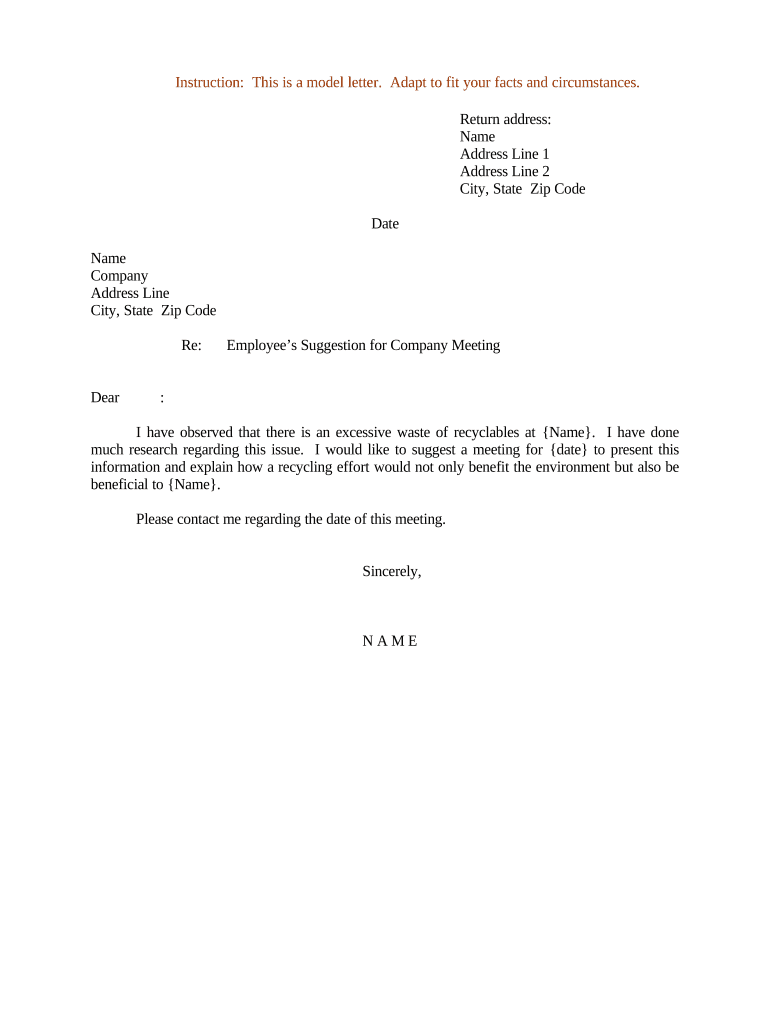
A formal letter clarifies objectives, records proposed actions, and signals organizational intent while preserving a paper trail for follow-up or municipal processes. It reduces ambiguity about scope, attendees, and next steps and helps coordinate stakeholders across departments or external partners.

Recipients may include internal teams, contractors, community groups, elected officials, and other stakeholders whose input or attendance is needed to advance recycling objectives.
Summarize the meeting objective in one clear sentence, for example to review program metrics, identify collection gaps, or discuss policy changes and expected outcomes.
List a specific date and time plus a short alternative window to increase the likelihood of scheduling a mutually convenient meeting.
Provide a short, ordered agenda with time estimates for each item so attendees understand priorities and can prepare data or questions in advance.
Name key invitees and their roles, noting whether attendance is requested or optional and whether proxies or alternates are acceptable.
Specify the physical meeting place or virtual access details, including dial-in, meeting ID, or instructions for joining remotely.
State the deadline for confirmation, any pre-work or documents to review, and the contact person responsible for coordination and follow-up.
| Field | Configuration |
|---|---|
| Document Format | PDF or DOCX; PDF/A recommended for long-term retention |
| Automatic Fields | Enable Magic fields or auto-detection for names and dates |
| Authentication | Use email or SMS code for recipient verification |
| Archive | Store signed copy in secure cloud folder with audit trail |
Configure authentication and storage choices to balance ease of signing with identity assurance and long-term access.
Send 14–28 days before the proposed meeting date
Set reply deadline 7 days before the meeting
Distribute final agenda 3 business days before meeting
Request supporting documents at least 5 days prior
Circulate notes and action items within 3 business days
Recipients receive the initial letter and meeting proposal.
Responses are recorded and attendee list finalized.
Discussion occurs, decisions documented, and assignments made.
Assigned tasks begin and progress is tracked against deadlines.
| signNow | DocuSign | Adobe Sign | PandaDoc | HelloSign | |
|---|---|---|---|---|---|
| Starting Price | $8/user/mo | $15/user/mo | $14/user/mo | $19/user/mo | $15/user/mo |
| Free Trial | Yes, 7-day free trial | No | No | No | No |
| Bulk Send | Yes | Yes | Yes | Yes | No |
| Audit Trail | Yes | Yes | Yes | Yes | Yes |
| Envelope Cap | No cap | 100 envelopes/user/year | Varies by plan | Varies by plan | Varies by plan |
A city sustainability office proposed a quarterly stakeholder meeting to review diversion rates and vendor performance
A homeowner association sent a letter to all residents suggesting a recycling education session and collection pilot