Establishing secure connection…Loading editor…Preparing document…

Letter of Demand

This template is fully customizable. Edit the text, fill out the fields, and send it for signature. Give it a try!
Letter of Demand

What a Letter of Demand Is and when it is used

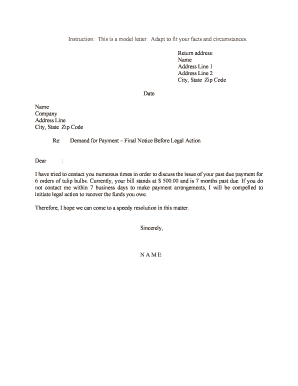
A Letter of Demand is a formal written notice sent by a creditor, supplier, landlord, or their legal representative requesting payment or performance from a debtor before further action. It identifies the obligation, states the amount due or the action required, sets a clear deadline for response, and explains the next steps if the demand is not met. The letter creates an evidentiary record that supports later collection, arbitration, or litigation, and it often prompts negotiated resolution without court filings when drafted and delivered accurately and promptly.

Why drafting a clear Letter of Demand matters

A well-drafted Letter of Demand clarifies the claim, documents notice, preserves rights, and often triggers payment or corrective action without formal court involvement. It reduces uncertainty and can shorten dispute timelines when used alongside accurate records and appropriate deadlines.

Why drafting a clear Letter of Demand matters

Who commonly prepares or receives a Letter of Demand

Typical senders and recipients vary by use case but share an interest in documenting claims and encouraging resolution.

  • Businesses and suppliers seeking unpaid invoices or contract performance, typically including accounting contacts and legal teams, who want a documented, time-bound request before escalation.
  • Landlords or property managers seeking unpaid rent or contract breaches, often using the letter to comply with statutory notice expectations and preserve eviction rights.
  • Legal counsel or collections professionals sending formal demand before filing suit, often crafting precise language to preserve remedies and evidentiary value.

Recipients may be individuals, businesses, or agents; ensure the letter is addressed to the correct legal entity and decision-maker to maximize enforceability.

Step-by-step: preparing and sending a Letter of Demand

Use this compact workflow to prepare a professional Letter of Demand that documents the claim and sets a clear path to resolution.

  • 01
    Collect records: Assemble invoices, contracts, and correspondence to prove the claim.
  • 02
    Draft the demand: State facts, amount, deadline, and intended escalation clearly.
  • 03
    Authorize signer: Have an authorized representative sign and date the letter.
  • 04
    Deliver and document: Send by tracked mail or eDelivery and retain proof of receipt.

Frequently asked questions and common issues

Answers to common practical questions about Letter of Demand drafting, delivery, enforceability, and next steps when a recipient does not respond.


Need help? Contact support

Essential elements to include in every professional Letter of Demand

Include these elements to create a complete, enforceable notice that documents the claim and supports escalation if the demand goes unmet.

Clear identification

Identify sender and recipient by full legal names, include contact details and any relevant account or invoice numbers so the recipient can immediately link the demand to the underlying transaction.
Statement of facts

Summarize the transaction, key dates, obligations, and prior communications succinctly to show the claim's factual basis and to limit potential disputes over context.

Itemized amount

Provide a precise breakdown of principal, accrued interest, late fees, and any statutory charges so the recipient can verify the total and dispute only specific line items if necessary.

Deadline and consequences

Set a specific MM/DD/YYYY response deadline and describe the exact next steps, such as litigation, lien filing, or credit reporting, so the recipient understands the seriousness of noncompliance.

Supporting attachments

Attach copies of contracts, invoices, delivery receipts, and prior correspondence to substantiate the demand and to reduce back-and-forth requests for proof.

Signature and authority

Include a signed signature block with the signer's printed name and title and, when appropriate, attach a firm letterhead or power-of-attorney proof to show authority to demand payment.

Security and compliance considerations for delivery and storage

Encryption in transit: TLS 1.2/1.3
Encryption at rest: AES-256
Audit trail: Tamper-evident logs
Privacy frameworks: GDPR and CCPA compliance
Healthcare BAA: HIPAA support with BAA
Regulatory standards: 21 CFR Part 11 readiness

Consequences of errors or omissions in a demand letter

Missed limitation: Risk of timing out claims
Incorrect party: Service may be invalidated
Ambiguous amount: Creates dispute and delay
Improper notice: May forfeit statutory remedies
Ineffective delivery: No proof of receipt
Costly escalation: Higher attorney and court fees

Common drafting and delivery mistakes to avoid

  • Using informal or vague language that fails to specify the amount, basis, and deadline, which invites disputes and stalls collections.
  • Addressing the wrong legal entity or using only a trading name; this can prevent proper service and lead to procedural dismissal.
  • Failing to attach supporting documents such as invoices or contracts, forcing the recipient to request proof and delaying resolution.
  • Relying solely on untracked delivery methods; without proof of receipt, you may lack evidence needed for later legal proceedings.

How electronic delivery and e-signing work for a Letter of Demand

A reliable e-delivery flow documents who received and opened the letter, and preserves signature evidence if required.

  • Upload document: Add the demand letter file to the e-delivery platform.
  • Set fields: Place signature, date, and authorization fields as needed.
  • Authenticate signer: Use email, SMS, or stronger verification methods.
  • Record audit trail: Capture timestamps, IP, and completion history.

Configuring an online Letter of Demand workflow

Recommended settings for a repeatable, auditable Letter of Demand workflow that reduces manual steps and preserves evidence.

Field Configuration
Signer authentication Email link, SMS code, or KBA where higher assurance needed
Reminders and expiration Automated reminders at set intervals; final expiration date
Template variables Populate names, amounts, and dates automatically
Retention policy Define archival time and export format

Technical capabilities to look for when sending electronically

Ensure the platform supports secure delivery, multi-factor signer authentication, and detailed audit trails before e-sending a demand.

  • Integrations: Salesforce, NetSuite, Google Workspace support
  • Formats: PDF, DOCX, and fillable form support
  • Storage: Encrypted archival and export options

These capabilities help maintain chain of custody and simplify recordkeeping when a claim advances to formal collection or legal proceedings.

Comparing eSignature options for sending and signing Letters of Demand

This concise comparison highlights starting prices and key capabilities for common eSignature providers; signNow is listed first for parity with platform features.

signNow DocuSign Adobe Sign PandaDoc HelloSign
Starting Price $8/user/mo $15/user/mo $14/user/mo $19/user/mo $15/user/mo
Free Trial Yes, 7-day free trial No No Yes, limited Yes, limited
Bulk Send Yes Yes Yes Yes No
Audit Trail Yes Yes Yes Yes Yes
HIPAA Compliant Yes Yes Yes No No

Real-world examples of Letters of Demand in practice

Two concise customer examples show how organizations use a Letter of Demand to resolve claims or accelerate collections.

Optica Ventures (COO)

The team centralized invoice disputes to reduce processing time and improve clarity.

  • They used a standardized demand template for consistency.
  • The approach improved response rates and reduced follow-up cycles, enabling quicker reconciliations and fewer escalations to legal counsel.

Martin Properties (Founder)

Property management used demand letters to address overdue rent across portfolios.

  • Letters included itemized balances and firm deadlines.
  • This consistent process enabled faster collections, preserved eviction remedies when needed, and reduced time spent on case-by-case negotiations.

Practical tips to prepare a stronger Letter of Demand

Follow these best practices to improve clarity, reduce disputes, and document your efforts for potential escalation.

Use precise language
Draft the demand with specific dates, amounts, and references to the contract or invoices. Clear, unemotional wording reduces the likelihood of misinterpretation and strengthens the evidentiary record for collections or litigation.
Attach evidence
Include copies of invoices, signed agreements, delivery confirmations, and prior correspondence to support the claim. Well-documented attachments reduce back-and-forth and make it easier for the recipient to verify and resolve the issue quickly.
Choose reliable delivery
Send the letter using tracked mail, courier, or an eDelivery platform that provides proof of receipt and an audit trail. Proof of delivery is critical if the matter escalates to court or arbitration.
Document follow-up
Record all communications and attempts to contact the recipient after sending the demand. A clear timeline of follow-ups demonstrates good-faith efforts to resolve the matter before pursuing formal remedies.

Key milestones after issuing a Letter of Demand

Track these milestones to ensure timely follow-up and preserve escalation options if the demand is unmet.

01

Issuance

Draft and send the demand with attachments and set the response deadline.

02

Acknowledgment

Confirm receipt; if none, resend by alternate method and document efforts.

03

Follow-up

Send reminder communications before the deadline to prompt resolution.

04

Escalation

If no resolution, initiate formal collection, mediation, or litigation as outlined in the letter.

be ready to get more
Join over 28 million airSlate SignNow users