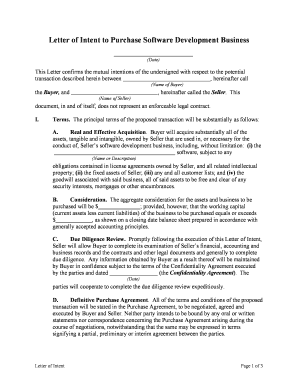
Letter of Intent to Purchase
What a Letter of Intent to Purchase Is and When It’s Used
Why Parties Use a Letter of Intent to Purchase
A Letter of Intent to Purchase helps parties confirm essential deal economics and timelines early, align expectations, and reduce negotiation friction. By documenting core terms and deadlines, an LOI can accelerate contract drafting, focus due diligence, and preserve bargaining positions while specifying any binding obligations such as confidentiality or deposits.
Who Typically Prepares or Receives an LOI
The Letter of Intent to Purchase is used across transactional roles; the entries below summarize common users and why they rely on LOIs.
- Prospective buyers and investors — to summarize offers and secure negotiation exclusivity while due diligence proceeds.
- Real estate brokers and agents — to memorialize offers, preserve priority, and coordinate communications with sellers.
- Sellers and property owners — to assess terms rapidly, control timelines, and decide whether to negotiate or reject.
Representative Signer Profiles
Corporate Buyer
A corporate buyer (e.g., VP of Acquisitions) uses an LOI to set price, due diligence windows, financing contingencies, and exclusivity. The LOI often conditions closing on board approvals and financing commitments and specifies deposit mechanics and timelines.
Real Estate Broker
A broker circulates LOIs to capture buyer interest and protect commission arrangements. Brokers emphasize clear acceptance windows, escrow instructions, and whether the LOI grants exclusivity or allows continued marketing of the property.
Step-by-Step: Preparing and Delivering an LOI
-
01Draft Terms: List price, deposit, contingencies, and closing timeline.
-
02Review with Counsel: Have attorneys review binding clauses and obligations.
-
03Obtain Approvals: Secure internal approvals and financing commitments before signing.
-
04Execute & Deliver: Sign, date, and send copies to seller and broker.
Customizing an Online LOI Workflow
| Field | Configuration |
|---|---|
| Signature method | Email signature or RON |
| Authentication | Email link plus optional SMS code |
| Templates | Save reusable LOI template with placeholders |
| Notifications | Auto reminders to signers and recipients |
Technical Requirements for eSubmission and Signing
Technical and format considerations for electronic Letters of Intent to Purchase include supported file types, signer authentication strength, and audit trail requirements.
- File formats: PDF and DOCX preserve formatting and are widely accepted.
- Integrations: CRM and document storage integrations streamline routing.
- Auth methods: Email link, SMS code, or RON verification may be used.
Who Receives the LOI and How It’s Routed
-
Seller: Primary recipient for acceptance and negotiation response.
-
Broker: Copies for listing agent and buyer broker records.
-
Title Company: Escrow deposit instructions and title review initiation.
-
Legal Counsel: For drafting definitive agreements and reviewing contingencies.
eSignature Vendor Comparison for Executing LOIs
| signNow | DocuSign | Adobe Sign | PandaDoc | HelloSign | |
|---|---|---|---|---|---|
| Starting Price | $8/user/mo | $15/user/mo | $14/user/mo | $19/user/mo | $15/user/mo |
| Free Trial | 7-day free trial | Varies by plan | Varies by plan | Varies by plan | Varies by plan |
| Bulk Send | Yes | Yes | Yes | Yes | No |
| Audit Trail | Yes | Yes | Yes | Yes | Yes |
| HIPAA Compliant | Yes | Yes | Yes | No | No |
Typical Deadlines and Timeframes in an LOI
Offer Expiration:
Often 48–72 hours unless a longer acceptance window is specified.
Due Diligence Period:
Commonly 7–30 days for inspections and financial review.
Earnest Money Deposit Due:
Specify amount, escrow recipient, and exact due date.
Exclusivity Period:
Restricts seller from soliciting other offers for a set period.
Target Closing Date:
Projected closing date used to schedule documents, title, and funding.
Key Transaction Milestones from LOI to Closing
LOI execution
Parties sign the LOI and exchange deposit and contact instructions.
Due diligence start
Buyer inspects assets, reviews contracts, and verifies representations.
Financing commitment
Buyer obtains lender commitment or final equity approvals.
Closing and transfer
Finalize definitive documents, transfer funds, and record conveyance.
Common Risks and Potential Consequences
Avoid These Common LOI Mistakes
- Treating an LOI as fully binding without expressly identifying which clauses are intended to be binding can create unintended legal obligations and litigation risk.
- Omitting clear dates for exclusivity, due diligence, or deposit deadlines leads to conflicting expectations and missed contractual milestones between parties.
- Failing to identify the correct legal parties or to use the exact entity formation name for corporate buyers or sellers can invalidate enforcement or title transfer steps.
- Using vague consideration language such as 'reasonable value' without a defined calculation invites disputes and may impede lender or tax reviews.
Frequently Asked Questions About Letters of Intent to Purchase
-
Is a Letter of Intent legally binding?
An LOI is often nonbinding overall but can create binding obligations if specific language makes clauses enforceable. Parties should state explicitly which sections are binding to avoid ambiguity; counsel commonly isolates confidentiality, exclusivity, and deposit clauses as binding.
-
Can an LOI be signed electronically?
Yes. Electronic signatures are enforceable under the ESIGN Act (15 U.S.C. ch. 96) and most states’ UETA enactments (1999), provided intent, consent, attribution, and reliable record retention are present; exceptions (wills, courts) may apply.
-
When is notarization necessary for an LOI?
Notarization is rarely required for LOIs themselves. Notarization is common for conveyance documents (deeds) and some powers of attorney; check state rules and whether the LOI’s terms will be incorporated into a deed or recorded document.
-
How do I limit which clauses are binding?
Use clear labeling such as 'The following provisions are binding: confidentiality, exclusivity, and deposit terms' and have counsel draft precise enforcement language to reflect the parties’ intent.
-
What supporting documents should accompany an LOI?
Attach key documents such as proof of funds, W‑9 or tax ID for closing, preliminary title information, property disclosures, and any basic financial statements to expedite diligence and buyer verification.
-
How can an LOI be revoked or cancelled?
Revocation depends on whether the LOI contains binding promises. For nonbinding LOIs, send written notice of revocation. If binding clauses exist, revocation may require mutual consent or follow terms set out in the LOI, so seek legal advice.