Heading
A concise subject line such as 'Notice of Price Change' so recipients recognize the letter’s purpose immediately and can prioritize reading it.
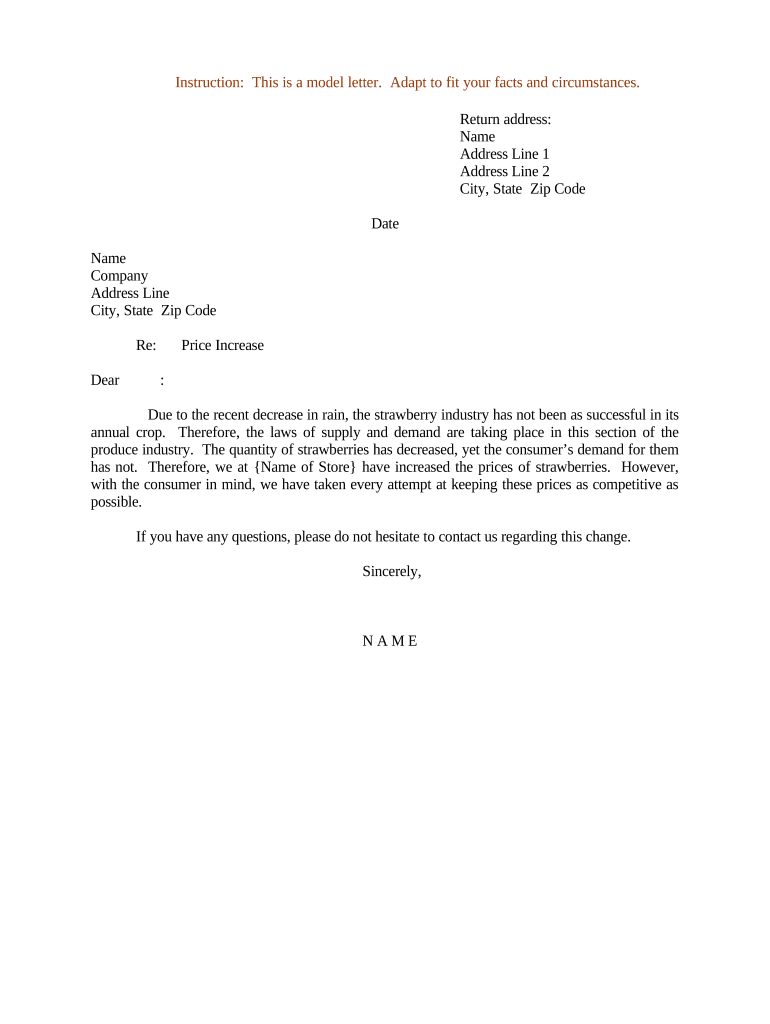
A clear price-increase letter reduces disputes, documents consent, and supports billing changes under existing contracts. When executed correctly it also creates an admissible record under ESIGN (15 U.S.C. ch. 96) and UETA for intrastate transactions.

Organizations use price-change letters when adjusting fees for services, subscriptions, leases, or contracted work.
Properly prepared notices protect both sender and recipient by clarifying timing, scope, and any options to accept or terminate.
| Field | Configuration |
|---|---|
| Signing Order | Set single or sequential signing to control who signs first. |
| Authentication | Choose email, SMS OTP, or stronger methods for identity verification. |
| Reminder Schedule | Set automatic reminders and expiration for unsigned notices. |
| Audit Trail | Enable detailed logging of IP, timestamp, and actions. |
Use a platform that supports PDF/DOCX uploads, field placement, and reliable audit trails; choose authentication appropriate to risk.
Confirm recipient access to the chosen format and record consent to electronic delivery where consumer-disclosure rules apply.
A concise subject line such as 'Notice of Price Change' so recipients recognize the letter’s purpose immediately and can prioritize reading it.
Include account number, contract reference, or invoice identifiers to tie the notice directly to existing records and reduce recipient confusion.
State the previous price, the new price, and the method of change (percentage or fixed amount) so the impact is transparent.
Provide the exact MM/DD/YYYY effective date and explain how it aligns with billing cycles or upcoming renewal dates.
Explain customer rights under the contract, including any termination or refund options and the steps required to exercise them.
List a customer service contact and escalation path for questions or disputes to facilitate quick resolution.
Complete legal and billing review at least 7–14 days before sending.
Common business practice is 30 days’ notice; check contract terms for required notice.
Set effective date to match a billing cycle to simplify proration and invoicing.
Retain executed notices from the effective date forward for compliance and audits.
Allow a clear timeframe (often 30 days) for customers to raise billing disputes.
Prepare the final text including prices, effective date, and contact information.
Legal and finance sign-off to confirm compliance and accounting entries.
Send to customers using agreed methods and record delivery evidence.
Update billing system on the effective date and apply prorations if needed.
| signNow | DocuSign | Adobe Sign | PandaDoc | HelloSign | |
|---|---|---|---|---|---|
| Starting Price | $8/user/mo | $15/user/mo | $14/user/mo | $19/user/mo | $15/user/mo |
| Free Trial | 7-day trial | Varies | Varies | Varies | Varies |
| Bulk Send | Yes | Yes | Yes | Yes | No |
| Audit Trail | Yes | Yes | Yes | Yes | Yes |
| HIPAA Compliant | Yes | Yes | Yes | No | No |
| Envelope Cap | No cap | 100 envelopes/user/year | Varies | Varies | Varies |
Tim Martin updated tenant billing notices online to improve tracking.
John Butler sent patient billing notices with clear effective dates and contact details.