Establishing secure connection…Loading editor…Preparing document…

Letter of Sympathy for Pet Loss

This template is fully customizable. Edit the text, fill out the fields, and send it for signature. Give it a try!
Letter of Sympathy for Pet Loss

What the Letter of Sympathy for Pet Loss Is and When to Use It

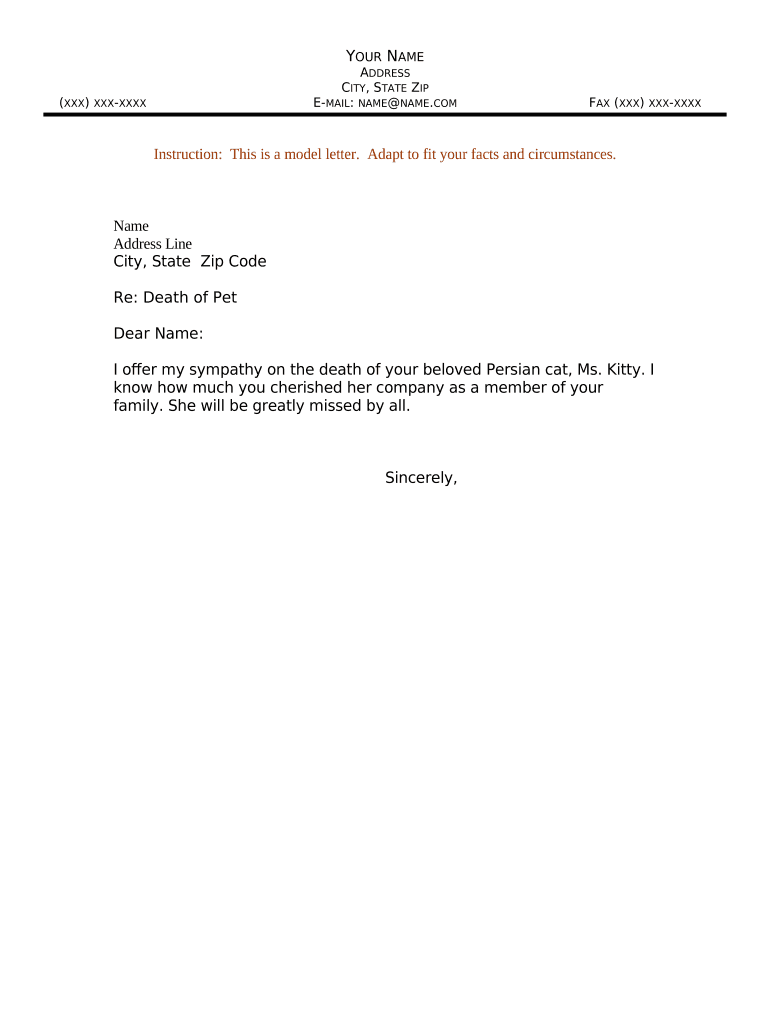
A Letter of Sympathy for Pet Loss is a short, personal written message expressing condolence to someone who has lost a companion animal. It is typically authored by a friend, family member, neighbor, veterinarian, or employer and focuses on empathy, acknowledgement of grief, and supportive language. The letter is not a legal instrument; its primary purpose is emotional support and recognition of the bereaved person’s loss. It can be sent as a printed note, email, or electronically signed document for recordkeeping or organizational workflows.

Why a Thoughtful Pet Sympathy Letter Matters

A well-crafted sympathy letter acknowledges loss, offers emotional support, and preserves the relationship between sender and recipient while providing a lasting record of care.

Why a Thoughtful Pet Sympathy Letter Matters

Who Typically Sends or Receives This Letter

Common senders include friends, family, veterinarians, animal shelter staff, and employers offering condolence on behalf of an organization.

  • Friend or Family Member — Personal messages that reference memories, the pet’s personality, and an offer of practical help during bereavement.
  • Veterinarian or Clinic Staff — Professional note acknowledging the pet and offering resources or follow-up support tailored to pet loss.
  • Employer or HR Representative — Short, respectful message from an organization recognizing an employee’s loss and any leave or support options.

Core Elements to Include in a Professional Letter of Sympathy for Pet Loss

Include concise, genuine elements that acknowledge the loss, identify the pet, and offer support. Keep the tone empathetic and avoid minimizing the recipient’s grief.

Salutation

Address the recipient by name and use a tone appropriate to your relationship; avoid overly formal or clinical language.
Acknowledgement

Name the pet and acknowledge the loss directly (for example, 'I am so sorry to hear about Max').

Memory or Trait

Share a brief, positive memory or note about the pet’s personality to show personal recognition.

Expression of Support

Offer specific support if appropriate (e.g., 'I can help with errands this week') or general sympathy.

Closing

End with a compassionate closing such as 'With sympathy' or 'Thinking of you' and sign your full name.

Optional Resources

Include links or references to bereavement resources, support groups, or veterinary grief counseling if relevant and welcome.

Step-by-Step: Completing the Letter of Sympathy for Pet Loss

Follow a simple sequence to prepare a sincere, appropriate letter whether sending by mail, email, or electronically.

  • 01
    Draft: Compose a brief message naming the pet and offering sympathy.
  • 02
    Personalize: Add a short memory or trait to show it is not generic.
  • 03
    Review Tone: Check for empathetic language and avoid minimizing phrases.
  • 04
    Send and Record: Send via chosen channel and keep a dated copy for your records if appropriate.

How to Send and Track a Sympathy Letter Professionally

Choose a delivery channel, confirm recipient details, and keep a dated copy for reference; consider recordkeeping when sent by an organization.

  • Choose Channel: Select mail, email, or electronic delivery based on recipient preferences.
  • Confirm Details: Verify recipient name, address, or email to avoid errors.
  • Attach Resources: Include optional bereavement or clinic support details when relevant.
  • Record: Save a copy in your files; organizational senders should retain a dated record.

Configuring an Online Workflow for Letters of Sympathy

If sending on behalf of an organization, set up a simple digital workflow to capture recipient data, sender approval, and a stored record.

Field Configuration
Recipient Name Required, single-line text
Recipient Contact Email or postal address validation
Personal Message Multiline text with 500-character limit
Save Copy Auto-save signed PDF to secure folder

Digital Sending and eSigning Considerations

Electronic delivery and eSignatures simplify sending and tracking while preserving a dated record when needed.

  • Document Format: Use PDF or DOCX for consistent appearance across devices.
  • Authentication: Email or SMS verification is sufficient for a sympathy letter; stronger authentication is optional.
  • Storage: Store signed copies in secure, access-controlled locations.

Timing Considerations and Typical Response Windows

There are no legal deadlines for sending a Letter of Sympathy for Pet Loss, but timeliness matters; aim to send within one to two weeks of learning of the loss.

Immediate Response:

1–3 days — brief empathy message acceptable

Recommended Window:

Within 7–14 days — ideal balance of timeliness and thoughtfulness

Organizational Timing:

HR or clinic letters often sent within 3–5 business days

Follow-up:

2–6 weeks — optional check-in or offer of continued support

Record Retention Note:

Keep a dated copy if sending as an organization for HR or client records

Key Milestones When Sending a Sympathy Letter

Milestones help ensure timely, respectful delivery and proper recordkeeping when sending on behalf of an organization.

01

Notification Received

Document date you learned of the loss and who notified you.

02

Draft Completed

Record when the message was written and reviewed for tone.

03

Approval Sent

If organizational, note when a manager or clinician approved the text.

04

Message Sent

Log the date and method of delivery for future reference.

Common Pitfalls to Avoid When Preparing a Sympathy Letter

  • Minimizing the loss — avoid phrases that downplay grief or compare losses.
  • Over-sharing personal details — keep the message focused on the recipient and the pet.
  • Incorrect names or details — verify the pet’s name and facts before sending.
  • Impersonal or generic tone — customize at least one sentence to show genuine care.

Risks and Consequences of a Poorly Prepared Letter

Relationship Strain: Hurt feelings from incorrect or insensitive content.
Privacy Exposure: Including medical or personal details could breach privacy expectations.
Records Confusion: Organizational senders without records may face internal disputes.
Tone Misalignment: Inappropriate formality can feel cold or dismissive.
Delivery Errors: Wrong address or email can cause embarrassment or breach.
Unintended Commitments: Offering specific help without capacity can create obligations.

Essential Information to Include or Protect in Records

Recipient Name: Full name for accurate addressing
Pet Identification: Pet name and species
Sender Identity: Full sender name and relationship
Date of Letter: MM/DD/YYYY for records
Delivery Method: Email, postal, or electronic signature
Consent Notes: Privacy preferences or opt-outs

Sample Scenarios: How a Letter of Sympathy Might Be Used

Two short examples illustrate typical language and context for a sympathy letter from different senders.

Veterinary Clinic Note

We were honored to care for Bella and share in your grief.

  • Bella’s calm nature touched our team.
  • The clinic offers a brief condolence card and resources for pet loss support; we record the outreach in the patient file for continuity of care.

Coworker Message

I am so sorry to hear about Jasper; I remember him from the photos you shared.

  • He clearly brought you joy.
  • I can cover a meeting this week if you need time; signing and logging the message helps HR coordinate any leave.

Practical Tips for Writing a Respectful Sympathy Letter

Follow these best practices to ensure your message is meaningful, respectful, and appropriate for the relationship and setting.

Be Specific and Brief
Mention the pet by name and one short memory; brevity is respectful and easier to receive during grief.
Respect Privacy
Avoid discussing medical details or personal matters unless the recipient has already shared them and consent is clear.
Offer Practical Help
If offering assistance, specify what you can do and a realistic time frame.
Keep Tone Empathetic
Use sincere, nonjudgmental language and avoid minimizing phrases like 'It was just an animal.'

Comparing eSignature Options for Sending and Recording Letters

Platforms vary in price and features; the table below summarizes common plan-level differences to consider for occasional or organizational use.

signNow DocuSign Adobe Sign PandaDoc HelloSign
Starting Price $8/user/mo $15/user/mo $14/user/mo $19/user/mo $15/user/mo
Free Trial 7-day free trial Varies by vendor Varies by vendor Varies by vendor Varies by vendor
Bulk Send Yes Yes Yes Yes Varies
Audit Trail Yes Yes Yes Yes Yes
HIPAA Compliant Yes Yes Yes No No

Frequently Asked Questions About Letters of Sympathy for Pet Loss

Answers to common practical and procedural questions about writing, sending, and storing sympathy letters.


Need help? Contact support

be ready to get more
Join over 28 million airSlate SignNow users