Establishing secure connection…Loading editor…Preparing document…

Letter Responding to Demand for Payment

This template is fully customizable. Edit the text, fill out the fields, and send it for signature. Give it a try!
Letter Responding to Demand for Payment

What a Letter Responding to Demand for Payment Is

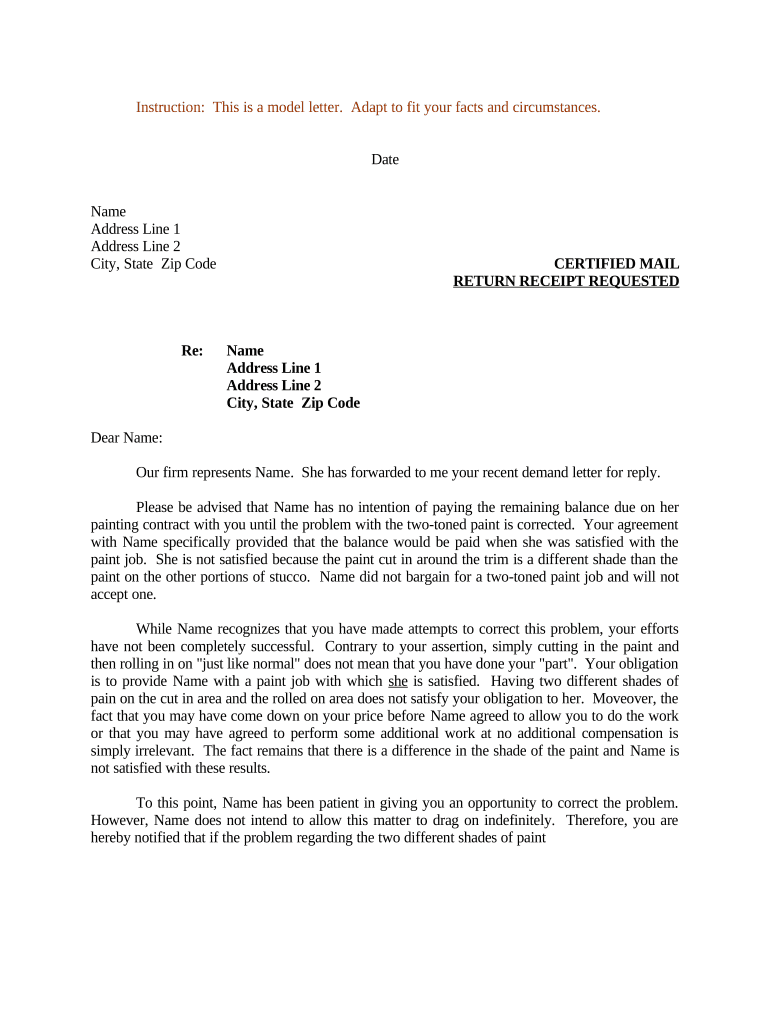
A Letter Responding to Demand for Payment is a written reply from a debtor, consumer, or representative addressing a creditor's formal demand for payment. The letter states whether the recipient acknowledges, disputes, or proposes resolution of the claimed debt, and it records facts, dates, and proposed next steps. It creates a clear paper or electronic record that may be used in collections, dispute processes, or court proceedings. Keep the tone factual, reference the original demand, and preserve proof of delivery and retention for future legal or administrative steps.

Why Sending a Clear Response Matters

A timely, accurate response preserves legal rights, documents your position, and can limit collection escalation or litigation risk. Under U.S. e-signature law (ESIGN 15 U.S.C. ch. 96 and UETA in most states) an electronically signed response can be enforceable when intent, consent, attribution, and retention are met.

Why Sending a Clear Response Matters

Who Typically Prepares This Letter

Choose the version and delivery method based on the recipient (collector, creditor, attorney, or court) and applicable law.

  • Consumers disputing a credit or billing claim who need a written record for credit bureaus and collectors.
  • Small businesses replying to vendor or supplier demands to document disputes or propose payment plans.
  • Attorneys and in-house legal teams sending formal responses during pre-suit negotiations or discovery.

Key Parts of an Effective Response Letter

A professional reply follows a consistent structure: reference the demand, state your position, include facts, propose next steps, attach evidence, and sign with contact details.

Letter Header

Include your name, address, date, and the creditor's contact information so the response is clearly attributed and traceable.
Demand Reference

Cite the original demand notice number, date, claimed amount, and account identifiers to link the reply to the specific claim.

Acknowledgment or Dispute

Clearly state whether you acknowledge the debt, partially dispute the amount, or deny liability, and summarize the factual basis.

Resolution Proposal

If offering payment, set a precise amount, payment schedule, or settlement terms and note any conditional language.

Supporting Evidence

Attach invoices, receipts, correspondence, or account statements that substantiate your position or correct errors in the demand.

Signature Block

Sign and date the letter, provide printed name and contact information, and note whether signature is electronic, witnessed, or notarized.

Required Information to Include

Sender Name: Full legal name
Recipient: Creditor or collector name
Account Details: Account or reference number
Claim Amount: Amount stated in demand
Demand Date: Date of original notice
Response Date: Date you mailed or e-sent reply

Step-by-Step: Drafting and Sending Your Reply

Follow a measured process to review the demand, prepare evidence, and deliver a durable response that preserves proof and legal options.

  • 01
    Review Demand: Confirm dates, amounts, and claimant identity.
  • 02
    Gather Evidence: Collect invoices, receipts, and prior communications.
  • 03
    Draft Letter: State position, attach evidence, propose resolution.
  • 04
    Send & Retain: Deliver by tracked method and archive proof.

How to Configure an Online Response Workflow

Set up a consistent electronic workflow to populate templates, gather signatures, and retain an immutable audit trail for each response.

Field Configuration
Template Preload letter template with merge fields
Authentication Use email or SMS code for signer verification
Attachments Attach supporting PDFs and invoices
Notifications Enable delivery receipts and completion alerts

Digital Signing and Submission Options

Ensure the chosen platform meets legal standards for e-signatures and retention and that you retain signed copies and metadata for the retention period.

  • File Formats: Accept PDF, DOCX, and image files
  • Integrations: Connects to Google Workspace and NetSuite
  • Authentication: Supports email, SMS, and advanced options

Where and How to Send Your Response

Choose the delivery method that provides verifiable receipt and matches the creditor's preferred communication channel to avoid disputes over service.

  • Certified Mail: Send via USPS Certified Mail with return receipt for physical proof
  • Email with Read Receipt: E-mail the creditor and request a delivery/read receipt
  • Registered Agent: Deliver through the creditor's registered agent if legal notice required
  • eSignature Platform: Use e-sign with audit trail for signed electronic responses

Typical Timelines and Deadlines to Watch

Respond promptly: timing affects dispute rights, credit reporting, and potential escalation to collections or litigation.

Immediate Review:

Examine the demand as soon as received — ideally within 5 business days

Response Window:

Send a formal reply within 30 days to preserve dispute records and rebut claims

Credit Dispute:

If reporting is disputed, creditors must investigate within 30 days under the FCRA

Follow-up:

Allow 14 days after your offer before escalating or seeking counsel

Retention Reminder:

Retain copies for at least 3 years, longer if tax or HIPAA issues apply

Common Preparation Mistakes to Avoid

  • Admitting liability accidentally by vague language; keep statements precise and avoid unnecessary concessions.
  • Failing to attach documentation; unsupported denials or counteroffers are less persuasive and harder to enforce.
  • Using informal delivery without proof; untracked email alone may not satisfy evidentiary needs in disputes.
  • Missing statutory or contractual notice deadlines; late responses can limit procedural defenses or negotiation leverage.

Risks and Consequences of an Incorrect or Missing Response

Court Judgment: Creditor may seek default judgment
Garnishment: Wage or bank garnishment risk after judgment
Credit Reporting: Unresolved disputes can harm credit reports
Statute Limitations: Delay can affect statute of limitations defenses
Costs: Potential attorney fees and court costs
Misstatement Penalty: False statements risk civil liability

eSignature Vendor Pricing Overview for Preparing and Signing Responses

Common commercial eSignature options differ by starting price, bulk features, and compliance capabilities; signNow is shown first for comparison.

signNow DocuSign Adobe Sign PandaDoc HelloSign
Starting Price $8/user/mo $15/user/mo $14/user/mo $19/user/mo $15/user/mo
Free Trial 7-day free trial Varies by plan Varies by plan Varies by plan Varies by plan
Bulk Send Yes Yes Yes Yes Varies
Audit Trail Yes Yes Yes Yes Yes
HIPAA Compliant Yes Yes Yes No No
Envelope Cap No cap 100 envelopes/user/year Varies Varies Varies

Frequently Asked Questions About Responding to a Payment Demand

Answers to common procedural and legal questions to help you craft an accurate, defensible reply and preserve evidence.


Need help? Contact support

be ready to get more
Join over 28 million airSlate SignNow users