Establishing secure connection…Loading editor…Preparing document…

Release and Assumption Agreement

This template is fully customizable. Edit the text, fill out the fields, and send it for signature. Give it a try!
Release and Assumption Agreement

What a Release and Assumption Agreement Is

A Release and Assumption Agreement is a contractual document in which one party releases claims or liabilities and another party accepts responsibility for specified obligations, property interests, or liabilities. Typical uses include releasing liens or claims while transferring responsibility for ongoing liabilities, assuming mortgage obligations, or allocating risk after a sale or termination. The agreement identifies the parties, describes the obligations being released and assumed, specifies effective dates, and records consideration and any conditions precedent. Proper execution and clear drafting determine enforceability and filing or recording needs.

Why this agreement matters for risk allocation

A clear Release and Assumption Agreement removes ambiguity about who bears future obligations and mitigates dispute risk by documenting consent, consideration, and the scope of released claims.

Why this agreement matters for risk allocation

Who commonly prepares and signs these agreements

Several professional roles regularly use this agreement when transferring responsibility between parties in transactions or post-closing adjustments.

  • Buyers and Sellers in Property Transfers
  • Lenders and Borrower Representatives
  • General Counsel and Transactional Attorneys

Each signer should have authority to bind their organization; verify corporate resolutions or lender approvals before execution.

Core sections to include for a professional agreement

Ensure the agreement contains these elements to clearly transfer obligations and limit future disputes.

Parties

Identify each releasing and assuming party by full legal name and entity type, include state of formation and business address for legal clarity and service.
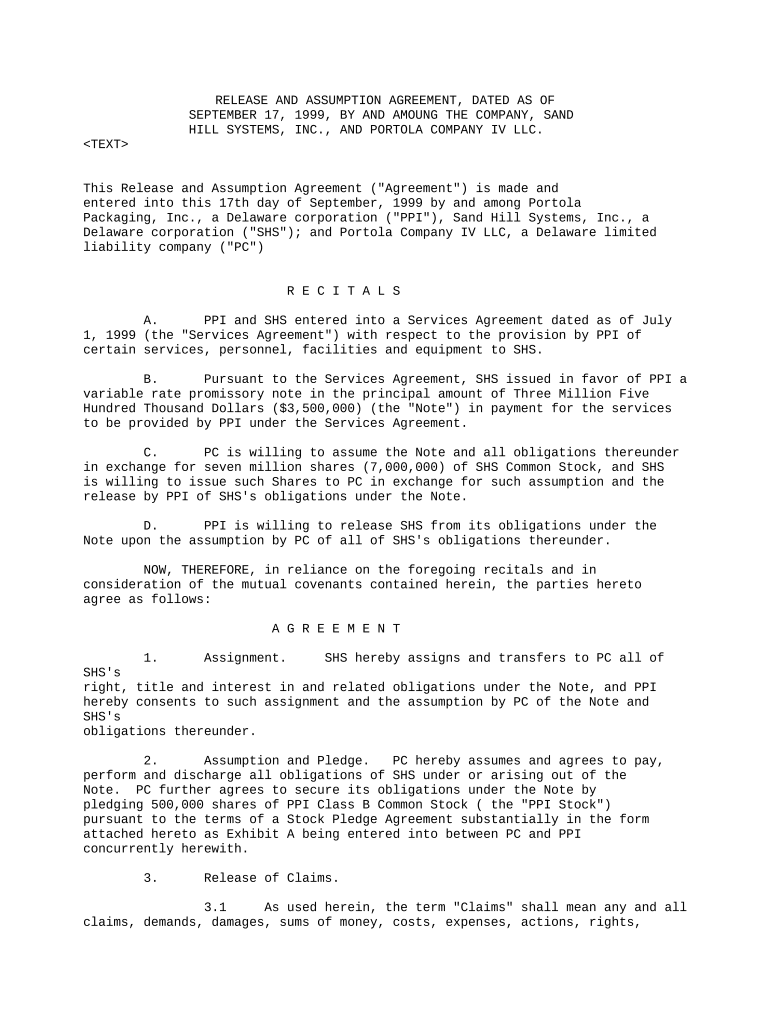
Recitals

Explain the background facts and the reason for the release and assumption so courts can interpret intent and scope if disputes arise.

Release Language

Precisely describe claims, liabilities, or rights being released, including relevant dates, accounts, or instrument references to avoid ambiguous catch-alls.

Assumption Terms

State obligations the assignee accepts, performance standards, payment terms, and whether consent of third parties (e.g., lenders) is required.

Consideration

Record the consideration supporting the transfer—monetary amount or other value—since courts require consideration for enforceability in many jurisdictions.

Execution and Recording

Specify effective date, signature blocks, notary or witness requirements, and whether the instrument must be recorded with a county recorder or filed with a third party.

Essential data fields to capture

Full Party Names: Legal entity name
Addresses: Street, city, state
Effective Date: MM/DD/YYYY
Consideration: Amount or description
Scope: Claims identified
Execution Data: Signatures and dates

Step-by-step: completing and executing the agreement

Follow this sequence to draft, approve, and finalize the Release and Assumption Agreement with minimal friction.

  • 01
    Draft: Describe releases and assumptions precisely.
  • 02
    Legal Review: Have counsel confirm liability allocation.
  • 03
    Authority Check: Verify signatory authority and corporate approvals.
  • 04
    Execute: Sign, notarize if needed, and record where required.

Process overview: from agreement to recorded instrument

A concise flow showing common operational steps after signature, used for workflow planning and third-party notifications.

  • Prepare Document: Populate fields and attach exhibits.
  • Obtain Consents: Secure lender or third-party approvals if required.
  • Sign and Authenticate: Execute with required witnesses or notarization.
  • Record or Deliver: Record with county clerk or send to servicers.

How to configure a digital workflow for this agreement

Use these settings when building a digital signing workflow to ensure proper routing and authentication.

Field Configuration
Signer Order Sequential or parallel routing
Authentication Email + SMS code for higher assurance
Notary Option Enable RON or remote notarization if required
Archive Attach audit trail and PDF/A copy

Digital signing and technical considerations

Confirm platform capabilities match legal and operational needs before eSubmission.

  • eSignature Standards: Audit trail and tamper-evident PDF
  • Authentication Methods: Email, SMS code, or advanced options
  • Integrations: Connectors for storage and ERP

Ensure the provider supports ESIGN/UETA compliance, retains auditable records, and can produce notarized or recorded documents as the transaction requires.

Timing and common scheduling considerations

Track these dates to protect rights, meet recording windows, and avoid post-closing disputes.

Effective Date Deadline:

Specify execution and when obligations begin.

Recording Window:

Record releases promptly to protect chain of title.

Third-Party Notices:

Notify lenders or lienholders within contract timelines.

Condition Precedent Period:

State time allowed to satisfy listed conditions.

Retention Start Date:

Begin retention from execution or recording date.

Key milestones from draft to recorded instrument

Numbered stages used to track progress and handoffs through the transaction lifecycle.

01

Initial Draft

Prepare draft and attach exhibits for review.

02

Review and Approval

Legal and business approval, obtain consents.

03

Execution and Notarization

Signatures, witnesses, or RON completed.

04

Recording and Delivery

File with recorder and send copies to stakeholders.

Common pitfalls to avoid when preparing this agreement

  • Using vague release language that fails to identify the specific claims or instruments being released, making enforcement contested by third parties.
  • Failing to obtain required third-party consents such as lender approval, which can render the assumption ineffective or trigger default rights.
  • Mismatched party names or unsigned signature blocks that impede recording or give rise to challenges to signer authority.
  • Omitting recording or notice steps so that subsequent purchasers or lienholders remain unaware of the release and assume competing claims.

Legal and financial risks of errors

Invalid Transfer: Release may be unenforceable
Continued Liability: Releasor may remain liable
Recording Rejection: County may refuse filing
Third-Party Claims: Creditors may assert liens
Tax Consequences: Unreported value triggers issues
Breach Exposure: Assignee may face indemnity claims

Cost and feature snapshot for common eSignature vendors

Comparison highlights starting price and core features relevant when executing Release and Assumption Agreements electronically; signNow appears first per platform ordering rules.

signNow DocuSign Adobe Sign PandaDoc HelloSign
Starting Price $8/user/mo $15/user/mo $14/user/mo $19/user/mo $15/user/mo
Free Trial 7-day free trial Varies by vendor Varies by vendor Varies by vendor Varies by vendor
Bulk Send Yes Varies by plan Varies by plan Varies by plan Varies by plan
Audit Trail Yes Yes Yes Yes Yes
HIPAA Compliant Yes Varies by plan Varies by plan Varies by plan Varies by plan

Frequently asked questions about Release and Assumption Agreements

Answers to common questions about execution, enforceability, notarization, eSigning, and post-execution steps.


Need help? Contact support

be ready to get more
Join over 28 million airSlate SignNow users