Establishing secure connection…Loading editor…Preparing document…

Marital Domestic Separation and Property Settlement Agreement

This template is fully customizable. Edit the text, fill out the fields, and send it for signature. Give it a try!
Marital Domestic Separation and Property Settlement Agreement

What a Marital Domestic Separation and Property Settlement Agreement Is

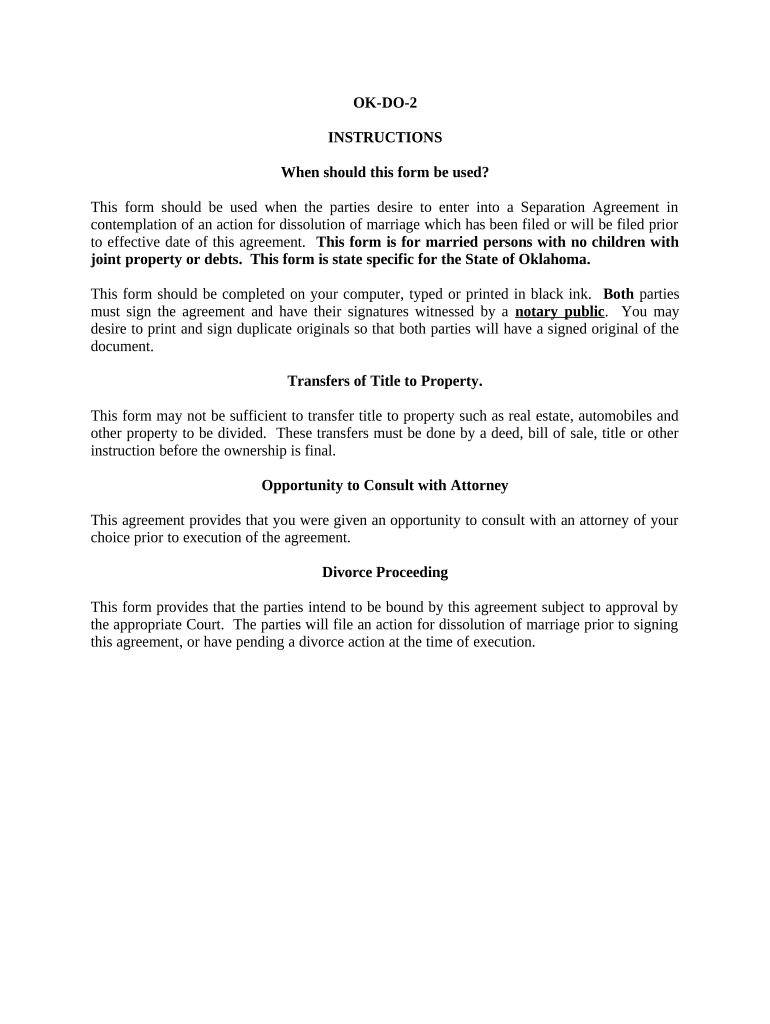
A Marital Domestic Separation and Property Settlement Agreement is a legally binding contract used by spouses or partners who are separating to allocate marital assets, debts, spousal support, custodial arrangements, and other rights and obligations without immediate court adjudication. The document typically records the parties' mutual understanding about division of property, responsibility for liabilities, and settlement of financial issues during a separation period and often serves as the basis for later divorce proceedings or can be incorporated into a divorce decree. Proper drafting reduces ambiguity and supports enforceability under state contract and family law.

Why a Clear Separation and Property Settlement Agreement Matters

A Marital Domestic Separation and Property Settlement Agreement clarifies how property, debts, support, and parental responsibilities will be handled during separation, reducing disputes, streamlining potential divorce proceedings, and creating a written record that courts and third parties can rely on for enforcement.

Why a Clear Separation and Property Settlement Agreement Matters

Who Uses a Marital Domestic Separation and Property Settlement Agreement

Separating spouses, domestic partners, mediators, family law attorneys, and financial advisors use this agreement to document property division and support arrangements.

  • Separating spouses seeking an out-of-court property division and temporary financial terms.
  • Couples wanting clear custody, visitation, and child support arrangements during separation.
  • Attorneys and mediators preparing enforceable settlement language for later court incorporation.

Primary Parties and Their Roles

Petitioner

The petitioner is the party initiating separation or filing for divorce; typically provides full financial disclosures, proposes property division, and signs the settlement to indicate acceptance of agreed terms and responsibilities.

Respondent

The respondent is the other spouse or partner who reviews proposed terms, submits counteroffers if needed, and signs when consent is given; their signature confirms assent to distribution of assets, debt allocation, and support arrangements.

Core Sections of a Professional Agreement

A professional agreement organizes parties, asset schedules, debt allocation, spousal support terms, custody arrangements, and dispute resolution into clear, enforceable provisions to minimize later litigation.

Parties

Full legal names, current addresses, and identification for each party; specify marital status and capacity to contract to ensure proper attribution and avoid identity disputes.
Recitals

Background statements describing separation date, marriage duration, and material circumstances that inform equitable division and demonstrate mutual intent to settle.

Asset Schedule

Comprehensive lists of real property, personal property, bank and investment accounts, retirement plans, business interests, vehicles, and agreed valuation methods.

Debt Allocation

Itemized debts with creditor names, account details when available, allocation of responsibility, and repayment schedules to limit future creditor and inter-party disputes.

Support Terms

Spousal and child support provisions including calculation method, payment amounts, duration, tax treatment, security for payments, and modification or termination triggers.

Enforcement

Remedies, choice-of-law clause, dispute resolution (mediation/arbitration), attorney fees allocation, and procedure for incorporation into a court decree when desired.

Step-by-Step: Completing the Agreement

Follow these steps to complete a Marital Domestic Separation and Property Settlement Agreement accurately and create an enforceable record.

  • 01
    Gather Documents: Collect financial statements, deeds, retirement records.
  • 02
    Detail Assets: List assets, values, ownership percentages.
  • 03
    Allocate Debts: Assign responsibility and payment timelines.
  • 04
    Review & Sign: Obtain signatures, witnesses, and notarization as required.

Workflow Overview: Draft to Storage

This flow outlines how parties draft, negotiate, sign, and store the agreement using digital or paper workflows.

  • Draft: Prepare agreement with full disclosures.
  • Negotiate: Exchange proposals and document changes.
  • Sign: Sign electronically or in person with notarization.
  • Store: Save originals and certified digital copies.

Setting Up an Online Signing Workflow

Configure an online workflow to assign roles, enforce field requirements, and capture audit logs for each signing event.

Field Configuration
Roles Specify signer order and role-based fields
Authentication Email, SMS codes, or enhanced verification (KBA)
Conditional Fields Show fields only when relevant to party responses
Audit Trail Capture IP, timestamp, action log for each signer

Platform Capabilities to Look For

Use an eSignature platform that supports audit trails, secure storage, and required authentication methods for legal compliance.

  • File Types: PDF, DOCX, HTML supported
  • Integrations: Salesforce, NetSuite, Google Workspace, Microsoft 365
  • Authentication: Email, SMS code, optional KBA

Security and Compliance Considerations

Encryption in transit: TLS 1.2 and 1.3
Encryption at rest: AES-256 encryption
Audit trail: Detailed timestamped logs
Certifications: SOC 2 Type II, ISO 27001
HIPAA: BAA available for covered entities
eSignature Laws: ESIGN and UETA compliant

Common Preparation Pitfalls

  • Failing to list all marital assets and separate property leads to later disputes and possible court reallocation.
  • Using vague terms like 'equitable division' without precise values or formulas creates ambiguity and enforcement problems.
  • Not updating account titles, deeds, or beneficiary designations can undermine the intended property settlement over time.
  • Skipping attorney review for complex assets like closely held businesses or retirement accounts risks adverse tax and legal outcomes.

Risks and Consequences of Errors

Unenforceable Terms: Court may refuse enforcement
Missed Disclosures: Financial penalties or reversal
Incorrect Signatures: Agreement deemed invalid
Tax Consequences: Unexpected liabilities for parties
Creditor Claims: Creditors may challenge allocations
Attorney Fees: Legal costs if contested

eSignature Pricing and Feature Comparison

Compare core eSignature pricing and enterprise features relevant to executing Marital Domestic Separation and Property Settlement Agreements.

signNow DocuSign Adobe Sign PandaDoc HelloSign
Starting Price $8/user/mo $15/user/mo $14/user/mo $19/user/mo $15/user/mo
Free Trial 7-day trial No No No No
Bulk Send Yes Yes Yes Yes No
Audit Trail Yes Yes Yes Yes Yes
HIPAA Compliant Yes Yes Yes No No

Frequently Asked Questions

Answers to common questions about preparing, signing, and enforcing Marital Domestic Separation and Property Settlement Agreements.


Need help? Contact support

be ready to get more
Join over 28 million airSlate SignNow users