Establishing secure connection…Loading editor…Preparing document…

Michigan Amendment to Trust

This template is fully customizable. Edit the text, fill out the fields, and send it for signature. Give it a try!
Michigan Amendment to Trust

What the Michigan Amendment to Trust Is and When It Applies

A Michigan Amendment to Trust is a written document that modifies one or more provisions in an existing trust instrument without creating a new trust. Typical amendments clarify beneficiary designations, change trustee powers or succession, adjust distribution timing, or correct drafting errors. Under Michigan practice, an amendment should reference the original trust by name and date, state the exact changes, and be executed by the settlor or other authorized party. Proper execution, notarization where required, and distribution to trustees and key beneficiaries preserve the amendment’s enforceability and reduce later disputes.

Why a Clear Amendment Matters

A precise amendment prevents ambiguity, preserves the settlor’s intent, and reduces probate or trust-contest risk. It provides an auditable change record and ensures trustees follow updated directions for asset management and distributions.

Why a Clear Amendment Matters

Who Commonly Prepares or Signs Trust Amendments

Trustees, settlors, estate attorneys, and family members often interact with trust amendments depending on authority and circumstance.

  • Individual settlors or grantors updating beneficiary or distribution provisions after life or tax events.
  • Trustees implementing administrative or fiduciary changes required by trust terms or law.
  • Estate and trust attorneys drafting, reviewing, and certifying amendment language for legal accuracy.

Clear role assignment and early legal review help avoid later challenges and provide continuity for trustees and beneficiaries.

Representative Signers and Their Roles

Settlor

A settlor (trust creator) usually must sign an amendment to change dispositive terms. If the settlor is incapacitated, an agent under a durable power of attorney may have limited authority; confirm trust and POA language with counsel.

Trustee

A trustee signs to acknowledge receipt or to accept delegated powers only if the trust requires trustee consent; trustee signature alone does not amend settlor-directed provisions unless authorized by the trust instrument.

Required Information Typically Included

Trust Name: Exact name and original execution date
Settlor Identity: Full legal name as on ID
Trustee Identity: Names of current trustees
Amendment Text: Precise clause additions/replacements
Effective Date: MM/DD/YYYY format
Signatures: Signature and date lines for required parties

Step-by-Step: Completing a Michigan Trust Amendment

Follow these steps to prepare a legally sound, enforceable amendment to an existing trust instrument in Michigan.

  • 01
    Draft: State original trust reference and specific changes.
  • 02
    Review: Have an attorney confirm consistency with trust terms.
  • 03
    Execute: Signer(s) sign and date per trust requirements.
  • 04
    Distribute: Provide copies to trustees and key beneficiaries.

How to Complete the Amendment Online and Configure Workflow

Set up a digital signature workflow that matches signer roles and required authentication before sending for signatures.

Signer Order Define sequential or parallel signing according to trust requirements.
Authentication Choose email, SMS code, or stronger ID verification for signer attribution.
Required Fields Make signature, date, and notary fields mandatory to prevent incomplete documents.
Document Attachments Include the original trust or relevant excerpts for context.
Audit Trail Enable full event logging to record IP, timestamp, and actions.

Where the Amendment Should Be Sent and Stored

After execution, route the amendment to parties who maintain trust records and to anyone the trust requires be notified.

  • Trustee Records: Retain the signed amendment with the trust file and trustee ledger.
  • Attorney of Record: Provide a copy for client file and future interpretation.
  • Beneficiaries: Send notice or courtesy copies to affected beneficiaries per trust terms.
  • Recorder (Real Property): If amendment alters title-related terms, record related deed documents at county recorder.

Digital Signing Considerations and Platform Capabilities

Choose a signing platform that supports required authentication, audit trails, and secure storage for sensitive estate documents.

  • File Formats: PDF, DOCX supported
  • Authentication: Email, SMS, KBA options
  • Integrations: Works with cloud storage and ERPs

Ensure the chosen solution is ESIGN/UETA-compliant and, where applicable, HIPAA-ready with a BAA. Keep export copies and an unalterable audit trail for recordkeeping.

Key Dates and Timing to Track

Track execution and distribution milestones to preserve priority and avoid disputes or tax complications.

Effective Date Entry:

Enter the date the amendment takes effect in MM/DD/YYYY format.

Execution Date:

Date on which settlor and required parties actually sign the amendment.

Notarization Window:

Complete notarization at signing or per state notary rules to match acknowledgment.

Distribution Deadline:

Send copies promptly to trustees and beneficiaries per trust notice provisions.

Recording Timeline:

If related to real property, record as soon as practical after execution to protect interests.

Common Mistakes to Avoid

  • Failing to reference the original trust precisely, creating ambiguity about which instrument is amended.
  • Using informal language that conflicts with trust definitions or omits required formalities.
  • Not checking whether the trust requires trustee consent or witness signatures before amendment.
  • Distributing unsigned or unnotarized copies and assuming the amendment is effective.

Risks and Legal Consequences of Flawed Amendments

Invalid Amendment: May be set aside in probate
Tax Exposure: Creates unintended tax consequences
Beneficiary Disputes: Leads to litigation or delay
Trustee Liability: Trustee may face breach claims
Title Problems: Real property interests may be unclear
Notary Defects: Can nullify acknowledgments

Real-World Examples of Trust Amendments

Sample use cases illustrate typical amendment reasons and practical outcomes in estate planning practice.

Martin Properties

A property-focused amendment clarified distribution of a commercial parcel after sale

  • Amendment identified parcel by legal description to avoid ambiguity
  • The amendment was notarized, distributed to trustees, and a certified copy provided to the bank holding the mortgage to prevent title disputes.

Fertility Centers of Illinois

An amendment updated successor trustee powers for healthcare decision cooperation

  • The language granted limited access for medical records
  • Counsel reviewed language, the settlor executed with notarization, and an updated trustee acceptance was obtained to document authority.

Anatomy of a Professional Michigan Amendment to Trust

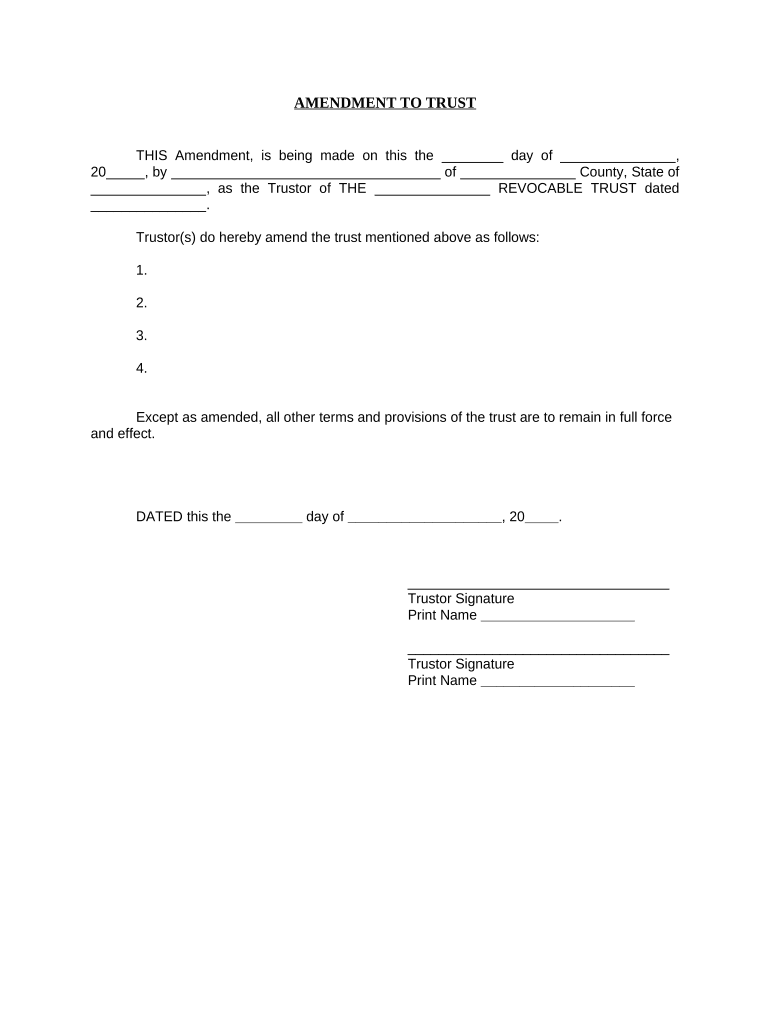
A professionally drafted amendment contains concise sections that identify the trust, state the modification, set the effective date, and provide clear execution language.

Title Clause

Identifies the document as an amendment and references the original trust by full name and execution date, preventing confusion with other instruments.
Recitals

Brief background statements explain why the amendment is made and confirm the authority of the signer to amend the trust.

Amendment Language

Specifies exact text to be added, modified, or deleted; use section references or quoted language for precision.

Effective Date

States when the amendment takes effect and whether it applies retroactively or prospectively to prior acts.

Execution Block

Contains signature and printed name lines for the settlor and any required consenting parties, with dates.

Notary Acknowledgment

Notary block or acknowledgement line used where notarization is desired or required for recording or evidentiary purposes.

Supporting Documents and Export Options

Keep supporting materials together and export signed copies in durable formats for legal and administrative use.

Original Trust

Attach or reference the original trust document and any prior amendments to preserve context and chain of title.

Trustee Consents

Include trustee acknowledgments or acceptance letters when the trust requires trustee approval for amendments.

Signed PDF/A

Export the final signed amendment as PDF/A for long-term preservation and compatibility with archival systems.

Audit Trail

Retain a signed audit trail showing timestamps, IP addresses, and authentication events for evidentiary support.

How to Update or Revise an Existing Amendment

When revising an amendment, follow a controlled workflow so each change is traceable and legally effective.

01

Draft:

Prepare revised language and mark superseded text.
02

Legal Review:

Confirm consistency with the trust and prior amendments.
03

Sign:

Have required signers execute as specified.
04

Notarize:

Complete acknowledgment when evidence or recording needs it.
05

Distribute:

Send revised copies to trustees and beneficiaries.
06

Archive:

File with originals and update indexed records.

Practical Tips for Accurate, Efficient Amendments

Adopt consistent drafting, execution, and storage practices to reduce errors and speed administration.

Use Precise References
Cite the trust name and original date, and identify specific sections being amended; vagueness often triggers disputes and requires costly interpretation.
Confirm Signing Authority
Verify the settlor's capacity and any trustee consent requirements; if the settlor is unavailable, confirm whether a power of attorney or other instrument permits action.
Prefer Notarization When Practical
Notarization and retaining notarized copies improve evidentiary weight even when not strictly required for validity in many jurisdictions.
Maintain a Clear Audit Trail
Store signed documents in immutable formats with time-stamped logs to preserve proof of execution and delivery.

eSignature Pricing and Feature Snapshot for Trust Amendments

Compare common eSignature vendor pricing and capabilities relevant to executing trust amendments. signNow is listed first for consistent vendor placement.

signNow DocuSign Adobe Sign PandaDoc HelloSign
Starting Price $8/user/mo $15/user/mo $14/user/mo $19/user/mo $15/user/mo
Free Trial 7-day free trial, no card Varies Varies Varies Varies
Bulk Send Yes Yes Yes Yes No
Audit Trail Yes Yes Yes Yes Yes
HIPAA Compliant Yes Yes Yes No No

Frequently Asked Questions About Michigan Trust Amendments

Answers to common questions help clarify execution, enforceability, and recordkeeping for trust amendments in Michigan.


Need help? Contact support

be ready to get more
Join over 28 million airSlate SignNow users