Granting Clause
A clear affirmative statement conveying the mineral interest, using language such as 'grant, bargain, sell and convey' to specify the transfer of subsurface rights and remove ambiguity about intent.
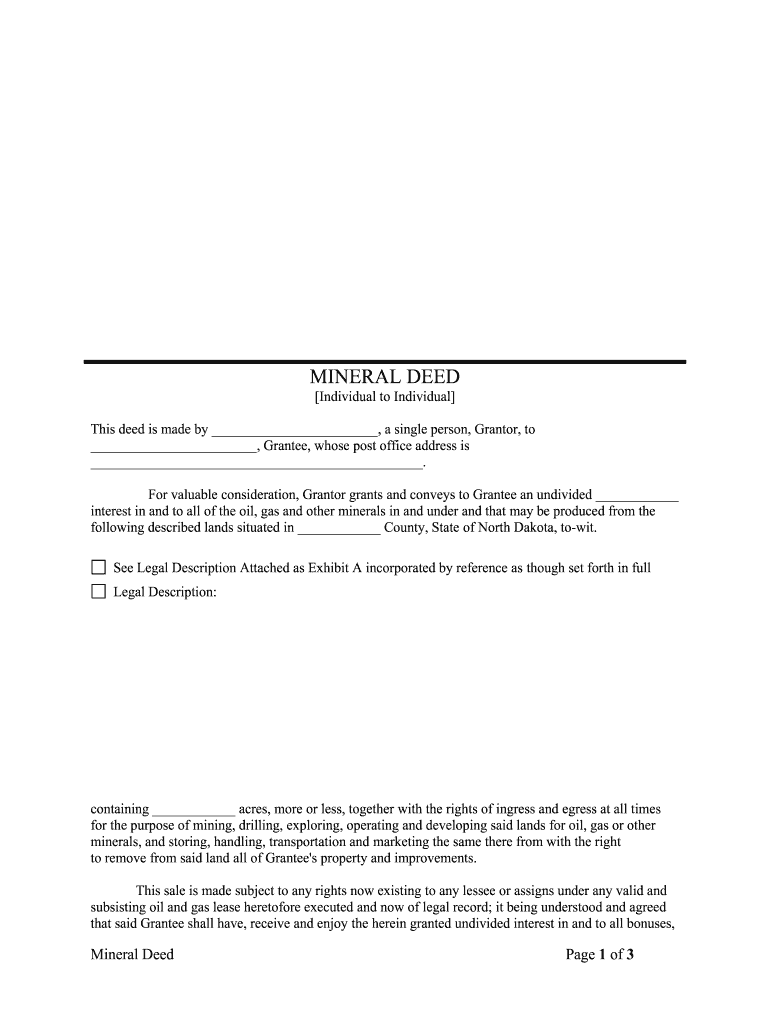
A clear, correctly executed mineral deed protects marketable title, ensures royalty allocation and tax reporting are accurate, and preserves the parties’ rights in subsequent transactions. Recording the instrument creates public notice and reduces the risk of later competing claims or title defects.

Typical users span private landowners, energy companies, and title professionals who manage subsurface interests and ensure legal recordation.
Each party’s role differs: grantors draft or authorize conveyance language, grantees confirm interest acquired, and professionals confirm formality and recording steps.
| Upload document | Start with a PDF containing the deed template and exhibits. |
|---|---|
| Place fields | Add fillable fields for names, dates, and legal descriptions. |
| Authentication | Choose signer authentication method such as email or SMS code. |
| Notary setup | Include notary acknowledgement block and prepare for in-person or RON session. |
| Routing | Set signing order and automated routing to parties and title agent. |
Digital handling requires platform support for PDF/DOCX, secure storage, audit trails, and—where used—remote online notarization (RON).
Confirm the county recorder’s accepted submission formats and whether the county supports e-recording or requires an original paper instrument before relying on digital filing.
A clear affirmative statement conveying the mineral interest, using language such as 'grant, bargain, sell and convey' to specify the transfer of subsurface rights and remove ambiguity about intent.
An exact recorded description (section, township, range, lot, block, or metes and bounds) tied to the county parcel record to ensure precise identification of the mineral tract.
Explicit statement of the type and size of interest conveyed (fee mineral interest, royalty interest, working interest, or fraction/percentage), including whether rights are surface subject.
A statement of the consideration paid (monetary amount or other value), which establishes the transaction’s basis and is often required for tax and recording purposes.
Any retained rights, existing leases, liens, easements, or exceptions should be described to avoid unintended conveyance of encumbered interests.
A properly completed notary block, dated and signed with seal, required by the county recorder for acceptance and indexing in the public record.
A current mineral title or abstract report showing chain of title, encumbrances, and outstanding interests to confirm the grantor’s ability to convey.
Used when transfers arise from intestate succession; provides evidence of heirship where probate may be incomplete or unavailable.
Existing oil and gas leases or prior assignments should be attached or referenced to show encumbrances or reservations affecting the minerals.
A map or detailed legal description included as an exhibit to the deed to precisely locate the mineral parcel.
Date on the deed governs rights; use MM/DD/YYYY format
Record as soon as possible after execution to protect priority
Recording times vary from same-day to several weeks depending on county workload
If RON used, retain A/V and journal per state rules
Notify tax authorities of transfers as required for local assessments
Prepare deed language and attach Exhibit A legal description.
All grantors sign and date before a notary public or during an approved RON session.
Submit original signed deed to county register of deeds and pay recording fee.
Provide recorded copies to grantee, title company, and tax authorities as needed.
| Criteria | Mineral Deed | Oil & Gas Lease |
|---|---|---|
| Transfer Type | permanent conveyance | limited-term grant |
| Duration | perpetual unless reserved | primary term plus production |
| Rights Conveyed | ownership interest | right to explore/produce |
| Recording Need |
| signNow | DocuSign | Adobe Sign | PandaDoc | HelloSign | |
|---|---|---|---|---|---|
| Starting Price | $8/user/mo | $15/user/mo | $14/user/mo | $19/user/mo | $15/user/mo |
| Free Trial | 7-day free trial | Varies | Varies | Varies | Varies |
| Bulk Send | Yes (Premium) | Yes | Yes | Yes | Varies |
| Audit Trail | Yes | Yes | Yes | Yes | Yes |
| Envelope Cap | No envelope cap | 100 envelopes/user/year | Varies | Varies | Varies |
A family transfers a 25% mineral interest following an estate settlement to provide heirs with royalty rights and income
An operator acquires severed mineral parcels to consolidate development acreage and records assignments from multiple owners
The grantor is the person or legal entity conveying the mineral interest. Their responsibilities include confirming title, signing the deed before a notary, and providing any necessary evidence of authority or succession. Errors in grantor identity can invalidate conveyance or require corrective instruments.
The grantee is the recipient of the mineral interest; title agents, closing attorneys, or company land departments often coordinate preparation, verify legal descriptions, ensure funds are transferred, and submit the deed for recording to create public notice.