Establishing secure connection…Loading editor…Preparing document…

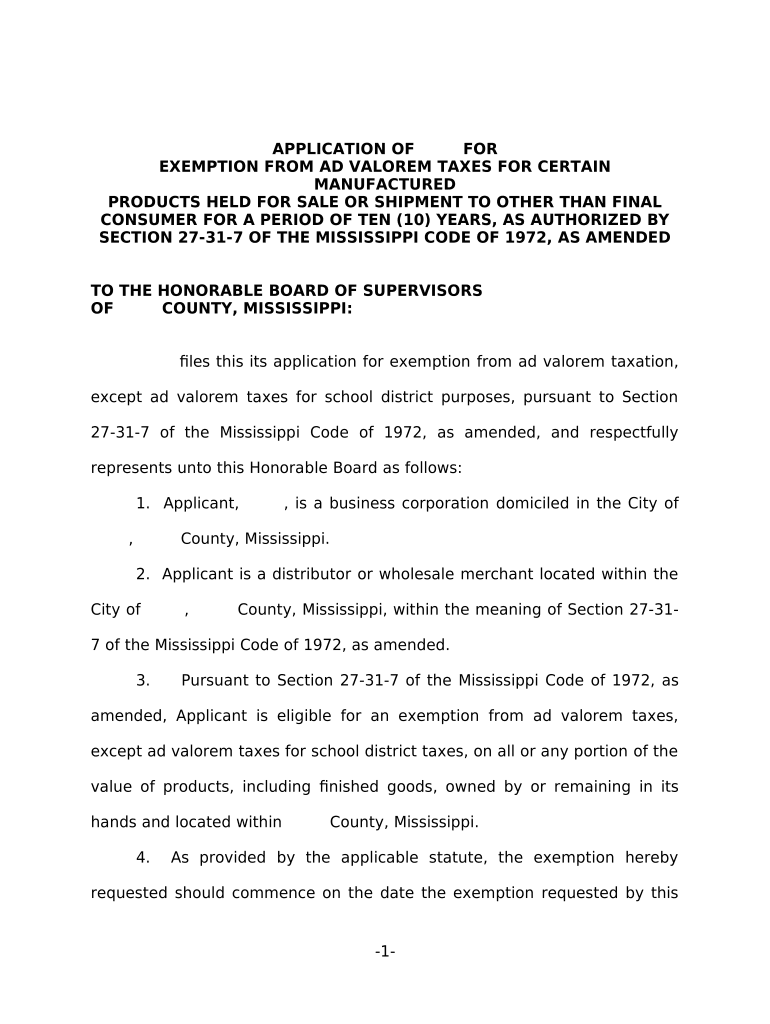
Mississippi Exemption

This template is fully customizable. Edit the text, fill out the fields, and send it for signature. Give it a try!
Mississippi Exemption

What the Mississippi Exemption Is and When It Applies

The Mississippi Exemption is a document used to claim a statutory exemption under Mississippi law, most commonly for sales and use tax, property, or specialized program exemptions. It identifies the claimant, cites the statutory basis for relief, and documents the transactions or property involved. Payers and vendors use it to verify eligibility and to support correct tax treatment. When completed accurately and retained with supporting evidence, the exemption helps prevent improper taxation and provides an audit record for both the claimant and the collecting party.

Why a Clear Exemption Certificate Matters

Using a properly completed Mississippi Exemption clarifies tax treatment, reduces the risk of withholding or incorrect charges, and creates a documented trail for audits. It also demonstrates compliance with state statute and supports exemptions claimed by businesses or individuals.

Why a Clear Exemption Certificate Matters

Who Commonly Prepares and Reviews These Certificates

Primary users include payers, vendors, tax professionals, and Mississippi-registered businesses that claim or verify state exemptions on taxable transactions.

  • Mississippi businesses purchasing exempt goods or services for resale or qualified use.
  • Payers and vendors who must validate exemption certificates before applying tax-exempt treatment.
  • Certified public accountants and tax attorneys preparing or reviewing exemption documentation for clients.

Core Elements of a Professional Mississippi Exemption

A professional Mississippi Exemption clearly identifies parties, statute citations, covered items, effective dates, authorized signatures, and supporting documentation for audit purposes.

Claimant Info

Provide the legal name, business type (LLC, corporation, individual), federal employer identification number or SSN where required, and the full mailing address to match payer records and tax filings.
Statutory Basis

Cite the specific Mississippi code section or exemption statute that authorizes relief and, where applicable, include the exemption category or certificate number issued by the state.

Transaction Details

Describe goods or services covered, invoice or order numbers, purchase dates, quantity and dollar amounts, and any limitations such as single-use or project-specific exemptions noted.

Effective Period

Specify the effective start and end dates, including retroactive or conditional effective clauses, and state whether the certificate covers a single transaction or ongoing purchases.

Authorization

Include the printed name, title, and original signature of an authorized representative, plus the date signed and contact information and phone for verification by the payer.

Supporting Docs

Attach certificates of eligibility, resale certificates, purchase orders, invoices, government letters, or any additional documentation and signatures required by Mississippi statute or the payer's internal policy.

Required Fields at a Glance

Claimant Name: Legal name exactly as on ID
Tax Identifier: EIN or SSN as applicable
Mailing Address: Street, city, state, ZIP
Exemption Code: Statute or certificate number
Transaction Data: Invoice number, date, amounts
Signature and Date: Authorized signature plus MM/DD/YYYY

Step-by-Step: Completing the Mississippi Exemption

Follow these steps to complete and validate a Mississippi Exemption for tax-exempt transactions, ensuring accuracy and audit readiness.

  • 01
    Gather Documents: Collect resale certificate, invoices, and eligibility letters.
  • 02
    Enter Details: Fill claimant, tax ID, address, and transaction data.
  • 03
    Cite Authority: Record the statute or exemption code precisely.
  • 04
    Sign and Store: Obtain authorized signature, date, and retain copies.

Configuring an Online Workflow for the Exemption

Configure the digital workflow to collect consent, authenticate signers, and preserve auditable records when completing the Mississippi Exemption online.

Field Configuration
Authentication Email and SMS two-factor authentication recommended
Conditional Logic Show supporting documents when exemption type selected
Auto-detect Magic fields extract names and dates
Notifications Send completed copies to payer and claimant

Where to Send or File the Completed Certificate

Routing depends on exemption type: present to vendor, file with state agency when required, and retain a copy for both payer and claimant records.

  • To Vendor: Provide certificate before purchase or invoicing
  • State Agency: File only if statute requires state registration
  • Payer Records: Vendor keeps certificate for audit support
  • Claimant Copy: Retain original and digital copies for audits

Technical Requirements for eSubmission and Storage

Ensure your signing platform supports secure authentication, tamper-evident records, and an auditable trail when e-submitting Mississippi Exemption documents.

  • Authentication: Email, SMS, or stronger
  • Encryption: TLS in transit; AES-256 at rest
  • Integrations: Connectors for accounting and storage

Timing and Retention Expectations

Timing varies by exemption type; provide certificates proactively and retain records for audit and verification according to payer or state requirements.

Provide on Request:

Give certificate when vendor or payer requests documentation

Before Purchase:

Submit certificate before invoicing to avoid tax charges

Vendor Retention:

Vendors typically keep certificates for audit periods

State Filing:

Some exemptions require state registration or pre-approval

Audit Windows:

Retain documentation for the full statute of limitations period

Practical Examples of How Certificates Are Used

Examples show how organizations use Mississippi Exemption certificates to prevent tax disputes and to document exempt transactions clearly for audits.

Small Business Resale

A small Mississippi retailer used an exemption certificate to buy wholesale inventory tax-exempt and avoid sales tax at point of purchase because goods were for resale.

  • Resale documentation protected the vendor during audit.
  • The retailer retained invoices, the seller’s copy of the certificate, and purchase orders. During an audit the records demonstrated legitimate resale activity, prevented assessments, and established a compliant paper trail for state review.

Nonprofit Exemption

A Mississippi nonprofit organization claimed exemption for program-related purchases by providing a completed certificate and proof of tax-exempt status to its suppliers.

  • Suppliers required documentation before waiving tax.
  • By combining the exemption certificate with a copy of the IRS determination letter and vendor agreements, the nonprofit minimized withholding risk and ensured reimbursements and grants were not inadvertently taxed; records were retained for the required audit period.

Common Preparation Errors to Avoid

  • Using vague exemption descriptions or failing to cite a statute can trigger vendor rejection and require supplemental documentation during audits.
  • Submitting certificates with mismatched names, incorrect TINs, or incomplete addresses may cause backup withholding or denial of exempt status.
  • Relying on expired or undated certificates leaves the payer exposed and can lead to retroactive tax assessments and penalties.
  • Failing to retain supporting invoices and registration documents undermines audit defenses and can result in penalties or loss of exemption.

Potential Penalties and Risks of Incorrect Certificates

Backup Withholding: 24% withholding may apply
Incorrect TINs: May trigger IRC §3406 backup withholding
Filing Penalties: IRC §6721 penalty tiers possible
Vendor Liability: Vendor could owe unpaid tax
Audit Exposure: Records insufficient for audit defense
Intentional Disregard: Higher fines with no cap

Comparison: eSignature Providers for Completing the Mississippi Exemption

Comparison of common eSignature options for completing and distributing the Mississippi Exemption; signNow is listed first for column alignment.

signNow DocuSign Adobe Sign PandaDoc HelloSign
Starting Price $8/user/mo $15/user/mo $14/user/mo $19/user/mo $15/user/mo
Free Trial 7-day trial Varies Varies Varies Varies
Bulk Send Yes Yes Yes Yes No
HIPAA Compliant Yes Yes Yes No No
Envelope Cap No cap 100 envelopes/user/year Varies Varies Varies

Frequently Asked Questions and Practical Answers

Answers to common questions about completing, signing, and retaining a Mississippi Exemption, including eSignature and audit considerations.


Need help? Contact support

be ready to get more
Join over 28 million airSlate SignNow users