Establishing secure connection…Loading editor…Preparing document…

Minnesota Mechanic's Lien

This template is fully customizable. Edit the text, fill out the fields, and send it for signature. Give it a try!
Minnesota Mechanic's Lien

What a Minnesota Mechanic's Lien Is and When It Applies

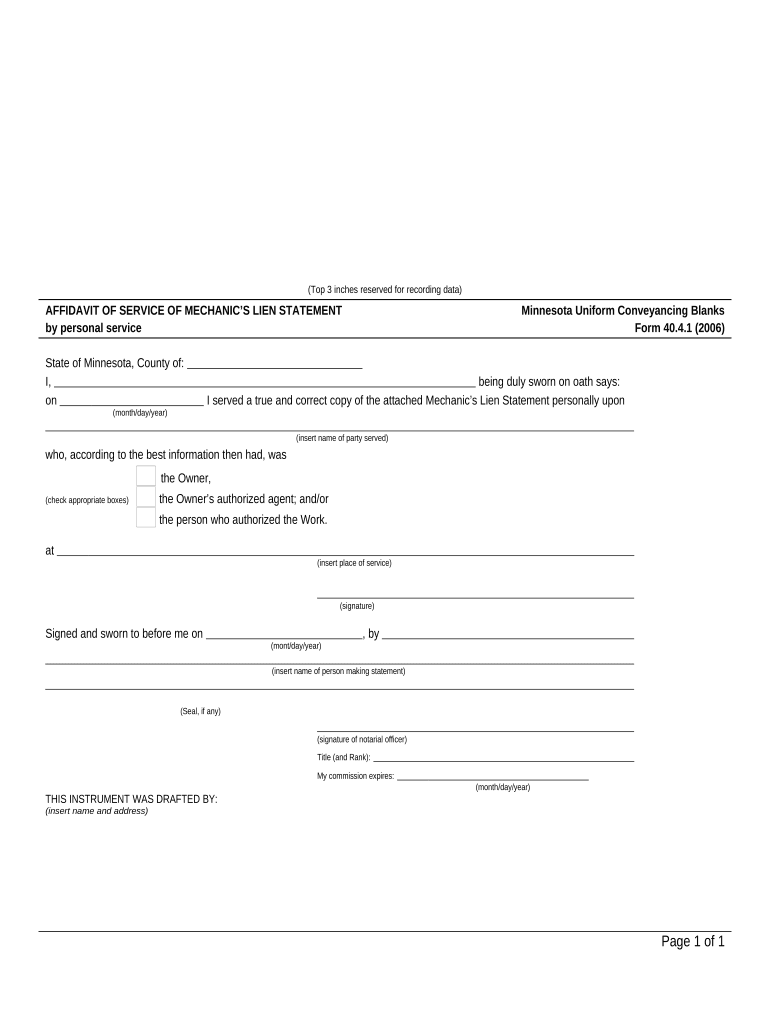
A Minnesota Mechanic's Lien is a statutory security interest that contractors, subcontractors, material suppliers, and design professionals can place against real property to secure payment for labor or materials furnished for improvement. The lien attaches to the property where work was performed or materials delivered and can affect the owner's ability to sell or refinance until satisfied or released. Filing and enforcement procedures, notice requirements, and timelines are governed by Minnesota law and vary by project type and claimant role; consult the applicable statute or county recorder for precise requirements.

Why the Mechanic's Lien Matters to Construction Stakeholders

A properly prepared Minnesota Mechanic's Lien preserves a claimant's leverage to obtain payment, creates a recorded encumbrance against the improved property, and establishes a procedural path to foreclose the lien if payment is not received.

Why the Mechanic's Lien Matters to Construction Stakeholders

Who Typically Prepares and Files This Lien

Each party's notice and filing rights differ; confirm eligibility and timing before preparing a lien to avoid misfiling.

  • General contractors and prime contractors who contracted directly with the property owner.
  • Subcontractors and specialty trades that supplied labor or materials but contracted below the prime level.
  • Material suppliers, equipment lessors, and design professionals claiming unpaid balances for provided goods or services.

Typical Claimant Profiles

General Contractor

General contractors often prepare liens to protect contract balance claims after project completion or when a payment application is disputed. They generally have direct contract documentation and payment schedules supporting the claim and must track project completion dates to meet filing windows.

Material Supplier

Suppliers who deliver materials but are unpaid can file a lien based on delivery and acceptance records. Proper invoicing, delivery receipts, and subcontractor purchase orders strengthen the supplier's claim and reduce the risk of a successful challenge.

Essential Data Elements for a Valid Lien

Claimant Name: Full legal name
Property Owner: Owner name on county records
Property Description: Legal description or parcel ID
Amount Owed: Precise dollar amount claimed
Work Dates: Start and completion dates
Signature: Claimant signature and date

Risks of Filing an Incorrect or Untimely Lien

Statute of Limitations: Missed filing windows can forfeit lien rights
Wrongful Lien Liability: Exposure to damages if lien is frivolous
Invalid Description: Inaccurate legal description can void lien
Perjury Risk: False statements may carry criminal penalties
Enforcement Costs: Foreclosure litigation and attorney fees
Title Delays: Recorded lien can block sale or refinance

Common Preparation Mistakes to Avoid

  • Using an informal property description rather than the county parcel ID or legal description leads to recording rejection or an invalid lien.
  • Failing to confirm who is the record owner at the time of filing can cause a lien to be enforced against the wrong party.
  • Submitting a claim amount without supporting invoices, delivery receipts, or work logs increases the chance of a successful challenge.
  • Missing required preliminary notices, if applicable, can bar later lien rights or reduce enforceable amounts.

Step-by-Step: Preparing and Filing a Minnesota Mechanic's Lien

Follow these core steps to prepare a claim; state-specific forms, notices, and deadlines determine final requirements.

  • 01
    Verify Eligibility: Confirm you qualify under Minnesota lien law.
  • 02
    Assemble Evidence: Gather contracts, invoices, delivery tickets, and change orders.
  • 03
    Draft Claim: Complete lien form with legal description and amount.
  • 04
    Record Claim: File with the county recorder and serve required parties.

How Filing, Recording, and Notice Typically Flow

A streamlined process helps preserve lien rights and ensures parties receive required statutory notices.

  • Prepare Document: Populate the lien with claimant, property, and amount details.
  • Obtain Signatures: Sign and notarize if state law or county requires.
  • Record Claim: Submit to county recorder for official indexing.
  • Serve Parties: Deliver copies to owner and other statutorily required recipients.

Digital Workflow Settings for Online Completion

Configure a digital workflow to capture required fields, authentication, and automated distribution when using eSigning platforms.

Field Configuration
Claimant Signature Require signer field with date stamp
Legal Description Use a multiline required text field
Supporting Uploads Allow PDF upload for invoices and receipts
Delivery Notifications Auto-email owner and claimant on record

Technical Considerations for eSigning and eFiling

Ensure the chosen platform preserves timestamps, stores a complete audit trail, and can deliver signed copies suitable for county recording or attorney review.

  • File Formats: PDF and DOCX are widely accepted for record-ready filings
  • Authentication Options: Email link, SMS code, or higher-assurance methods reduce dispute risk
  • Integrations: Look for integrations with cloud storage and project systems

Timing and Time-Sensitive Steps to Track

Mechanic's lien rights depend on timely notices and filings; calendar each critical step and verify Minnesota statutory requirements for exact dates.

Work Completion Date:

Establish when improvement is substantially complete

Notice Requirements:

Determine if a preliminary notice is required before filing

File Claim of Lien:

Record the claim within the state-prescribed window

Serve Claimant Notice:

Deliver recorded claim copies to required parties

Enforce Lien:

Initiate foreclosure litigation before expiration

Key Milestones from Job Start to Lien Enforcement

Track these sequential milestone stages to preserve rights and allow timely enforcement where necessary.

01

Job Start and Delivery

Document initial contracts and material deliveries immediately.

02

Performance and Completion

Record the date work is substantially complete for lien calculations.

03

Record Claim of Lien

File the recorded lien with the county recorder.

04

Foreclosure or Release

Either enforce via suit or record release upon payment.

eSignature Provider Pricing Snapshot for Lien Workflows

Compare starting prices, trial availability, bulk-send support, audit trails, HIPAA compliance, and envelope limits when selecting an eSignature provider.

signNow DocuSign Adobe Sign PandaDoc HelloSign
Starting Price $8/user/mo $15/user/mo $14/user/mo $19/user/mo $15/user/mo
Free Trial Yes, 7-day trial No No Yes, limited Yes, limited
Bulk Send Yes Yes Yes Yes No
Audit Trail Yes Yes Yes Yes Yes
HIPAA Compliant Yes Yes Yes No No

Practical Examples of Lien Use

Two concise examples illustrate typical scenarios where a Minnesota Mechanic's Lien preserves payment rights.

Commercial Contractor Recovery

A general contractor completed a build but the owner withheld final payment for disputed work

  • The contractor recorded a lien and served the owner
  • After mediation and presentation of pay apps and change orders, the owner consented to a negotiated payoff and the lien was released, clearing title for refinancing.

Supplier Secures Unpaid Materials

A supplier delivered materials to a multi-unit renovation and was not paid by the subcontractor

  • The supplier filed a lien against the improved parcel and served notices to the owner and prime contractor
  • The filing prompted negotiations resulting in partial payment and a stipulated lien release once the balance was satisfied.

Practical Tips for Accurate and Efficient Lien Filing

Adopt consistent documentation practices and use checklists to reduce errors and support enforceability.

Document Continuously
Keep contemporaneous records of deliveries, daily work logs, certified payroll, change orders, and correspondence to substantiate the claim and reduce dispute risk during enforcement.
Confirm Ownership
Verify the recorded property owner and mortgagees at the time of filing to ensure proper service and to avoid filing against the wrong party.
Use Clear Legal Descriptions
Pull the legal description or parcel number directly from the county recorder's index. Informal street addresses alone can lead to rejection or misindexing.
Consider Digital Workflows
Use platforms that capture an immutable audit trail, preserve timestamps, and store supporting documents to accelerate service, reduce postage, and maintain compliance records.

Frequently Asked Questions About Minnesota Mechanic's Liens

Answers to common questions clarify eligibility, eSignature acceptance, enforcement options, and next steps when disputes arise.


Need help? Contact support

be ready to get more
Join over 28 million airSlate SignNow users