Establishing secure connection…Loading editor…Preparing document…

New York Attorney's Affidavit for Wrongful Death Settlement

This template is fully customizable. Edit the text, fill out the fields, and send it for signature. Give it a try!
New York Attorney's Affidavit for Wrongful Death Settlement

Overview: What the New York Attorney's Affidavit for Wrongful Death Settlement Is

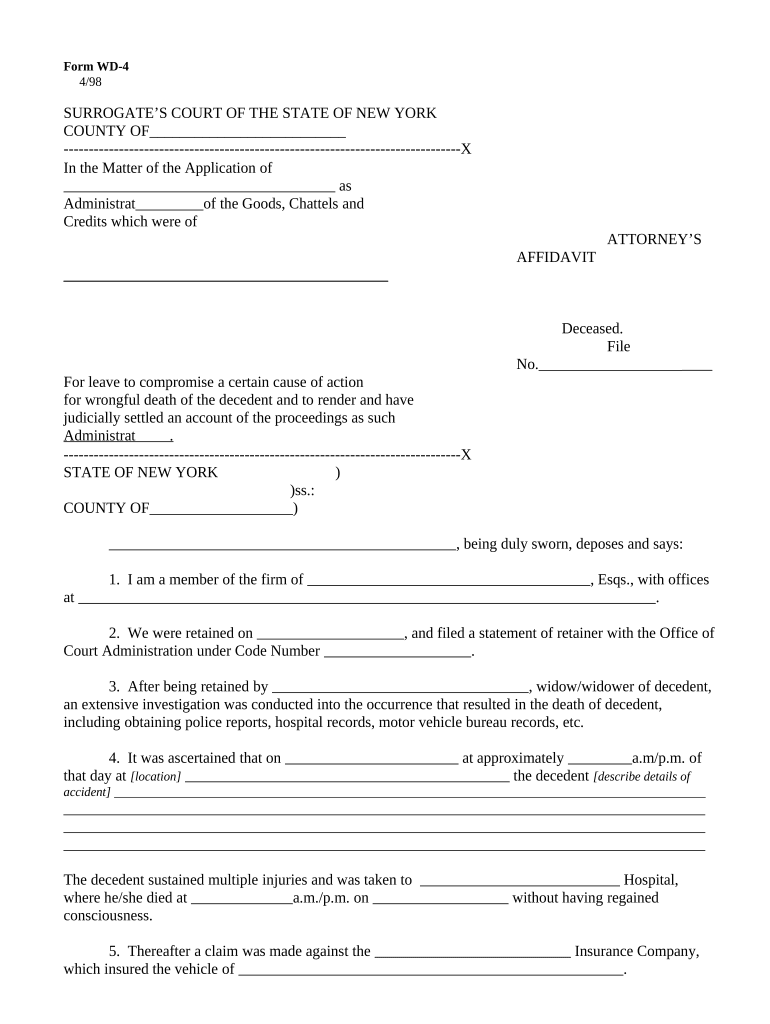
The New York Attorney's Affidavit for Wrongful Death Settlement is a sworn written statement prepared by counsel that documents settlement terms, confirms authority to settle on behalf of heirs or estate representatives, and records distributions or liens affecting recovery. It typically accompanies settlement paperwork submitted to insurers, liable parties, or probate venues and can clarify whether funds are to be distributed to a personal representative, pay medical liens, or satisfy statutory claimants. Properly completed affidavits reduce disputes over who receives proceeds and provide a formal record helpful for closing the matter and avoiding later challenges.

Why a Clear Attorney's Affidavit Matters in Wrongful Death Settlements

A precise affidavit documents legal authority, identifies beneficiaries and liens, and records settlement allocations—reducing delays, limiting post-settlement litigation, and supporting insurer or court acceptance of the distribution plan.

Why a Clear Attorney's Affidavit Matters in Wrongful Death Settlements

Who Typically Prepares and Uses This Affidavit

The affidavit is most often drafted by plaintiffs' counsel, corporate defense counsel, or estate representatives to formalize settlement mechanics and signatory authority.

  • Plaintiff attorneys handling wrongful death claims looking to document settlement allocations and beneficiary authority clearly.
  • Estate administrators or personal representatives who must show authority to receive and disburse settlement funds.
  • Insurance adjusters and corporate counsel who require a sworn statement to authorize release of policy proceeds.

Representative Roles and Typical Responsibilities

Attorney

Senior litigation counsel prepares the affidavit, confirms client authority, attaches settlement exhibits and lien information, and certifies distributions under oath to facilitate insurer or court acceptance.

Administrator

Estate administrator or personal representative signs as the authorized payee, provides identification and letters testamentary when required, and works with counsel to document releases and creditor notifications.

Essential Security and Compliance Considerations

Encryption: TLS 1.2/1.3 in transit
At Rest: AES-256 storage
Audit Trail: Timestamps and IP logs
HIPAA BAA: Available if required
Authentication: Multi-factor options
Standards: SOC 2 Type II, ISO 27001

Key Legal Risks If the Affidavit Is Incorrect

Invalid Affidavit: Rejection by payor
Late Filing: Payment delays
Wrong Signatory: Fraud allegations
Perjury Risk: Criminal exposure
Tax Consequences: Incorrect reporting
Post-Settlement Suit: Increased litigation

Common Preparation and Submission Pitfalls

  • Using abbreviated or inconsistent client names that do not match letters testamentary or government ID causes payors to pause disbursement and request additional proof.
  • Failing to list medical or Medicare liens with amounts and claimants increases the risk of later creditor claims and may require rescission of distributions.
  • Omitting the precise settlement allocation or failing to attach the settlement agreement leads to ambiguity about who receives funds and in what order.
  • Not verifying notarization or witness rules for New York specifics can invalidate the affidavit for insurers or probate use.

Practical Examples of Affidavit Usage

These two scenarios illustrate how an attorney affidavit supports settlement disbursement and closes potential disputes.

Insurance Release Example

A plaintiff's counsel prepared a sworn affidavit documenting heirs and lien resolution

  • The affidavit attached the settlement and lien statements
  • This allowed the insurer to issue payment within days, avoiding extended escrow and reducing administrative holdbacks.

Estate Distribution Example

An estate administrator used an attorney affidavit to confirm distribution allocations

  • Counsel listed funeral and medical liens explicitly
  • The personal representative obtained payment and transferred funds to beneficiaries without subsequent creditor challenges.

Step-by-Step: Completing the Attorney's Affidavit

Follow these clear steps to prepare a compliant and usable affidavit for settlement disbursement.

  • 01
    Gather documents: Collect settlement agreement, letters testamentary, lien statements.
  • 02
    Identify parties: List decedent, heirs, personal representative, and counsel.
  • 03
    Detail allocations: Specify amounts for liens, fees, and beneficiary distributions.
  • 04
    Sign and notarize: Execute affidavit, obtain required notarization and witnesses.

How the Affidavit Moves Through a Typical Settlement Workflow

This flow outlines where the affidavit fits from negotiation to payment release.

  • Drafting: Attorney prepares sworn affidavit with exhibits.
  • Review: Insurer or defense counsel reviews terms and liens.
  • Authentication: Notary and witness steps completed as required.
  • Disbursement: Payor issues funds based on affidavit and releases.

Core Components of a Professional Attorney's Affidavit

A professional affidavit is structured, precise, and supported by attachments that verify identity, authority, and encumbrances affecting settlement proceeds.

Caption

Case caption and docket number to tie the affidavit to the underlying claim and settlement documents for easy reference during review and payment processing.
Declarant Identity

Full legal name, law firm, bar number, and contact details to identify the attorney making the sworn statement and enable verification by third parties.

Authority Statement

Clear statement of the signatory's authority to settle on behalf of the estate, including reference to letters testamentary or court appointment when applicable.

Settlement Terms

Concise description of the settlement amount, payment structure, and any conditional terms that affect timing or distribution of funds.

Lien and Debt Allocations

Detailed listing of known liens, Medicare issues, outstanding bills, and how settlement proceeds will be applied to each claimant.

Verification

Notary acknowledgement, signature block, and any required witness statements to attest that the affidavit is sworn and enforceable.

Configuring an Online Affidavit Workflow

When you digitize the affidavit, configure fields and signer order to match legal and insurer requirements.

Field Configuration
Signer Order Attorney first, then personal representative
Required Fields Full name, date, notary block
Attachments Settlement agreement, lien statements
Authentication Email or SMS code, optional KBA

Digital Signing and Submission Requirements

Ensure the eSignature platform supports notarization, audit trails, and secure attachment handling before e-filing.

  • Notarization Support: Remote notarization options
  • Audit Trail: Comprehensive signed-event log
  • File Formats: PDF and DOCX supported

Expected Timelines and Typical Deadlines

Timelines vary by insurer and court; plan for lead time to verify liens, obtain notarization, and meet payor internal review cycles.

Document Preparation Time:

1–5 business days depending on complexity

Insurer Review:

7–21 business days for lien verification and approval

Notary or RON Scheduling:

Same day to several days depending on availability

Payment Issuance:

Once accepted, payors often issue funds within 7–30 days

Possible Court Filings:

Probate or settlement approval may add 30–90 days

Key Milestones from Draft to Disbursement

A sequential milestone view helps track progress and assign responsibilities for each stage of settlement closure.

01

Draft Affidavit

Attorney prepares affidavit and attaches settlement and lien documents.

02

Authenticate Signatures

Obtain notary and witness signatures, or perform RON if permitted and accepted.

03

Submit to Payor

Send affidavit, settlement, and supporting documents to insurer or defense counsel for confirmation.

04

Receive Payment

Payor issues funds and attorney distributes per affidavit allocations.

eSignature Vendor Price and Feature Comparison for Affidavit Workflows

Compare starting prices and core capabilities relevant to affidavit signing, notarization support, and compliance needs when choosing a platform.

signNow DocuSign Adobe Sign PandaDoc HelloSign
Starting Price $8/user/mo $15/user/mo $14/user/mo $19/user/mo $15/user/mo
Free Trial 7-day free trial Varies Varies Varies Varies
Bulk Send Yes Yes Yes Yes No
Audit Trail Yes Yes Yes Yes Yes
HIPAA Compliant Yes Yes Yes No No
Envelope Cap No cap 100 envs/user/yr No cap No cap No cap

Frequently Asked Questions About the New York Attorney's Affidavit for Wrongful Death Settlement

Answers to the most common questions about execution, electronic signing, notarization, and record requirements for affidavits in settlement contexts.


Need help? Contact support

be ready to get more
Join over 28 million airSlate SignNow users