Establishing secure connection…Loading editor…Preparing document…

Notice Contract

This template is fully customizable. Edit the text, fill out the fields, and send it for signature. Give it a try!
Notice Contract

What a Notice Contract Is and when it’s used

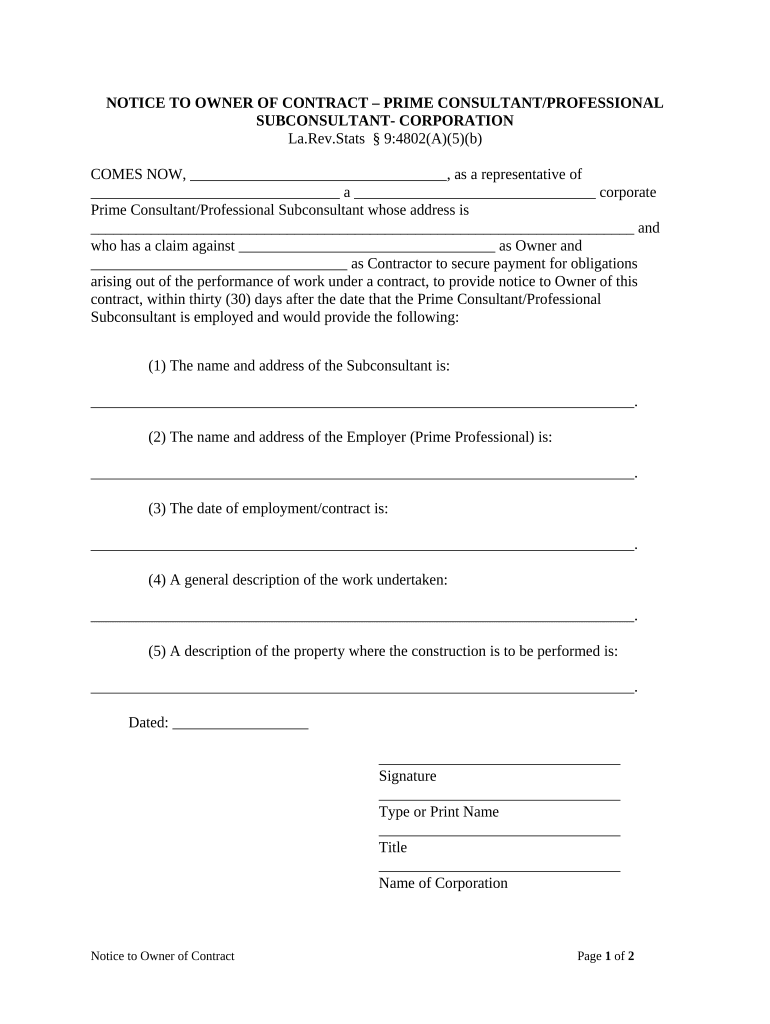
A Notice Contract is a written instrument used to deliver a formal notice tied to contractual rights or obligations — for example, notice of breach, termination, cure, or intent to enforce a lien. It sets out the party giving notice, the recipient, the reason for notice, the effective date, and any required corrective actions or deadlines. In commercial settings the Notice Contract documents legal triggers and starts statutory or contractual timelines; when signed and retained properly it becomes admissible evidence of delivery and timing under ESIGN and state electronic signature laws.

Why a clear Notice Contract matters

A clear Notice Contract preserves contractual rights by documenting when and how notice was provided, the relief requested, and the deadline for response. Accurate notices reduce disputes, support enforcement, and create an audit trail that proves delivery and timing in both paper and electronic formats.

Why a clear Notice Contract matters

Typical users and recipients of Notice Contracts

Organizations and individuals who must document formal contract communications rely on Notice Contracts to start timelines or assert rights.

  • Contract administrators and legal teams who issue cure or termination notices to counterparties.
  • Property managers and landlords issuing lease default or eviction-related notices.
  • Vendors and suppliers asserting payment or performance-related notices before collection or lien actions.

Essential parts of a professional Notice Contract

A well-drafted Notice Contract is concise, unambiguous, dated, and signed; it identifies parties, cites contract provisions, states the remedy requested, and specifies a clear deadline.

Heading

A clear title such as Notice of Breach or Notice of Termination so the recipient understands the purpose immediately and it indexes correctly in records.
Parties

Full legal names and contact details for sender and recipient; mismatched names can cause service or enforcement challenges.

Contract Reference

Citation of the underlying agreement (date, section or clause) and a brief description of the contractual provision being enforced.

Statement of Facts

Concise factual summary of the events or defaults that give rise to the notice, with dates and specific actions referenced.

Requested Remedy

Clear statement of the corrective action or relief sought, and the time period to cure or respond.

Signature Block

Signature, printed name, title, and date for the issuing party; include delivery method and recipient acknowledgment if available.

Step-by-step: prepare and send a Notice Contract

Follow a short, repeatable sequence to prepare a legally effective Notice Contract and document its delivery and receipt.

  • 01
    Identify authority: Confirm the contract clause or statute authorizing the notice.
  • 02
    Draft facts: Summarize the default, dates, and supporting evidence clearly.
  • 03
    Set deadline: Specify the cure period and the exact expiration date.
  • 04
    Document delivery: Send via the contract-specified method and keep delivery proof.

Configuring an online Notice Contract workflow

When automating notices, define fields, routing, authentication, and retention so each notice is tracked and auditable.

Field Configuration
Template Fields Party names, dates, clause reference, remedy text, signature block
Routing Rules Auto-send to legal then to counterparty if condition met
Signer Authentication Email link with SMS code or stronger KBA as required
Retention Policy Store signed notice and audit log for required retention period

How electronic delivery and eSigning typically work

Electronic Notice Contracts follow a clear sender-to-signer flow with authentication, signing, and an auditable completion record.

  • Upload template: Sender uploads and prepares the notice fields.
  • Assign signer: Add recipient email or generate a secure signing link.
  • Authenticate signer: Confirm identity by email, SMS, or stronger methods.
  • Capture audit: System timestamps signature and records IP and actions.

Technical considerations for eDelivery and eSignature

Choose a platform that supports secure delivery, audit logging, and the authentication level required by the underlying contract or statute.

  • File formats supported: PDF, DOCX, and common office formats
  • Authentication options: Email, SMS, KBA, and enterprise SSO
  • Audit logging: Timestamp, IP, and action history

Typical notice periods and timing expectations

Notice Contract deadlines vary by agreement and statute; confirm the contractual cure period and calculate the exact expiration date before sending.

Notice to Cure:

Commonly 10–30 days to correct a breach

Termination Notice:

Often 30–90 days depending on contract

Lien or Payment Notice:

Statutory deadlines may apply; check state law

Response Deadline:

Specify date and time zone explicitly

Preservation Period:

Retain notice evidence throughout dispute

Security and compliance items to document with each Notice Contract

Encryption: TLS 1.2/1.3, AES‑256 at rest
Audit Trail: Timestamped signature evidence
HIPAA BAA: Execute BAA where PHI present
21 CFR Part 11: Required for FDA records
SOC 2: Controls for data security
Access Controls: Role-based signer permissions

Penalties and legal risks from improper notices

Missed Deadline: Waiver of rights
Incorrect Service: Process invalidation risk
Tax Penalties: Related filing fines (IRC §6721)
I-9 Violations: Civil fines per 8 CFR
Unclear Remedy: Increased litigation cost
Forgery Risk: Criminal exposure

Common mistakes to avoid when preparing a Notice Contract

  • Failing to cite the exact contract clause leaves the notice legally ambiguous and invites dispute over authority and remedy.
  • Using imprecise dates or time zones can create calculable disputes about deadlines and cure periods during enforcement.
  • Delivering to an incorrect address or by an unauthorized method can void contractual notice provisions and delay remedies.
  • Omitting signature details or proof of delivery weakens admissibility and may require additional costly validation in court.

Real-world examples of Notice Contract usage

These short examples show how different organizations use Notice Contracts to preserve rights and document timelines.

Optica Ventures — Lease Cure Notice

Optica documented unpaid rent and service defaults in a one-page notice to the tenant, referencing Section 8 of the lease.

  • The tenant received a 30-day cure period.
  • The clear timeline and delivery proof enabled fast resolution without litigation and preserved the landlord’s right to initiate termination if defaults were not cured.

Martin Properties — Contractor Default Notice

Martin Properties issued a contract default notice after delayed milestones on a renovation project, attaching milestone reports as exhibits.

  • A 14-day cure window was specified.
  • The contractor remedied the defects promptly; the documented notice and audit trail supported retention of liquidated damages when partial performance remained incomplete.

Selected eSignature provider pricing and capabilities for Notice Contracts

The table compares starting price and selected capabilities across common eSignature vendors; signNow is listed first to align with platform comparison conventions.

signNow DocuSign Adobe Sign PandaDoc HelloSign
Starting Price $8/user/mo $15/user/mo $14/user/mo $19/user/mo $15/user/mo
Free Trial Yes, 7-day trial No No Yes, limited Yes, limited
Bulk Send Yes Yes Yes Yes No
Audit Trail Yes Yes Yes Yes Yes

Practical quality-control practices for Notice Contracts

Adopt a short checklist to reduce errors, ensure enforceability, and preserve a defensible audit trail for each notice.

Verify legal names and addresses exactly
Cross-check party names against the underlying contract and corporate filings to avoid mistaken identity or later challenges in service.
Specify exact deadlines and time zones
State the cure or response deadline with MM/DD/YYYY and time plus the applicable time zone to eliminate ambiguity.
Record delivery proof and acknowledgements
Keep certified mail receipts, delivery confirmations, or the eSignature audit log with timestamp and IP for evidentiary use.
Keep a consistent template library
Use standardized templates reviewed by counsel to ensure each notice references the correct clause and uses consistent remedy language.

Frequently asked questions about Notice Contracts

Answers to common questions about validity, eSigning, delivery, and how Notice Contracts interact with statutes and contract clauses.


Need help? Contact support

be ready to get more
Join over 28 million airSlate SignNow users