Establishing secure connection…Loading editor…Preparing document…

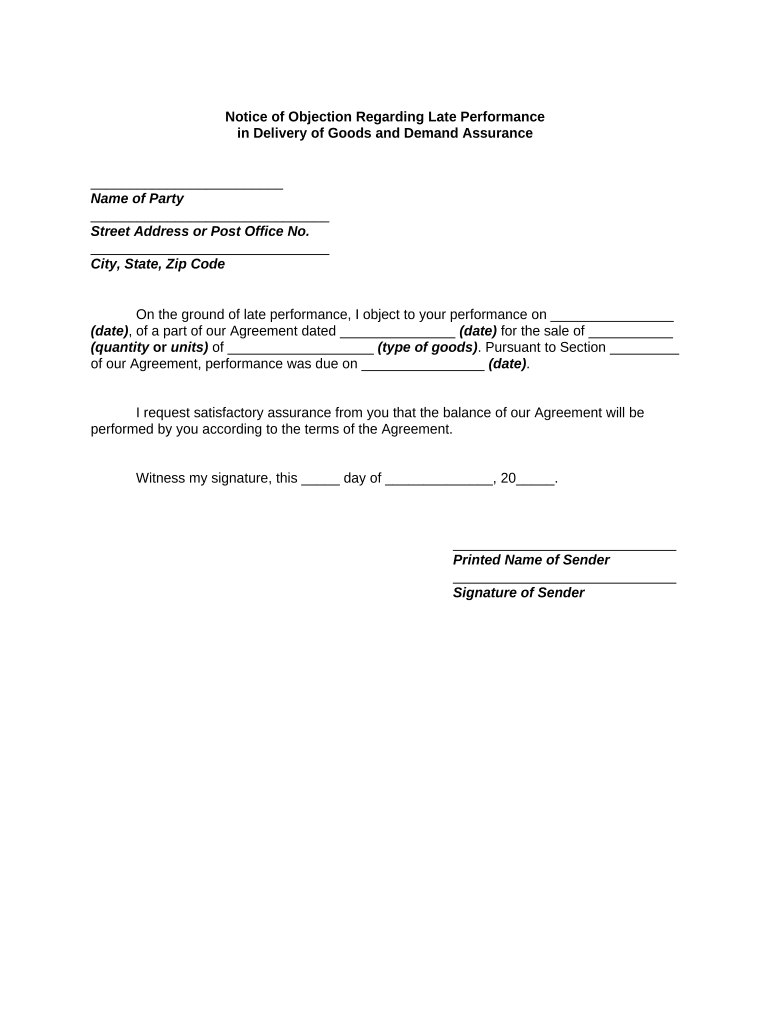
Notice of Objection Form

This template is fully customizable. Edit the text, fill out the fields, and send it for signature. Give it a try!
Notice of Objection Form

What the Notice of Objection Form Is and When it Applies

A Notice of Objection Form is a written, dated statement used to formally contest a decision, charge, or proposed action in administrative, regulatory, tax, or contractual contexts. It identifies the party filing the objection, the decision being contested, the factual and legal grounds for disagreement, and the specific relief requested. The form creates a record that preserves rights, triggers an agency or counterparty response, and often starts a time-limited review or appeal process. Many jurisdictions accept electronically completed and signed Notices of Objection under ESIGN and UETA when no statutory exception applies.

Why filing a clear Notice of Objection matters

Filing a Notice of Objection preserves legal rights, creates an auditable record, and forces a formal response from the opposing party or agency. A precise, well-documented objection helps avoid missed deadlines, reduces the risk of administrative dismissal, and supports later appeals or litigation if needed.

Why filing a clear Notice of Objection matters

Who commonly completes a Notice of Objection

Typical filers include individuals, business representatives, attorneys, and administrative staff who need to preserve appeal rights or dispute charges.

  • Individual claimants submitting a dispute about an administrative decision or billing charge.
  • Business representatives filing objections about compliance findings or invoices on behalf of their company.
  • Attorneys or legal representatives preparing objections with supporting legal arguments and evidence.

Common signatories and their roles

Claimant

An individual or entity directly affected by the decision who has authority to sign and certify the facts in the objection; statements should match identity documents and case records.

Authorized Representative

A named agent or attorney with express written authorization to file and sign on behalf of the claimant; include proof of representation when required by the receiving agency.

Essential parts of a professional Notice of Objection

A complete Notice of Objection follows a predictable structure so reviewers can quickly determine jurisdiction, timeliness, and the relief sought. Use clear headings, precise dates, and concise factual statements; attach supporting evidence and reference any controlling decision or invoice numbers.

Header

Case name, recipient agency or party, contact details, and a clear title such as 'Notice of Objection'.
Identification

Full legal name, mailing address, telephone, email, and any case or invoice numbers used by the recipient.

Grounds

Concise statement of facts and legal reasons you object, organized into numbered points for clarity.

Relief Requested

Specific remedy sought (refund, reconsideration, stay of enforcement, hearing); avoid vague language.

Attachments

List and attach exhibits such as receipts, correspondence, contracts, or evidence supporting the objection.

Signature Block

Signer name, title, signature, printed name, and date; include representative authorization if applicable.

Step-by-step: fill, sign, and submit a Notice of Objection

Follow a concise process: gather documents, complete the form accurately, sign with required authentication, and deliver to the correct recipient using permitted channels.

  • 01
    Gather documents: Collect decision notices, invoices, contracts, and supporting evidence before you begin.
  • 02
    Complete form: Enter all required fields, use MM/DD/YYYY dates, and attach exhibits referenced in the grounds.
  • 03
    Authenticate signature: Sign in person, notarize if required, or use an accepted eSignature method under ESIGN/UETA.
  • 04
    Submit and keep copies: Send via the agency's accepted channel and retain a timestamped copy and delivery receipt.

How submission and routing typically proceed

After filing, the receiving party verifies timeliness and jurisdiction, assigns a case number if needed, and either accepts, requests more information, or schedules a hearing.

  • Sender prepares: Upload completed form and attachments; confirm recipient and filing address.
  • Place fields: Add signature, date, and optional initial fields for each signer.
  • Choose authentication: Select the appropriate signer authentication level for admissibility.
  • Submit and track: Deliver via accepted method and archive the signed receipt and audit trail.

Technical options for sharing and signing the form

Many filers submit Notices of Objection electronically; choose file formats and authentication that meet the recipient's rules.

  • File formats: PDF and DOCX accepted widely for record integrity.
  • Integrations: Connectors for Google Workspace, Microsoft 365, and CRM systems.
  • Authentication: Email, SMS code, knowledge-based, or RON where permitted.

Typical timelines and deadlines to watch

Deadlines vary by agency and dispute type; confirm the exact filing window in the controlling statute or agency rule. Timeliness is usually jurisdictional and can be dispositive.

Initial filing window:

Often 10–30 days from the decision; check agency rules.

Response period:

Receiving party commonly has 20–60 days to reply.

Hearing scheduling:

If granted, hearings are typically set 30–120 days after acceptance.

Extended timelines:

Extensions may be available on narrow grounds; confirm in writing.

Statutory variations:

Some statutes impose shorter or longer deadlines; verify per jurisdiction.

Common mistakes that delay or invalidate objections

  • Missing or incorrect case numbers prevent matching your objection to the right file, causing processing delays or administrative dismissal.
  • Late filing beyond the agency's deadline can forfeit appeal rights even where the objection is otherwise meritorious.
  • Submitting unsigned or improperly signed notices leads to rejection; check whether electronic signatures or notarization are required.
  • Failing to attach referenced evidence or using unclear numbering makes it difficult for reviewers to verify factual claims.

Risks and consequences of an incorrect or late Notice of Objection

Loss of rights: Missed deadlines may permanently bar appeals.
Administrative dismissal: Form errors can lead to immediate rejection.
Monetary exposure: Delays can cause interest, fees, or collection actions.
Evidentiary gaps: Incomplete records weaken later positions in hearings.
Notary noncompliance: Improper notarization may make signatures inadmissible.
Identity disputes: Unverified signers can cause affidavit or proof hearings.

How a Notice of Objection differs from a formal appeal

Notices of Objection are often the initial, informal challenge that reserves rights; formal appeals follow different procedures, timelines, and evidentiary rules.

Criteria Notice of Objection Formal Appeal
Purpose initial contest full administrative review
Filing Deadline short (varies) longer (varies)
Hearing Required sometimes usually
Formality Level informal formal record

Comparing eSignature providers for filing Notices of Objection

Choose an eSignature provider that supports required authentication, audit trails, and storage. The table compares core pricing and compliance features across common vendors; signNow is listed first per comparison rules.

signNow DocuSign Adobe Sign PandaDoc HelloSign
Starting Price $8/user/mo $15/user/mo $14/user/mo $19/user/mo $15/user/mo
Free Trial 7-day free trial No No Yes, limited Yes, limited
Bulk Send Yes Yes Yes Yes No
Audit Trail Yes Yes Yes Yes Yes
HIPAA Compliant Yes Yes Yes No No

Real-world examples of using e-signed Notices of Objection

These use cases show how organizations streamline objections and maintain compliance when submitting contested decisions or charges electronically.

Optica Ventures LLC

A private investor firm used an electronic objection workflow to contest an invoice dispute promptly

  • Reduced processing friction in high-volume cases
  • "The interface is simple and easy-to-use for our team; more importantly, it is just as easy for our customers."

Martin Properties

A real estate operator filed multiple property tax objections with attached exhibits using a standardized e-form

  • Allowed consistent evidence indexing across counties
  • "I can process and execute all of these documents online with 100% compliance and built-in security."

Practical tips to prepare a defensible Notice of Objection

Follow structured drafting and submission practices to reduce processing time and strengthen your position in later proceedings.

Start with the core facts
Begin by listing chronological facts and attach primary evidence first. Clear, numbered facts make it easier for reviewers to verify your claims and reduce follow-up requests.
Be specific in relief requested
State the exact remedy you want, with dollar amounts or corrective actions where applicable. Vague remedies can lead to administrative dismissal or default rulings.
Follow agency formatting
Use the agency's accepted form or required headings and include required case numbers to prevent clerical rejection for nonconforming submissions.
Preserve all receipts and communications
Keep delivery confirmations, proof of service, and timestamped signed copies to establish filing date and chain of custody in case of dispute.

Frequently asked questions about Notices of Objection

Answers to common questions about timing, signatures, supporting evidence, and electronic filing to help avoid processing delays.


Need help? Contact support

be ready to get more
Join over 28 million airSlate SignNow users