Establishing secure connection…Loading editor…Preparing document…

Objection Petition Colorado

This template is fully customizable. Edit the text, fill out the fields, and send it for signature. Give it a try!
Objection Petition Colorado

What an Objection Petition in Colorado Is and When It Applies

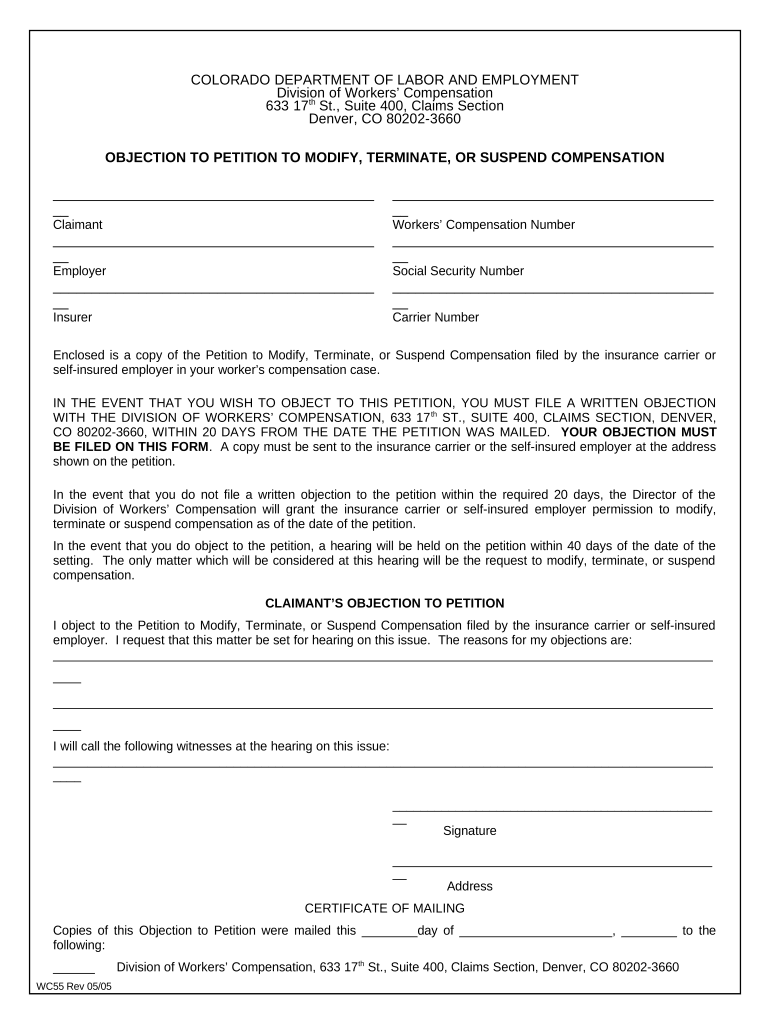
An Objection Petition in Colorado is a formal written challenge filed with a court or administrative body to contest a proposed action, judgment, or administrative decision affecting a party’s rights. Typical contexts include probate contests, zoning or land-use appeals, administrative licensing disputes, and objections to trustee or executor actions. The petition must identify the decision being challenged, articulate factual and legal grounds for objection, and request relief or a hearing. Local rules and statutory deadlines control procedure; supporting evidence and service on affected parties are normally required to preserve the objection for adjudication.

Why an Objection Petition Matters for Your Colorado Matter

Filing a timely, well‑supported petition preserves legal rights, triggers formal review or a hearing, and creates a record for appeal. A clear objection focuses the court or agency on factual disputes and legal arguments that can alter outcomes.

Why an Objection Petition Matters for Your Colorado Matter

Who Typically Prepares and Files an Objection Petition

Individuals, attorneys, and organizations subject to a court or administrative action commonly file objections to protect legal interests and prompt review.

  • Self-represented litigants asserting errors in probate or administrative decisions
  • Attorneys representing beneficiaries, neighbors, or licensees in contested matters
  • Organizations (HOAs, municipalities, businesses) challenging permits or adverse rulings

In many matters counsel prepares the petition; however pro se filers may proceed if they follow local court or agency rules for form, service, and deadlines.

Step-by-Step: Preparing and Filing an Objection Petition in Colorado

Follow these steps in order to prepare a compliant petition and reduce the risk of procedural rejection.

  • 01
    Review the Trigger: Confirm the decision or filing you intend to object to and identify the exact record entry.
  • 02
    Check Deadlines: Identify statute or rule deadlines for objections and appeals before drafting.
  • 03
    Draft the Petition: Draft caption, statement of facts, legal grounds, relief requested, and signature block.
  • 04
    Serve and File: Serve opposing parties per local rules and file with the clerk or agency with required fees or e-filing steps.

Typical Digital Workflow Setup for eFiling and eSubmission

Set up a consistent digital workflow to create, sign, serve, and file objection petitions efficiently.

Document Draft in Word, save as PDF
Signers Petitioner and attorney (if any)
Authentication Email or SMS verification
Service Use certified mail or e-service per local rule
Filing Upload to court e-filing portal or submit in-person

What Happens After You File an Objection Petition

Understanding the procedural flow helps you prepare for service, response, and hearings.

  • Clerk Acceptance: Clerk reviews filing for compliance and assigns docket number or return for correction.
  • Service Confirmation: Proof of service is required; file certificate or affidavit of service as directed.
  • Response Period: Respondent may file a response or motion to dismiss within the court’s timeline.
  • Hearing / Ruling: Court schedules a hearing or issues a written ruling after reviewing filings.

Digital Filing and eSignature Platform Essentials

Ensure your e-signature and e‑filing platform supports the authentication, document formats, and audit trails required by Colorado courts.

  • File Formats: Accept PDF/A and searchable PDF for filings
  • Audit Trail: Capture timestamp, IP, and signer attribution
  • Integrations: Support for email, cloud storage, and court e-filing portals

Use platforms that permit secure storage and reproducible audit records to meet ESIGN/UETA retention and evidence standards.

Essential Components Every Professional Objection Petition Should Include

A complete petition presents the issue, legal basis, facts, evidence, and precise relief requested to help the court resolve the dispute efficiently.

Clear Caption

Accurate court name, case number, and party designations ensure the petition is filed in the correct matter and prevent clerical rejection.
Statement of Jurisdiction

A brief citation to the statute or court rule establishing jurisdiction gives the court the legal basis to consider the petition.

Concise Facts

Chronological, numbered facts tied to exhibits reduce ambiguity and help the judge or hearing officer focus on disputed issues.

Specific Legal Grounds

Cite controlling statutes or case law and explain how the facts meet each legal element for relief.

Relief Requested

A precise, itemized request (e.g., vacate order, set aside probate action, schedule hearing) clarifies remedy and scope.

Signature and Verification

Signed by petitioner or counsel and, when required, notarized or verified under penalty of perjury to meet procedural rules.

Required Core Information to Include in the Petition

Petitioner Identity: Full legal name
Respondent Identity: Full legal name
Case Reference: Docket number
Grounds Stated: Legal basis
Relief Sought: Specific remedy
Signature Block: Signed and dated

Consequences of Filing an Incomplete or Late Objection

Dismissal Risk: Filed late
Waiver: Claims waived
Sanctions: Court sanctions possible
Evidence Excluded: Unsupported exhibits excluded
Costs: Fee shifting
Appeal Limits: Appellate rights narrowed

Common Mistakes to Avoid When Preparing an Objection Petition

  • Missing the statutory or local deadline for objections, which often results in waiver of the right to challenge the matter.
  • Failing to serve all required parties properly or omitting a certificate of service, causing procedural defects or delays.
  • Submitting unsigned or unverified petitions or failing to include required affidavits and supporting exhibits.
  • Relying on broad assertions instead of documented facts and numbered exhibits tied to specific assertions in the petition.

eSignature Vendor Pricing & Feature Snapshot Relevant to Objection Petitions

When selecting an eSignature provider for petitions and exhibits, consider price, audit trail, HIPAA coverage, bulk send, and any envelope or usage limits.

signNow DocuSign Adobe Sign PandaDoc HelloSign
Starting Price $8/user/mo $15/user/mo $14/user/mo $19/user/mo $15/user/mo
Free Trial 7-day free trial Varies by plan Varies by plan Varies by plan Varies by plan
Bulk Send Available (Business Premium) Available Available Available Varies by plan
Audit Trail Yes Yes Yes Yes Yes
HIPAA Compliant Yes (BAA available) Varies by plan Varies by plan Varies by plan Varies by plan

Real-World Examples of Objection Petitions

These concise examples show typical uses and outcomes where objections changed case handling or preserved rights.

Probate Objection Example

A beneficiary filed an objection alleging lack of adequate notice and improper accounting.

  • The court set a hearing within 30 days.
  • After review the court ordered supplemental accounting and adjusted distributions, preserving beneficiary rights and record.

Administrative License Appeal

A business objected to a licensing denial for missing procedural notice.

  • The agency reopened the matter for additional evidence.
  • The agency ultimately granted a hearing and reconsidered the denial based on the corrected record.

Practical Tips for Accurate and Efficient Objection Petitions

Adopt these practices to reduce delays, improve clarity, and strengthen your petition for adjudication or appeal.

Follow Local Rules Exactly
Consult the court or agency's procedural rules for caption format, page limits, and required certificates. Noncompliance is a frequent ground for rejection or delay.
Numbered Paragraphs and Exhibits
Use numbered paragraphs and label exhibits clearly. Cross-reference exhibits in the text so the judge or hearing officer can verify assertions quickly.
Use Clear, Concise Legal Grounds
Cite statutes or case law only as necessary and explain how facts meet legal standards; avoid long, unfocused narratives that obscure issues.
Preserve Proof of Service
File a certificate of service or affidavit promptly; keep copies of certified mail receipts, e-service confirmations, or RON certificates for the record.

Frequently Asked Questions About Objection Petitions in Colorado

Answers to common procedural and practical questions about preparing, serving, and filing objection petitions in Colorado.


Need help? Contact support

be ready to get more
Join over 28 million airSlate SignNow users