Establishing secure connection…Loading editor…Preparing document…

Ohio Corporation

This template is fully customizable. Edit the text, fill out the fields, and send it for signature. Give it a try!
Ohio Corporation

What an Ohio Corporation filing is and when it’s used

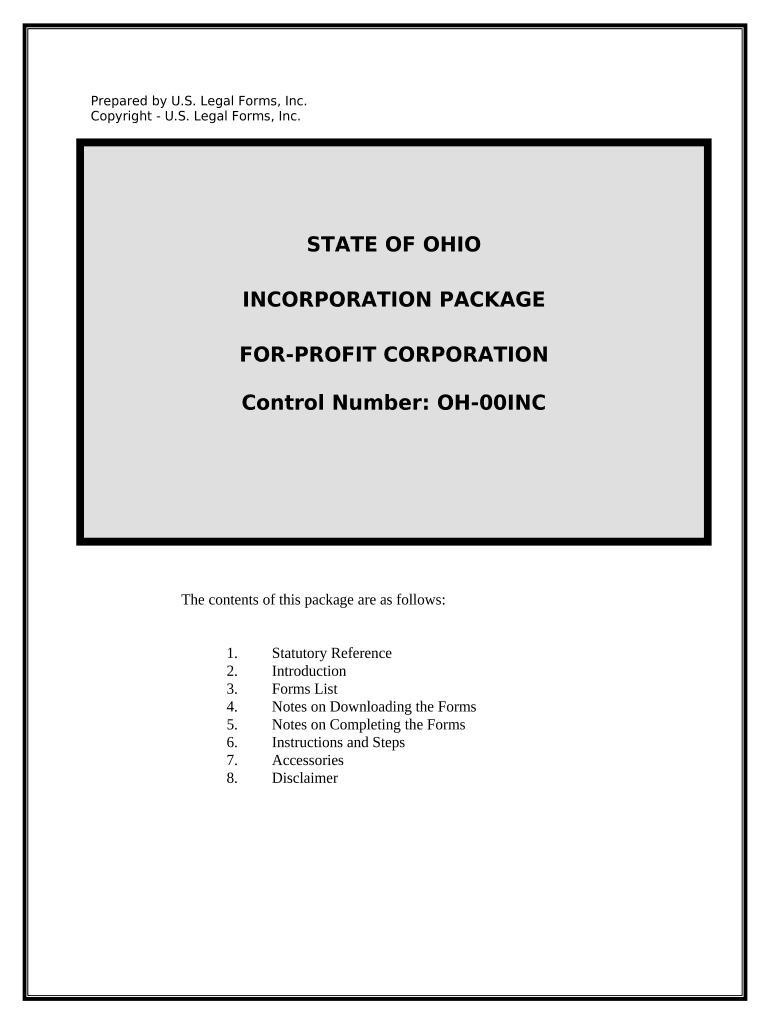
An Ohio Corporation refers to the statutory formation documents filed with the Ohio Secretary of State to create a business corporation under Ohio law. The core filing—Articles of Incorporation—establishes the corporate name, purpose, registered agent, authorized shares, and incorporator details. Once accepted and processed by the Secretary of State, the corporation becomes a distinct legal entity capable of entering contracts, holding assets, and employing staff. This guide explains the document’s required elements, common filing paths (online or paper), eSignature and notarization considerations, retention obligations, and practical steps to complete and submit a compliant filing in Ohio.
Why a correctly prepared Ohio Corporation filing matters

A complete and accurate Articles of Incorporation avoids delays, reduces rejection risk from the Secretary of State, and creates clear governance and ownership records. Properly documented corporate formation supports access to bank accounts, tax IDs, contracts, and liability protection for owners.

Why a correctly prepared Ohio Corporation filing matters

Who typically prepares and submits an Ohio Articles of Incorporation

Each party must confirm signatory authority, confirm the registered agent, and retain a certified copy of the filed documents for corporate records and third-party requests.

  • Founders and entrepreneurs preparing formation documents for funding or operations.
  • Corporate counsels or external attorneys ensuring legal compliance and governance.
  • Registered agent services or formation specialists filing on behalf of the incorporator.

Signatory roles and typical preparers

Incorporator

The incorporator is the person or entity who signs the original Articles of Incorporation and submits them to the Ohio Secretary of State. Often the incorporator is a founder, attorney, or formation service that prepares the initial filing and records.

Authorized Signer

Corporate officers (for example, a president or secretary) may sign bylaws, corporate minutes, and other formation-related documents. Verify signing authority in the Articles and in any power delegation documents to avoid later challenges.

Core components to include in professional Articles of Incorporation

The Articles of Incorporation should clearly present statutory elements required by Ohio law and include optional provisions that shape governance, liability, and capital structure. Each clause should be concise, formatted for filing, and consistent with bylaws and shareholder agreements.

Corporate Name

Full legal corporate name including required word or abbreviation (e.g., 'Corporation', 'Inc.'). Confirm name availability with the Ohio Secretary of State before filing and avoid punctuation or terms that imply a different entity type.

Registered Agent

Name and Ohio street address of the registered agent authorized to accept service of process. The agent must maintain a physical address in Ohio; P.O. boxes are not acceptable for the registered office.

Purpose Statement

A general lawful purpose or a narrowly tailored business purpose. Many filers use a broad statement such as 'to engage in any lawful business' to avoid future amendment needs.

Authorized Shares

Number and classes of shares authorized, including par value if any, and rights attached to each class. Specify preferred or common stock distinctions to reflect investor agreements and capitalization plans.

Incorporator Details

Name and address of each incorporator signing the Articles. The incorporator often executes the initial filing and later adopts the first bylaws and elects directors.

Optional Provisions

Provisions on director liability limitations, indemnification, duration (perpetual or fixed term), and any special voting or transfer restrictions. Draft carefully, as some provisions affect investor rights and statutory default rules.

Step-by-step: preparing and filing Articles of Incorporation in Ohio

Follow these ordered steps to prepare a clean filing package: confirm name availability, draft required fields, select a registered agent, obtain signatures, and submit to the Ohio Secretary of State.

  • 01
    Check name availability: Search the Secretary of State database to avoid rejection for duplicative names.
  • 02
    Prepare Articles: Complete required fields precisely and attach any required exhibits or additional statements.
  • 03
    Designate registered agent: Confirm agent consent and provide a physical Ohio address in the filing.
  • 04
    File and retain copy: Submit online or by mail and save a certified or stamped copy with corporate records.

Typical online workflow settings for e-filing an Ohio corporation

When using an online filing portal or eSignature platform, configure these core workflow elements to ensure correct routing and security.

Field Configuration
Signer order Sequential or parallel signing depending on incorporator and witness needs
Authentication Email link or SMS code; use stronger ID verification for high-risk signers
Document format PDF/A or PDF recommended to preserve layout and signatures
Audit log retention Enable full audit trail for timestamps, IP, and signer actions

How eSigning and eSubmission typically proceeds

Electronic completion and filing follow a predictable sequence; prepare documents, place signature fields, invite signers, collect signatures, and submit the final package to the Secretary of State or service provider.

  • Upload document: Add the Articles PDF and any attachments into the e-filing or eSignature platform.
  • Add fields: Place signature, date, and text fields where required by the Articles form.
  • Authenticate signer: Confirm identity via email, SMS, or stronger verification before signing.
  • Submit filing: Download the signed package and submit electronically or print for mail as required.

Technical and integration considerations for filing digitally

Ensure the chosen tools produce an unalterable audit trail and a downloadable signed copy for corporate records and future filings.

  • File formats: PDF, DOCX, and PDF/A compatibility ensure accepted submissions and archival integrity.
  • Integrations: Common integrations include Google Workspace, Microsoft 365, NetSuite, and document repositories.
  • Authentication: Support for email, SMS, and advanced ID verification reduces signer friction and risk.

Timing and routine post-filing obligations

After forming a corporation in Ohio, expect a short processing period for filing and recurring compliance tasks such as biennial or annual reports and tax registrations.

Initial processing:

Secretary of State reviews filings; turnaround varies by method and volume.

Employer registrations:

Register for an EIN with the IRS to open bank accounts and hire employees.

Annual/Biennial reports:

Corporations must file periodic reports and update registered agent or address changes.

State tax filings:

Register for Ohio tax accounts and understand withholding and sales tax obligations.

Recordkeeping:

Maintain corporate minute books, bylaws, and certified formation documents.

Key milestones from formation to first corporate actions

Track these milestones to ensure the corporation is organized correctly and governance steps are completed in sequence.

01

File Articles

Submit Articles of Incorporation and receive confirmation of legal existence.

02

Adopt bylaws

Board or incorporator adopts bylaws to set internal governance rules.

03

Hold initial meeting

Elect directors, issue stock, and approve initial corporate actions.

04

Register for taxes

Obtain EIN and register for state and local tax accounts.

Common preparation mistakes to avoid

  • Using an unavailable or confusing corporate name that delays filing and requires amendment and additional fees.
  • Providing a P.O. box for the registered agent address when a physical Ohio street address is required.
  • Failing to specify authorized shares precisely, causing investor confusion and later amendments that attract legal fees.
  • Skipping retention of a certified copy of the filed Articles, complicating banking, contracts, and proof of formation.

Risks and legal consequences of incorrect filings

Rejection or delay: Filing deficiencies delay legal existence.
Personal liability: Improper formation can expose owners to liability.
Tax complications: Missing EIN or registrations triggers penalties.
Record disputes: Inaccurate records complicate ownership claims.
Costs to amend: Amendments incur state fees and legal costs.
I‑9 / employment fines: Noncompliance with employment records carries fines.

Security and compliance elements to preserve validity

Encryption: TLS 1.2/1.3 in transit; AES-256 at rest
Audit trail: Timestamped logs and signer metadata
BAA availability: Business Associate Agreement for HIPAA workflows
Access controls: Role-based permissions and SSO
Certifications: SOC 2 Type II and ISO 27001
Retention: Reproducible signed copies and export options

Practical tips for accurate and efficient filings

Adopt these practices to reduce rework, speed acceptance by the Secretary of State, and maintain clean corporate records.

Verify name availability
Check the Ohio Secretary of State database before drafting documents to avoid rejections and the need for costly name amendments later.
Use a physical registered address
Provide a physical Ohio street address for the registered agent; P.O. boxes are typically not acceptable and can cause service issues.
Maintain a certified copy
After filing, obtain and store a certified copy or stamped PDF in the corporate minute book and in an encrypted document repository for future proof.
Coordinate governance documents
Align Articles, bylaws, shareholder agreements, and meeting minutes to prevent contradictory provisions that require amendments or legal advice.

Realistic scenarios for using Ohio Articles of Incorporation

These two scenarios illustrate how different organizations approach corporate formation and early compliance tasks.

Small Business Formation

A two-founder startup files Articles to create limited liability and access banking

  • The founders authorize 1,000,000 shares and designate a registered agent
  • They obtain an EIN, adopt bylaws, and retain a certified copy for investor and bank requirements.

Professional Practice

A small professional services firm incorporates to formalize governance and client contracting

  • The incorporator specifies share structure and indemnification provisions
  • The firm records bylaws, issues stock certificates, and registers for Ohio tax accounts.

Comparison: eSignature providers for completing and signing incorporation documents

Common vendor features and entry-level pricing for eSignature platforms used to sign and assemble corporate formation documents. signNow is listed first per provider-comparison conventions.

signNow DocuSign Adobe Sign PandaDoc HelloSign
Starting Price $8/user/mo $15/user/mo $14/user/mo $19/user/mo $15/user/mo
Free Trial 7-day free trial Varies by plan Varies by plan Varies by plan Varies by plan
Bulk Send Yes (Premium) Yes Yes Yes No
Audit Trail Yes Yes Yes Yes Yes
HIPAA Compliant Yes Yes Yes No No

Frequently asked questions about Ohio corporation filings

Answers to common issues encountered when preparing, signing, and filing Articles of Incorporation in Ohio; includes legal validity of electronic signatures and recordkeeping notes.


Need help? Contact support

be ready to get more
Join over 28 million airSlate SignNow users