Establishing secure connection…Loading editor…Preparing document…

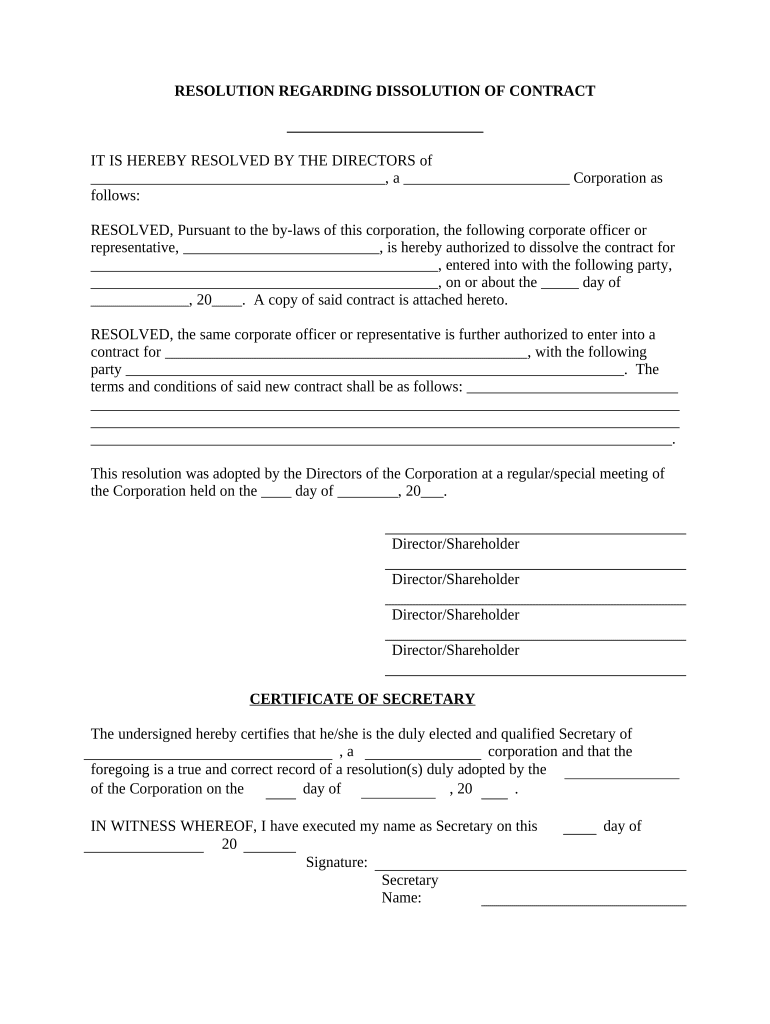
Resolution Regarding Dissolution of Contract

This template is fully customizable. Edit the text, fill out the fields, and send it for signature. Give it a try!
Resolution Regarding Dissolution of Contract

What the Resolution Regarding Dissolution of Contract Is

A Resolution Regarding Dissolution of Contract is a formal written action adopted by an authorized party or governing body that records the decision to terminate a contractual relationship and documents the effective date, authorizations, and any post-termination obligations. It provides a clear, auditable record that the parties or an organization have agreed to dissolve the contract, often describing notice provided, any cure periods, property or payment obligations, and authority delegated to execute termination documents or settlements. Such a resolution supports internal records, potential regulatory compliance, and downstream enforcement or dispute resolution.

Why a Clear Resolution Matters

A written resolution reduces ambiguity about who authorized termination, records the effective date and obligations, and creates an audit trail useful for enforcing rights, satisfying auditors, and supporting any required corporate minutes or filings.

Why a Clear Resolution Matters

Who commonly adopts this resolution

Common users include boards, corporate officers, contracting parties, and legal teams that must document formal termination decisions.

  • Corporate boards and committees adopting formal corporate actions and minutes to document termination decisions clearly and consistently.
  • Company officers or managing members executing on delegated authority to terminate vendor, lease, or service agreements per governance rules.
  • In-house or outside counsel preparing legally defensible records that describe termination reasons, settlement terms, and notice compliance.

The resolution format varies by entity type and industry but consistently serves to evidence authority, timing, and required follow-up steps.

Typical roles that sign the resolution

Corporate Secretary

Corporate secretaries often prepare and retain the executed resolution within corporate records, confirming board approval language, effective dates, and cross-referencing minutes and corporate seal requirements for governance and audit purposes.

Authorized Officer

An authorized officer or managing member executes the resolution on behalf of the organization, certifies authority, and ensures required notifications and contract wind‑down steps are carried out according to the resolution’s directives.

Key data elements to protect and log

Signer Identity: Name and title
Effective Date: MM/DD/YYYY
Contract Reference: Contract ID or description
Authority Source: Board minutes ref
Execution Method: Electronic or wet signature
Retention Location: Document repository

Risks and legal consequences of mistakes

Invalid Execution: May void termination
Breach Claims: Counterparty damages risk
Late Notice: Forfeited contractual remedies
Recordkeeping Gaps: Audit or compliance issues
TIN Errors: Tax reporting complications
Unauthorized Signer: Challenge to enforceability

Common preparation pitfalls to avoid

  • Failing to identify the exact contract by title and date makes it difficult to prove which agreement was dissolved.
  • Omitting or misstating the effective date may cause overlapping obligations or unintended performance liabilities.
  • Using vague language about authority or consideration can invite disputes over whether termination complied with governance rules.
  • Neglecting to include follow-up steps — final invoices, property return, or confidentiality obligations — can leave open enforcement gaps.

Step-by-step: completing the resolution

Follow these core steps to produce a clear, enforceable resolution that documents authority, timing, and post-termination duties.

  • 01
    Identify Contract: Reference title, date, and parties precisely.
  • 02
    State Action: Record the decision to dissolve and reason.
  • 03
    Authorize Signers: List officers or members with execution authority.
  • 04
    Document Follow-up: List notices, payments, and property returns required.

How to amend or revise a resolution

When changes are needed, follow a transparent amendment process that preserves the original record and evidence of approval.

01

Draft Amendment:

Describe exactly which sections change.
02

Approve Formally:

Obtain the same level of authority as the original.
03

Execute Amendment:

Sign and date the amendment.
04

Attach Originals:

Store amendment with the original resolution.
05

Notify Parties:

Send amended notice to counterparties.
06

Record Changes:

Update corporate minutes and repository.

Typical eSubmission and acceptance workflow

Electronic completion and submission streamline signing, provenance capture, and distribution while preserving an auditable record.

  • Prepare Document: Upload template and place required fields.
  • Add Signers: Assign roles and signing order if needed.
  • Authenticate: Use email, SMS code, or stronger methods.
  • Capture Audit: Store timestamp, IP, and signature evidence.

Essential clauses to include in the resolution

A professional resolution covers authority, identification, effective timing, obligations, delegation, and record retention to limit ambiguity and support enforcement.

Identification

Precisely identify the contract by full title, original execution date, parties involved, and any contract identification numbers or exhibits for unambiguous reference.
Authority

State the corporate or organizational authority under which the resolution is adopted, referencing board action, bylaws, membership votes, or delegated officer powers.

Effective Date

Specify the exact effective date using MM/DD/YYYY format and note whether termination is immediate or contingent on notice or cure periods.

Post-Term Obligations

List settlement, final payment, property return, confidentiality survival, and any release or indemnity provisions applicable after dissolution.

Execution Instructions

Name the persons authorized to sign termination documents, specify signature format (electronic or wet), and detail any notarization or witness requirements.

Recordkeeping

Direct where the executed resolution and related documents will be stored, who maintains access, and the retention period consistent with governance and legal requirements.

Configuring an electronic resolution workflow

Set up the digital workflow to capture identity, execute in order, and preserve a robust audit trail for compliance.

Field Configuration
Signer Order Sequential or parallel routing
Authentication Level Email code, SMS, or KBA
Audit Trail Capture IP, timestamp, and events
Storage Location Secure document repository

Technical considerations for eSigning and storage

Choose a platform that captures signer identity, an immutable audit trail, and supports your required retention and access controls.

  • File formats: PDF, DOCX supported
  • Integrations: Connect to CRM or DMS
  • Authentication: Email, SMS, or stronger

Ensure the chosen solution supports ESIGN/UETA compliance, optional notarization or RON workflows where required, and secure long-term storage for audit readiness.

Timing and notice items to track

Track notice, cure periods, effective date, and the dates for completing wind‑down actions to avoid unintended liabilities.

Notice Sent:

Date when termination notice is delivered to counterparty.

Cure Period Expires:

Last day counterparty may cure defaults per the contract.

Effective Date:

MM/DD/YYYY when dissolution becomes operative.

Final Accounting:

Deadline to reconcile payments and invoices.

Record Filing:

Date to file corporate minute entry or internal record.

Key milestones from decision to closure

Sequence the resolution process into clear milestones so each responsible party knows timing and dependencies.

01

Board Approval

Formal vote or written consent authorizing dissolution of the contract.

02

Notice Delivery

Serve termination notice to the counterparty per contractual requirements.

03

Execution

Authorized signers execute the resolution and any settlement documents.

04

Archive Records

Store executed documents and update corporate minutes and repositories.

eSignature vendor comparison for executing resolutions

Compare commonly required eSignature features and pricing across vendors; signNow is listed first for easy reference.

signNow DocuSign Adobe Sign PandaDoc HelloSign
Starting Price $8/user/mo $15/user/mo $14/user/mo $19/user/mo $15/user/mo
Free Trial 7-day free trial, no credit card Varies by offer Varies by offer Yes, limited trial Yes, limited trial
Bulk Send Yes Yes Yes Yes No
Audit Trail Yes Yes Yes Yes Yes
HIPAA Compliant Yes Yes Yes No No

Frequently asked questions about dissolution resolutions

Answers to common legal and practical questions when preparing and executing a Resolution Regarding Dissolution of Contract.


Need help? Contact support

be ready to get more
Join over 28 million airSlate SignNow users