Establishing secure connection…Loading editor…Preparing document…

Order Setting Hearing

This template is fully customizable. Edit the text, fill out the fields, and send it for signature. Give it a try!
Order Setting Hearing

What an Order Setting Hearing Is and why it matters

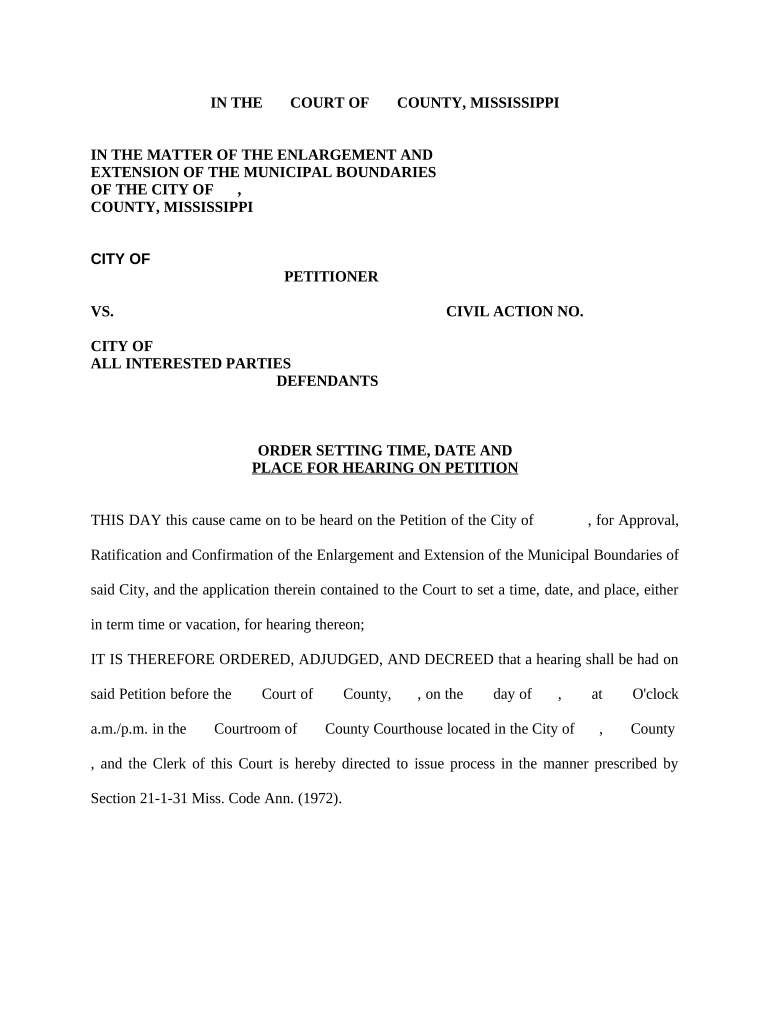
An Order Setting Hearing is a court-managed proceeding used to schedule case milestones, set briefing deadlines, and establish the sequence of events toward disposition or trial. It typically follows an initial filing or a dispositive motion and gives the judge an opportunity to calendar future hearings, identify outstanding issues, and direct service or discovery timelines. Parties receive formal notice of the date, time, location, and any procedural requirements. Accurate notices minimize continuances, reduce calendar congestion, and preserve parties' rights to timely notice and objection.

Why a clear Order Setting Hearing notice reduces risk

A precise Order Setting Hearing document clarifies dates, preserves due process, and reduces administrative delays while creating an evidentiary record of service. Under federal law an electronic notice can be valid where ESIGN (15 U.S.C. §7001) and state UETA rules apply, but confirm local court rules and any consumer disclosure requirements first.

Why a clear Order Setting Hearing notice reduces risk

Who prepares and receives Order Setting Hearing documents

The document is typically prepared by counsel, court clerks, or self-represented litigants and sent to all parties on the case docket.

  • Attorneys and law firms: Prepare proposed schedules and serve opposing counsel in accordance with local rules and statutes.
  • Court clerks and judicial staff: Enter hearing into the calendar and circulate official notice to parties and registered counsel.
  • Self-represented litigants: Follow the same filing and service rules; courts may require additional proof of service.

Confirm local civil or family court rules before filing; requirements for timing, service, and e-filing differ by jurisdiction.

Core elements that a professional Order Setting Hearing must include

A complete hearing notice contains defined fields and procedural instructions so recipients can act promptly and correctly.

Caption

Court name, case number, and party names exactly as shown on the original filing to ensure accurate docketing.
Hearing Details

Date, start time, courtroom or virtual link and estimated duration to permit counsel and parties to plan attendance.

Purpose

Clear statement of the hearing's purpose (e.g., status conference, motion call, scheduling) to frame required submissions.

Submission Deadlines

Dates for exchanging exhibits, filing briefs, and lodging proposed orders so the court has materials in advance.

Service Instructions

Method and proof of service required (personal, mail, e-service, e-file) and required certificates.

Consequences

Notice of consequences for failure to appear, including possible sanctions, continuance denial, or default judgment.

Step-by-step: preparing and filing the Order Setting Hearing notice

Follow these sequential actions to prepare and submit a compliant hearing notice.

  • 01
    Draft the Notice: Populate caption, case number, hearing purpose, date, and service instructions.
  • 02
    Check Local Rules: Confirm timing, page limits, and e-filing requirements with the court's local rules.
  • 03
    File or E-file: Submit via court e-filing system or clerk's office according to jurisdictional procedure.
  • 04
    Serve Parties: Serve opposing counsel and parties and complete the certificate of service.

Typical flow for electronic submission and service

Digital workflows streamline filing and proof of service while preserving an auditable record accepted by many courts.

  • Upload Document: Add the completed notice to your e-filing or e-signature platform.
  • Apply Signatures: Attach attorney signature blocks and date stamps as required.
  • E-file to Court: Upload through the court's e-filing portal or deliver to clerk per local rules.
  • Serve and Record: Serve parties electronically where allowed and retain service receipts for the certificate.

Configuring the digital workflow for an Order Setting Hearing

Set up a consistent template, signer roles, and delivery method to reduce manual errors and speed distribution.

Field Configuration
Document Template Use a reusable template with fixed caption and placeholder fields.
Signer Roles Assign roles: Preparing Attorney, Counsel for Other Parties, Court Recorder.
Authentication Choose signer authentication method required by court or internal policy.
Delivery Mode Select e-service, registered email, or physical mail per jurisdiction rules.

Technical and platform considerations for eSubmission

Confirm your e-filing and e-service platforms support required file types, access control, and audit logs.

  • File Formats: PDF or PDF/A preferred
  • Authentication: Email, SMS code, or advanced methods
  • Integrations: E-file portals, case management

Choose a platform that captures timestamps, IP addresses, and service receipts; ensure compatibility with court e-filing and retention needs.

Common scheduling and filing deadlines tied to an Order Setting Hearing

Timelines vary by jurisdiction; below are typical deadlines parties should expect and calendar.

Notice Filing Deadline:

File the hearing notice by the court's required lead time, often 7–21 days before hearing.

Service Deadline:

Serve opposing parties at least as many days in advance as local rule requires.

Objection or Response Deadline:

File any objections or motions to continue per local scheduling rules.

Exhibit Exchange Deadline:

Exchange exhibits and witness lists by the court-ordered cutoff date.

Pre-Hearing Submission:

Submit briefs, proposed orders, or statements by the court-specified date.

Key milestones in the Order Setting Hearing lifecycle

Track these numbered milestones from filing through the hearing to keep the case on schedule.

01

Motion or Request Filed

Document initiating scheduling or relief is filed with the court.

02

Notice Issued

Court or moving party issues the Order Setting Hearing notice to parties.

03

Service Completed

All parties receive notice and proof of service is filed.

04

Hearing Occurs

Judge conducts the hearing and issues scheduling or case-management orders.

Frequent mistakes that delay Order Setting Hearings

  • Using an incorrect or incomplete case caption, which can cause the clerk to reject the filing or misroute the notice.
  • Missing local rule timing requirements for filing or service, leading to continuances or sanctions at the hearing.
  • Failing to attach required supporting documents or proposed orders, which can prevent the judge from ruling as requested.
  • Relying on informal service methods when the court requires formal e-service or certified mail, resulting in defective proof of service.

Consequences of improper preparation or service

Continuance Risk: Hearing postponed
Sanctions: Monetary or procedural penalties
Default Judgment: Risk where defendant not served
Denied Relief: Court may refuse requested schedule
Document Rejection: Clerk may refuse to file
Privacy Exposure: Improper service can disclose sensitive data

Representative eSignature pricing and compliance comparison

Quick reference of starting prices and core capabilities across common eSignature providers; confirm plan details before purchase.

signNow DocuSign Adobe Sign PandaDoc HelloSign
Starting Price $8/user/mo $15/user/mo $14/user/mo $19/user/mo $15/user/mo
Free Trial 7-day free trial No free trial No free trial Limited trial Limited trial
Bulk Send Yes Yes Yes Yes No
HIPAA Compliant Yes Yes Yes No No
Envelope Cap No cap 100 envelopes/user/year Varies by plan Varies by plan Varies by plan

Common questions about Order Setting Hearings and electronic handling

Answers to frequent procedural and technical questions about preparing, serving, and filing hearing notices.


Need help? Contact support

be ready to get more
Join over 28 million airSlate SignNow users